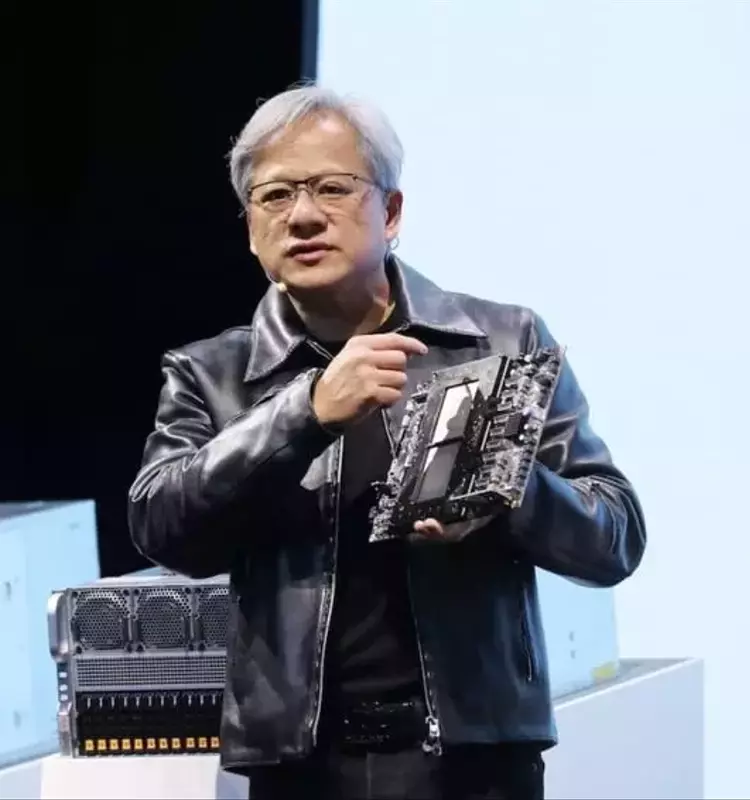
Nvidia's CEO, Jensen Huang, has openly discussed the formidable obstacles that stand in the way of creating artificial intelligence data centers in space. While acknowledging the long-term vision, he underscored the immediate need to prioritize terrestrial infrastructure development. The rising demand for AI processing has driven technological companies to explore innovative solutions beyond conventional, energy-intensive data facilities. Huang's insights shed light on the intricate engineering and economic considerations inherent in such ambitious endeavors.
A critical challenge identified by Huang is the effective management of heat in a vacuum. Traditional cooling methods rely on conduction and convection, which are non-existent in space. The only viable alternative, radiation, necessitates expansive surface areas, substantially escalating system complexity and costs. Despite these difficulties, Nvidia has already embarked on space-based computing initiatives, deploying CUDA-enabled systems on satellites for advanced imaging and AI tasks. This marks a strategic shift towards in-situ data processing, reducing the need to transmit vast amounts of data back to Earth. Huang remains optimistic about overcoming these obstacles, recognizing that significant time and investment will be required.
Overcoming the Thermal Challenges of Space-Based AI
One of the foremost technical challenges for deploying AI data centers in orbit revolves around efficient heat management. On Earth, data centers utilize conduction and convection to dissipate the significant heat generated by powerful AI processors. However, in the vacuum of space, these mechanisms are ineffective. The only available method for heat rejection is thermal radiation, which requires large, specialized radiators to effectively transfer heat away from the sensitive electronic components. This dramatically increases the size, weight, and complexity of orbital systems, leading to higher manufacturing and launch costs. Huang emphasized that mastering this thermal hurdle will be a multi-year undertaking, demanding innovative engineering solutions and substantial research and development.
Despite the severe thermal and economic constraints, the prospect of harnessing abundant solar energy and vast physical space in orbit remains a powerful incentive. Nvidia has already made strides in this direction, integrating its CUDA-powered systems into satellites for critical functions like image processing and AI computations. This pioneering work demonstrates the feasibility of performing complex AI tasks directly in space, thereby minimizing latency and reducing the burden on terrestrial networks. The company's commitment to developing radiation-hardened chips, such as the THOR chip and the Space-1 Vera Rubin Module, further exemplifies its dedication to advancing orbital computing capabilities. The journey to fully realize space-based AI data centers is long, but Nvidia views it as an essential step in meeting the burgeoning demands of the AI era.
The Strategic Imperative and Economic Realities of Orbital AI
The vision of establishing AI data centers beyond Earth's atmosphere is driven by the insatiable growth of artificial intelligence workloads. As AI applications become more pervasive and computationally demanding, traditional ground-based data centers face increasing pressure regarding energy consumption, physical footprint, and environmental impact. Space, with its limitless solar energy potential and expansive environment, offers a compelling alternative for future data infrastructure. However, the current economic landscape for orbital computing presents a significant barrier. The sheer cost of manufacturing, launching, and maintaining sophisticated hardware in space remains prohibitively high, impacting the short-term viability of widespread adoption. Nvidia's CEO acknowledges these economic realities, noting that while the economics are challenging today, they are expected to improve over time as technology advances and launch costs decrease.
Nvidia's proactive engagement in space-based AI, despite the current hurdles, highlights a long-term strategic commitment to this frontier. By developing specialized hardware like the radiation-approved THOR chip and unveiling initiatives such as the Space-1 Vera Rubin Module, Nvidia is positioning itself at the forefront of orbital data processing. The company's ongoing deployment of CUDA-powered systems on satellites for tasks like imaging and AI processing validates the practical application of space-based computing. Jensen Huang's confidence in the future of orbital AI, despite the acknowledged multi-year timeline, underscores the transformative potential he sees in processing data directly in space. This forward-thinking approach is not only about technological advancement but also about shaping the future infrastructure that will support the next generation of artificial intelligence.
