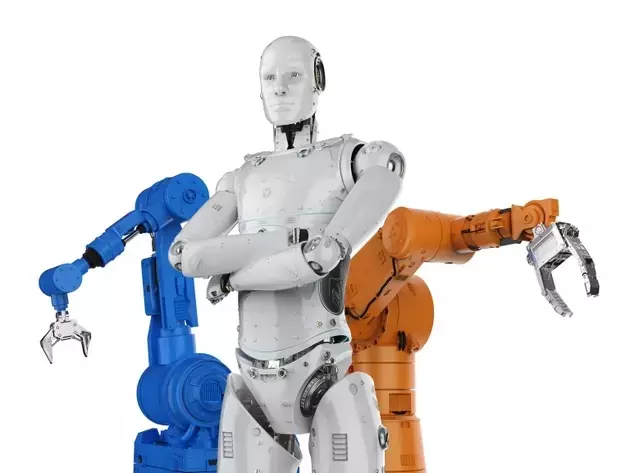
This article explores OpenAI's increasing focus on robotics and simulation, suggesting that physical AI is emerging as a critical area for future technological advancement. OpenAI’s strategy involves building robust AI and data infrastructure, which could enable widespread adoption of general-purpose robotics. This convergence of AI and robotics marks a significant trend, offering diverse investment prospects in related fields.
OpenAI's Strategic Shift Towards Embodied AI and Robotics
In a notable strategic pivot, OpenAI, renowned for its groundbreaking work in natural language processing with innovations like ChatGPT and GPT-4, is now aggressively expanding its footprint into the realm of physical artificial intelligence. This shift is characterized by a concerted effort in robotics and advanced simulation technologies, signaling a new frontier in the company's ambitious vision for AI development.
OpenAI's approach is distinct: rather than focusing solely on hardware manufacturing, it is prioritizing the development of scalable learning and simulation infrastructure. This strategic choice is designed to industrialize the generation of training data, a critical component for advancing sophisticated robotic systems. By concentrating on these foundational elements, OpenAI aims to foster the widespread deployment and accessibility of general-purpose robotics, moving beyond specialized applications to more versatile and adaptable machines.
This evolving landscape, where artificial intelligence and robotics are increasingly intertwined, represents a profound technological megatrend. For investors, this convergence opens up new avenues, particularly in sectors related to embodied AI, such as humanoids, drones, and various autonomous systems. Funds like the WisdomTree Physical AI, Humanoids, and Drones Fund are specifically designed to provide diversified exposure to this burgeoning market, capturing the essence of this transformative period.
As AI capabilities extend into the physical world, the implications for industries and daily life are vast, promising innovations that could reshape work, logistics, and human-machine interaction on an unprecedented scale.
