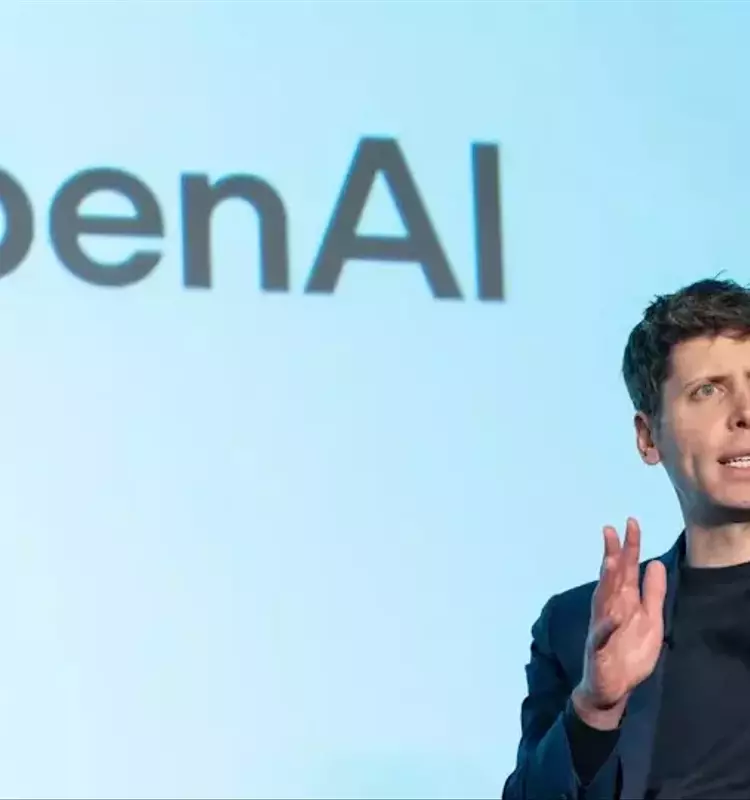
OpenAI is embarking on an unprecedented expansion of its artificial intelligence infrastructure, projecting an investment of $750 billion by the year 2030. This colossal sum, a significant increase from previous estimates, underscores the company's commitment to securing the vast computational resources essential for the advancement of its AI models. The strategy involves a blend of enhanced partnerships with leading cloud service providers and a bold move towards constructing its own large-scale data centers, marking a new chapter in its pursuit of AI dominance.
This ambitious undertaking is not without its complexities and internal discussions. While the strategic necessity of such investments for AI development is clear, questions have arisen regarding the financial sustainability of these expenditures. The company's leadership is navigating the challenge of balancing rapid expansion with prudent financial management, as it seeks to maintain its trajectory of innovation while ensuring long-term viability.
OpenAI's Escalating Investment in AI Computing
OpenAI has dramatically increased its projected spending on computing infrastructure, now estimating approximately $750 billion by 2030, a substantial rise from the $600 billion forecast earlier this year. This upward revision is primarily fueled by new agreements forged with prominent cloud computing providers, highlighting the company's relentless drive to acquire the immense computational capabilities necessary for its cutting-edge AI models. The scale of this investment underscores the foundational role of robust infrastructure in powering the next generation of artificial intelligence, as OpenAI positions itself at the forefront of this transformative technology.
The company's strategic push includes both expanding its reliance on external cloud services and venturing into self-owned data center development. These massive infrastructure commitments are a testament to the ever-growing demands of AI research and deployment, which require unprecedented levels of processing power and data storage. OpenAI's aggressive investment trajectory reflects its determination to meet these demands head-on, ensuring that its AI development remains unconstrained by computational limitations and continues to push the boundaries of what's possible.
Strategic Data Center Development and Leadership Augmentation
As part of its expanded infrastructure strategy, OpenAI recently announced plans to invest $20 billion in the construction of 'Project Camellia,' a new data center located in Effingham County, Georgia. This facility represents a significant shift for OpenAI, as it will be the company's inaugural venture where it acts as the primary designer and builder, diverging from its previous model of leasing chip capacity from providers like Oracle and Amazon Web Services. This move signifies OpenAI's intent to gain greater control over its computational resources, ensuring optimized performance and scalability for its advanced AI workloads.
To bolster this critical initiative, OpenAI has brought in key talent, including Brent Mayo, a distinguished figure known for his work on Elon Musk's xAI data center infrastructure. Mayo's expertise, particularly in rapidly deploying large-scale AI chip clusters, will be instrumental in overseeing the construction and operation of the Georgia facility and ensuring that existing cloud partners meet their development deadlines. This strategic recruitment, along with the promotion of Uday Ruddarraju to Chief Technology Officer of computing capacity, underscores OpenAI's commitment to assembling a top-tier team capable of executing its ambitious infrastructure vision and navigating the complexities of large-scale data center development.
