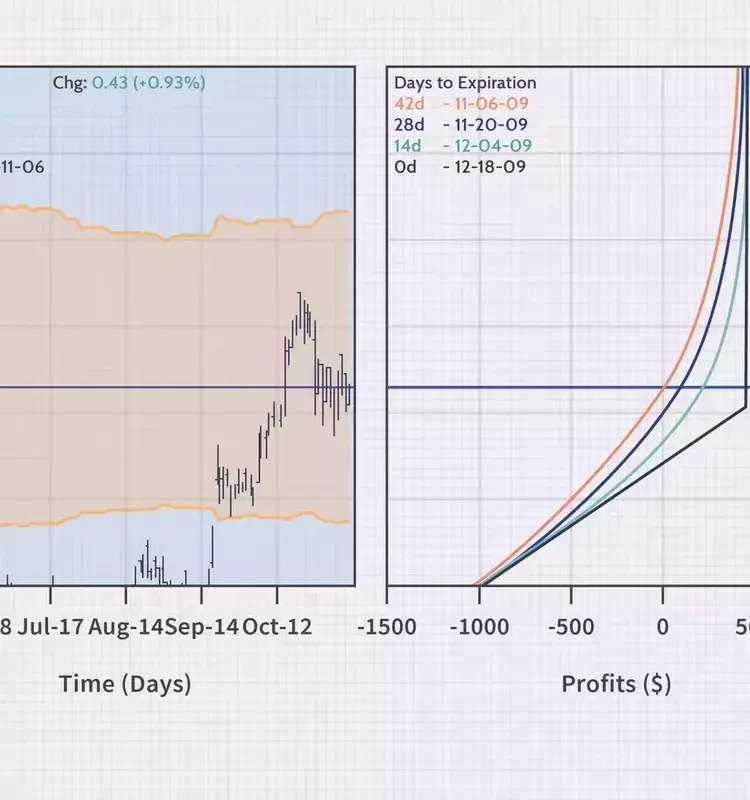
Traditional covered call strategies often require significant capital and can cap potential gains while still exposing investors to downside risks. This analysis explores an innovative alternative: implementing a directional covered call using only options. This method, which constructs a calendar spread, aims to reduce initial costs and enhance potential returns, offering a more flexible and potentially profitable approach for investors seeking to generate income or hedge positions without the direct ownership of underlying stocks.
Refined Options Strategies: Boosting Profits Beyond Conventional Covered Calls
In the dynamic world of financial markets, investors constantly seek strategies to optimize returns while managing risk. One such strategy, the covered call, traditionally involves owning a stock and selling call options against it to generate income or provide a limited hedge. However, this conventional approach has inherent limitations, such as capping upside potential and requiring substantial capital investment. A more sophisticated, options-only strategy emerges as a compelling alternative, offering potentially higher returns and reduced capital commitment, particularly in a bullish market scenario.
Consider a practical illustration: Imagine a stock trading at $46.56. A traditional covered call involves purchasing 100 shares at this price and simultaneously selling a December 45 call option for $5.90. The initial investment for the stock would be $4,656, offset by $590 from the option premium, leading to an effective breakeven price of $40.66. Under this setup, the maximum profit is capped at $434, representing a 10.7% return on the capital risked. While this offers some income and minimal downside protection, it clearly limits potential gains if the stock price soars beyond the strike price.
Now, let's explore an advanced options-only strategy. Instead of purchasing the stock, an investor might buy three January 40 call options at $10.80 each and sell two December 45 call options at $5.90 each. This configuration, essentially a calendar spread, results in a total cost and maximum risk of $2,060. This is roughly half the capital required for the traditional method. This strategy boasts a breakeven point at $44.48, which is higher than the conventional method’s $40.41, yet it opens the door to potentially unlimited profit if the stock rallies significantly.
The efficacy of this alternative was starkly demonstrated in a scenario where the underlying stock surged from $46.56 to $68.20 by December option expiration. The traditional covered call investor, having their stock called away at $45, would realize a profit of $434, a 10.7% return. In contrast, the investor employing the options-only strategy could have sold their three long January 40 calls for $28.50 each and bought back the two short December 45 calls for $23.20 each. This series of transactions would yield a remarkable profit of $1,850 on an initial investment of $2,060, translating to an 89.8% return. This stark difference underscores the power of sophisticated options strategies to unlock greater profitability, especially when market conditions favor an upward trend.
The financial markets are replete with opportunities for astute investors who are willing to look beyond conventional wisdom and embrace innovative strategies. The comparison between the traditional covered call and its options-only counterpart highlights a crucial lesson: by meticulously crafting trades with a deeper understanding of options mechanics, investors can significantly alter their risk-reward profile. This shift towards a more capital-efficient and potentially higher-yielding approach underscores the importance of continuous learning and adaptability in investment practices. It encourages a perspective where hedging and income generation are not just about mitigating losses but also about strategically positioning oneself for amplified gains. This evolution in strategy suggests a future where market participants increasingly leverage the versatility of options to achieve their financial aspirations with greater precision and efficacy.
