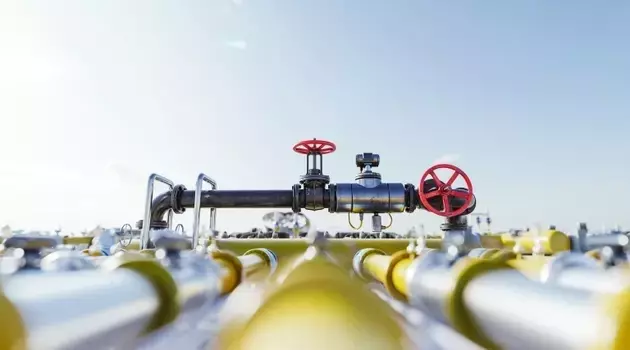
Permian Basin Natural Gas Bottleneck Eases with New Pipeline Expansions
Finance

Permian Basin Natural Gas Bottleneck Eases with New Pipeline Expansions

authorBy Nouriel Roubini
DateJun 27, 2026
Read time3 min

For an extended period, the Permian Basin grappled with an oversupply of natural gas, leading to depressed, often negative, prices at the Waha hub. This imbalance, where gas production outstripped the region's infrastructure for transportation, highlighted a critical bottleneck. However, a series of strategic pipeline expansions is now beginning to alleviate these pressures, signaling a potential return to more stable and profitable conditions for natural gas producers in the area.

Permian Basin Natural Gas Bottleneck Eases with New Pipeline Expansions

In a significant development for the energy sector, the Kinder Morgan Gulf Coast Express expansion officially commenced operations in late May 2026. This crucial infrastructure upgrade immediately injected an additional 570 million cubic feet per day (MMcf/d) of natural gas takeaway capacity, and its impact on pricing has been swift and positive. This expansion marks a pivotal moment for the Permian Basin, a region that has struggled with gas production outstripping its transportation capabilities, frequently leading to discounted, and at times, even negative, Waha pricing. The addition of this capacity provides much-needed relief to producers in the basin, allowing for more efficient transport of natural gas to market.

Looking ahead, further substantial relief is anticipated with the scheduled completion of two major pipeline projects. The Blackcomb pipeline, designed to provide approximately 2.5 billion cubic feet per day (Bcf/d) of capacity, is projected to enter service during the fourth quarter of 2026. Following closely, the Hugh Brinson pipeline, offering an estimated 1.5 Bcf/d of capacity, is slated for staged activation throughout the third and fourth quarters of 2026. These forthcoming projects are expected to significantly enhance the Permian Basin's ability to manage its burgeoning natural gas output, paving the way for sustained improvements in pricing and market stability. The collective impact of these expansions is poised to normalize basis differentials and foster a more robust natural gas market for the region.

The ongoing expansion of natural gas pipeline infrastructure in the Permian Basin offers valuable insights into the dynamic interplay between energy production, market demand, and logistical capabilities. This situation underscores the critical importance of robust infrastructure in supporting economic growth and ensuring the efficient flow of vital resources. The immediate positive response in natural gas pricing following the Gulf Coast Express expansion highlights how swiftly market dynamics can shift with the introduction of new capacity. For stakeholders, this period serves as a reminder to meticulously monitor the progression of infrastructure projects and their ripple effects across the energy landscape. The strategic development of takeaway capacity is not merely about transportation; it is about unlocking value, fostering market equilibrium, and enabling producers to operate effectively in a global energy market.

More Articles
Finance
Aramark Stock Upgrade: Strong Demand and Nexus Driving Growth
Aramark (ARMK) receives an upgrade to 'Buy' due to robust commercial performance translating into improved revenue and margins. The company's organic revenue grew by 12% in Q2 2026, supported by strong client retention. A new growth driver, Nexus, targeting hyperscale AI data centers, is expected to boost higher-margin revenue, offering significant upside potential beyond current FY2026 guidance. Valuation at approximately 22x NTM PE is justified by these structural growth drivers, with a projected share price increase to $68-$85 by FY28-FY29.
By David RubensteinJun 27, 2026
Finance
Mitsubishi Electric: A Strong Contender with a Rich Valuation
Mitsubishi Electric is demonstrating robust financial health with strong revenue and operating profit growth, fueled by key investments in electrification, semiconductors, datacenters, and defense. Despite facing restructuring expenses, the company's operating profit saw an increase, with the life segment, encompassing air conditioning and building systems, being the primary contributor to earnings before interest and taxes. This segment is poised for significant growth by fiscal year 2027 and is the highest-multiple business. However, even with these positive indicators, the current valuation of MIELY, at 18.9x EV/EBIT, appears high when compared to a blended fair multiple of approximately 15x derived from selected comparable companies. The multiples within the HVAC sector do not seem sufficient to justify the company's elevated valuation.
By Robert KiyosakiJun 27, 2026
Finance
The Evolving Landscape of AI Investment Narratives
The artificial intelligence narrative is undergoing a significant transformation, branching into diverse interpretations. This evolution presents intricate challenges for investors assessing pure-play AI ventures, as the market's complexity intensifies. What was once a relatively straightforward discussion has become a multifaceted debate, with further complications anticipated in the future, requiring a nuanced understanding of emerging trends and competitive dynamics.
By Lisa JingJun 27, 2026
Finance
PagSeguro Digital: Undervalued Fintech Opportunity
PagSeguro Digital, a Brazilian fintech, appears significantly undervalued, trading at approximately 5x forward non-GAAP earnings and below book value. Despite flat payment volume growth, its earnings are increasingly supported by banking, credit expansion, and strategic capital returns. The company's aggressive credit growth, particularly in working capital loans, presents both a major opportunity and a risk if credit quality is not meticulously managed. Key catalysts for future growth include a recovery in Total Payment Volume (TPV), improved gross profit margins, stable non-performing loan (NPL) rates, and continued share buybacks and dividends.
By Strive MasiyiwaJun 27, 2026
Finance
The ASIC-GPU Standoff: Google's TPU Bet and OpenAI's New Chip
This article explores the evolving landscape of AI hardware, focusing on the debate around domain-specific silicon versus general-purpose GPUs. It highlights Google's successful bet on its custom-designed Tensor Processing Units (TPUs) and introduces OpenAI's new "Jalapeño" inference chip, developed in collaboration with Broadcom and Celestica. The emergence of such specialized chips by hyperscalers raises critical questions about Nvidia's long-term dominance and the future of AI infrastructure.
By Robert KiyosakiJun 27, 2026