Unleashing Polkadot's Potential: Faster, Easier, and Ready for Web3 Dominance
Polkadot's Evolution: Addressing Past Challenges and Charting Future Growth
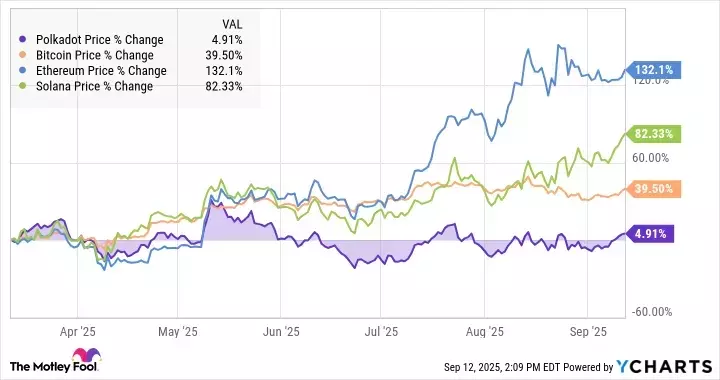
For a considerable period, investors in the Polkadot (DOT) digital currency have been eagerly awaiting transformative developments. While other leading cryptocurrencies like Bitcoin (BTC), Ethereum (ETH), and Solana (SOL) have enjoyed robust performance, Polkadot's gains have been comparatively modest, reflecting a need for innovation. However, the focus is now shifting from market prices to the core utility and development capabilities of the platform. The real value in most cryptocurrencies, especially those designed for developers like Polkadot, is fundamentally driven by the applications built upon them. This is where Polkadot is poised for a significant leap, with two key platform enhancements aimed squarely at its developer community: the JAM scaling upgrade and the ready-to-code DevContainer.
The JAM Upgrade: Accelerating Transactions and Enhancing Flexibility
The Polkadot network, recognized as a vital connector for various blockchains, is on the cusp of a major overhaul, dubbed \"Polkadot 3.0\" by its supporters at the Web3 Foundation. This pivotal technical upgrade centers around the Join Accumulate Machine (JAM). While the intricacies of JAM involve complex technical details, its core impact is straightforward: Polkadot is set to become considerably faster, more adaptable, and user-friendly. The global network of computing nodes responsible for validating Polkadot transactions and executing smart contracts is already known for its speed. JAM is projected to amplify this computing power tenfold. Gavin Wood, co-founder of Polkadot, envisions this transformation as creating a \"supercomputer on the blockchain,\" offering seamless and immediate access to the exact computational resources required for any application. This means an end to unpredictable auctions for computing time, replaced by a streamlined project funding system and a transparent pricing model for computing power, simplifying resource allocation for developers.
DevContainer: Simplifying Developer Onboarding and Fostering Innovation
Although the DevContainer feature might seem less impactful than the JAM upgrade, its role in attracting and supporting developers is crucial for Polkadot's long-term success. The Polkadot Smart Contracts DevContainer aims to make the entry point for new Polkadot developers significantly easier. Historically, setting up a development environment has often been a time-consuming and challenging process. The DevContainer eliminates this hurdle by replacing manual setup and configuration with a single command and extensive automation. This instant setup, combined with the powerful JAM system, is designed to encourage more developers to engage with the platform, thereby stimulating growth and innovation within the Polkadot ecosystem.
Implications for DOT Holders and Future Prospects
The introduction of the DevContainer and the impending rollout of JAM, expected before the close of 2025, are timely upgrades coinciding with a growing global interest in Web3 applications. These applications are designed to empower users with greater control, shifting influence away from large social media corporations. Polkadot has historically lagged behind other cryptocurrencies in market performance. However, its fundamental ability to connect diverse cryptocurrencies and facilitate the transfer of data, assets, and code across different blockchains positions it as a critical component, the \"digital glue,\" that could unify the next iteration of the internet, Web3.
Real-World Adoption: The Key to Polkadot's Success
With JAM replacing inefficient auctions with a pay-as-you-go model and the DevContainer simplifying developer onboarding, Polkadot is removing significant barriers to entry. If these enhancements successfully draw in a larger community of developers and end-users, it could trigger a substantial increase in demand for DOT. The improved technology is expected to translate into greater investor value. While a sudden surge in DOT prices is not anticipated, these strategic upgrades could pave the way for a sustained and lucrative appreciation in value over time, as developers and a broad user base increasingly adopt Polkadot's technology for real-world applications on smartphones and cloud platforms. The stage is set for Polkadot to emerge from the shadows and claim its rightful place alongside other leading cryptocurrencies.