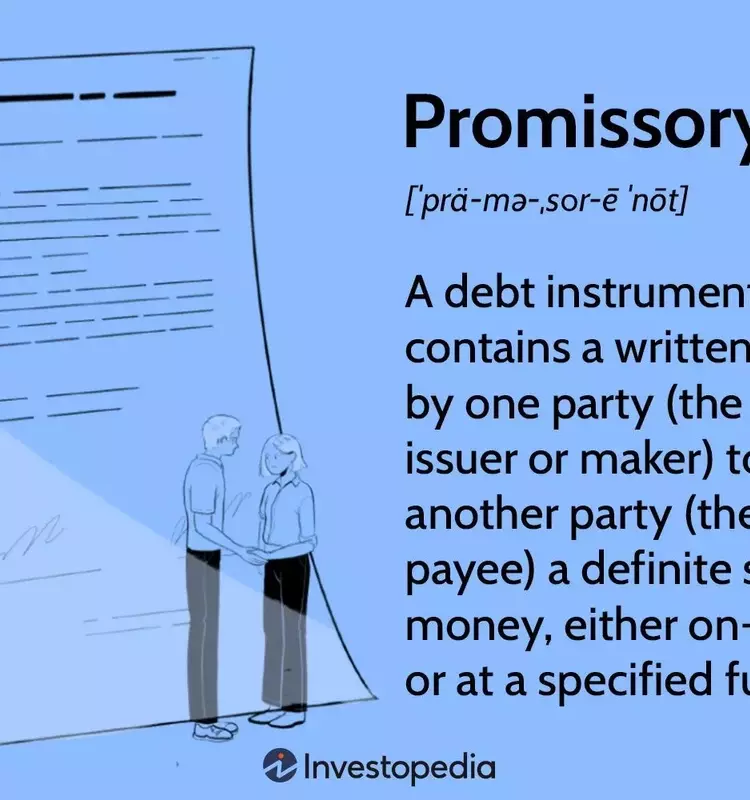
A promissory note serves as a formal written acknowledgment of a debt, where one party pledges to repay a specific sum of money to another. More structured than a simple IOU but less formal than a typical loan agreement, it delineates the financial terms between the issuer and payee. These notes are employed across diverse financial scenarios, ranging from individual loans between family members to more complex transactions like student loans, mortgages, and corporate financing. While offering flexibility in lending, it's crucial for both lenders and investors to comprehend the inherent risks and regulatory frameworks associated with these debt instruments.
Understanding promissory notes is essential for anyone engaged in lending or borrowing outside conventional banking channels. They provide a clear framework for repayment, including interest rates and schedules, making them a valuable tool for various financial arrangements. However, their flexibility also necessitates careful consideration of terms, collateral, and legal implications to mitigate potential risks, especially when notes are offered as investment opportunities.
The Core Nature of Promissory Notes
A promissory note is a written agreement where one entity formally commits to compensating another party with a specific monetary amount, either upon request or by a predetermined future date. This instrument sits between the informal nature of an IOU and the rigorous structure of a standard loan contract. It meticulously details key financial elements such as the initial loan amount, the applicable interest rate, the ultimate due date, and the agreed-upon payment methodology. This precise documentation clearly defines the financial responsibilities between the individual or entity issuing the note and the recipient of the payment. Promissory notes offer considerable adaptability, extending lending avenues beyond conventional financial institutions and making them accessible to a wider array of lenders.
These financial documents serve a critical function by providing a clear and legally binding framework for monetary transactions outside traditional banking. They specify not only the amount to be repaid but also the timeline and any associated costs, such as interest. This level of detail helps prevent misunderstandings and ensures that both parties are aware of their obligations and rights. The versatility of promissory notes means they can be tailored to various situations, from personal loans between acquaintances to more formal arrangements for educational funding or property acquisition. However, the absence of stringent institutional oversight, particularly in less formal settings, means that the parties involved must exercise due diligence and consider consulting legal counsel to ensure compliance with relevant laws and to protect their interests.
Secured vs. Unsecured Notes and Repayment Methods
Promissory notes can be broadly categorized into secured and unsecured types, distinguishing them by the presence or absence of collateral. A secured promissory note explicitly identifies assets, often real estate, that guarantee the debt. Should the borrower fail to meet their repayment obligations, the lender is legally entitled to claim these specified assets. Conversely, an unsecured promissory note does not involve collateral. In such cases, if a borrower defaults, the lender must pursue debt recovery through conventional legal procedures, which can be more complex and less certain. In both scenarios, the promissory note remains with the lender until the debt is fully settled, after which it must be canceled and returned to the issuer. It is advisable to seek legal counsel when drafting these notes to ensure adherence to state and federal lending and investment regulations.
The repayment of promissory notes can take several forms, typically involving the repayment of the principal amount along with interest, which can be either fixed or variable and calculated on various frequencies (daily, monthly, or annually). One common method is the installment note, where regular payments are made according to a defined schedule. For smaller sums, a simple note might stipulate a single lump-sum repayment on a specific date. Open-ended notes allow borrowers to access funds over time and repay the total drawn amount plus interest by a set deadline. A demand note, on the other hand, requires repayment whenever the lender requests it. Given the varying structures and legal nuances, especially concerning state-specific interest rate caps, consulting with a certified accountant and an attorney is crucial to understand the tax and legal implications of the repayment schedule.
