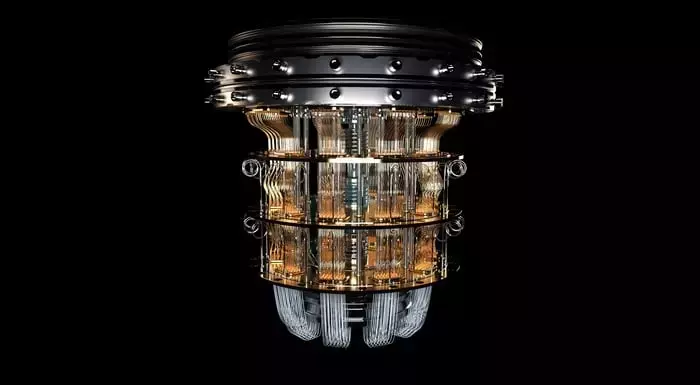
The convergence of quantum computing and artificial intelligence represents a groundbreaking frontier, poised to reshape technological landscapes and investment strategies. While AI currently holds the spotlight, the transformative potential of quantum computing to dramatically enhance AI's capabilities cannot be overstated. Industry leaders such as IonQ, with its innovative trapped-ion quantum systems, and Alphabet, leveraging its vast resources for in-house quantum chip development, are spearheading advancements. These companies are strategically positioning themselves to meet the escalating demand for the sophisticated computational power that will fuel future AI innovations, offering promising opportunities for forward-thinking investors.
The current market's fascination with artificial intelligence is well-justified, given the substantial investments flowing into the sector. However, the impending synergy between quantum computing and AI is set to elevate the latter to unprecedented levels of performance within a few short years. This symbiotic relationship promises to unlock new possibilities and efficiencies that are currently beyond the reach of conventional computing. Early investors recognizing this potent combination stand to gain significant rewards, as the foundational technology for next-generation AI is laid. The technological race is on, and the companies pioneering quantum solutions for AI are likely to become future market titans.
IonQ's Groundbreaking Quantum Technology
IonQ stands out in the quantum computing landscape with its innovative trapped-ion technology, offering a distinctive approach to quantum computation. Unlike most competitors who rely on superconducting methods, IonQ's system operates effectively at room temperature, eliminating the need for expensive, specialized cryogenic facilities. This operational efficiency provides a significant advantage, reducing both cost and complexity. Furthermore, IonQ's trapped-ion quantum computers boast exceptional accuracy, a critical factor for early adopters prioritizing precise calculations over raw speed in the nascent stages of quantum application development.
IonQ's advancements are not merely theoretical; the company has established world records for quantum computing accuracy, underscoring the reliability of its technology. This precision is particularly relevant for enhancing artificial intelligence, where accurate data processing can lead to more robust and effective AI models. The recent achievement of the #AQ 64 performance milestone by IonQ's Tempo system demonstrates a doubling of its quantum calculation capacity in a short period, highlighting rapid progress. This growth suggests a significant potential for IonQ's hybrid quantum-classical computing solutions to substantially reduce energy consumption for AI models, positioning the company as a strong contender in the evolving quantum-AI integration market.
Alphabet's Strategic Quantum Initiatives
Alphabet, a titan in the technology sector, is actively developing its own quantum computing chip, known as Willow, which has shown impressive performance metrics. Leveraging its immense financial and intellectual capital, Alphabet possesses an unparalleled capacity to invest in and advance this cutting-edge technology. The company's strategic vision includes creating a proprietary hybrid quantum computing system specifically designed to bolster AI capabilities, thereby reducing its reliance on external hardware suppliers for its advanced computing needs.
The successful development of a viable quantum computing solution by Alphabet would provide an immediate and substantial boost to its generative AI model, Gemini. This enhanced computational power would likely propel Gemini to the forefront of AI model performance, solidifying Alphabet's leadership in artificial intelligence. Moreover, Alphabet plans to integrate quantum computing services into its Google Cloud platform, allowing clients to access and utilize these advanced capabilities. This move would generate significant demand and highly profitable growth, especially if Alphabet's solution proves to be a leading commercial quantum computing option, securing its position at the vanguard of the quantum-AI revolution.