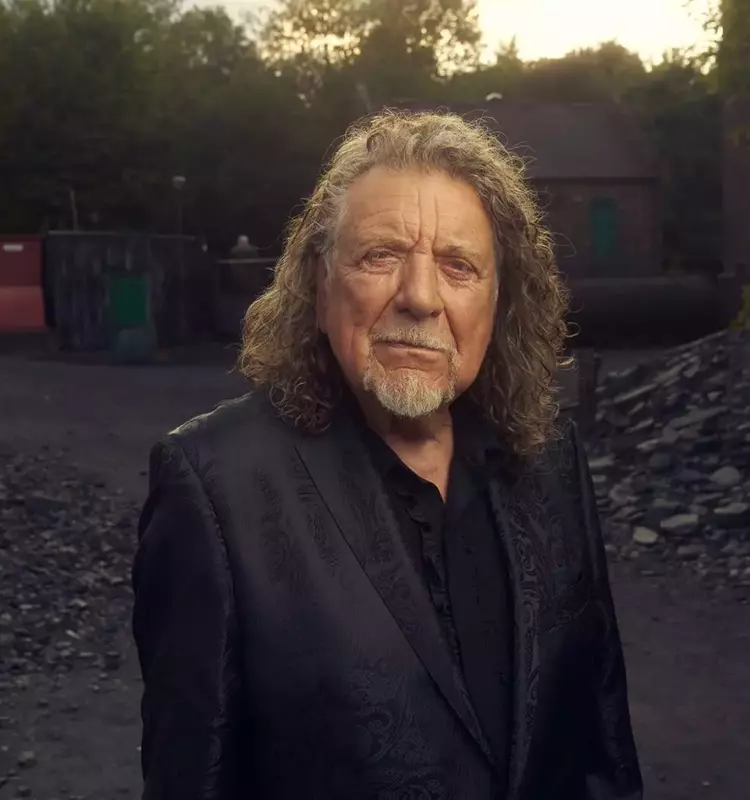
In a recent conversation, celebrated musician Robert Plant shared insights into his current project, Saving Grace, a collective that began with informal performances and has now culminated in a forthcoming studio album and an eagerly anticipated tour. This venture, which provided a refreshing creative outlet for Plant, demonstrates a more relaxed, unburdened approach to music-making, diverging from past endeavors.
The genesis of Saving Grace traces back to February 2019, when Plant initiated a series of intimate shows across England. These performances, held in small, unassuming venues, allowed the band to explore a diverse repertoire of covers, ranging from Donovan and Townes Van Zandt to Patti Griffin, alongside reinterpretations of Led Zeppelin compositions, all with a distinct acoustic flair. Plant remarked on the pleasure of these low-key engagements, emphasizing the absence of professional pressure and the sheer joy derived from the musical interaction.
The band, comprising Plant, drummer Oli Jefferson, guitarist Tony Kelsey, banjo and string player Matt Worley, cellist Barney Morse-Brown, and vocalist Suzi Dian, quickly discovered a strong artistic connection. Despite various scheduling conflicts, including Plant's commitments to his second album and extensive tour with Alison Krauss, the group gradually developed their sound and laid the groundwork for their debut studio recording. The self-titled album, a culmination of these efforts, is scheduled for release on September 26, with the lead single “Everybody’s Song” already available. A North American tour is set to commence on October 30 in Wheeling, West Virginia.
Plant elaborated on the formation of Saving Grace, highlighting his desire to connect with local musicians in his long-time residence near the Welsh Borders. After the passing of John Bonham and the dissolution of Led Zeppelin, Plant sought a more grounded musical experience. His collaboration with Matt Worley, who shared his appreciation for English and Irish folk traditions, proved pivotal in assembling the band. The inclusion of Suzi Dian as a co-vocalist brought a fresh dynamic, allowing Plant to adapt to a different vocal style, reminiscent of his work with Alison Krauss and Patty Griffin.
The recording process for the Saving Grace album was unconventional and organic. Initial sessions took place in an open field near Matt Worley's property, capturing the natural environment, including birdsong, which can be heard on some tracks. This outdoor recording method evoked memories of his work on Led Zeppelin's 'Physical Graffiti.' As circumstances allowed, the band also utilized other unique spaces, such as an old farm barn in Gloucestershire, maintaining an unpressured and experimental approach throughout. Plant stressed that the project was never about grand aspirations but rather about the sheer pleasure of creation among like-minded individuals.
The album features a mix of original material and covers, including Moby Grape's "It's a Beautiful Day Today" and Memphis Minnie's "Chevrolet," both selected for their historical significance and the band's fresh interpretations. Plant also included songs by contemporary artists like Martha Scanlan and Low Anthem, demonstrating his ongoing engagement with diverse musical forms. His recent participation in the Outlaw Tour with music legends such as Bob Dylan and Willie Nelson further reinforced his appreciation for collaborative, unscripted musical journeys, where the focus remains on authentic expression rather than replicating past successes. Plant emphasized his commitment to musical evolution, preferring to explore new artistic territories rather than endlessly revisiting his famous repertoire. He expressed his firm disinterest in writing a memoir or authorizing a biopic, stating his preference to remain an enigmatic figure rather than dwelling on the past.