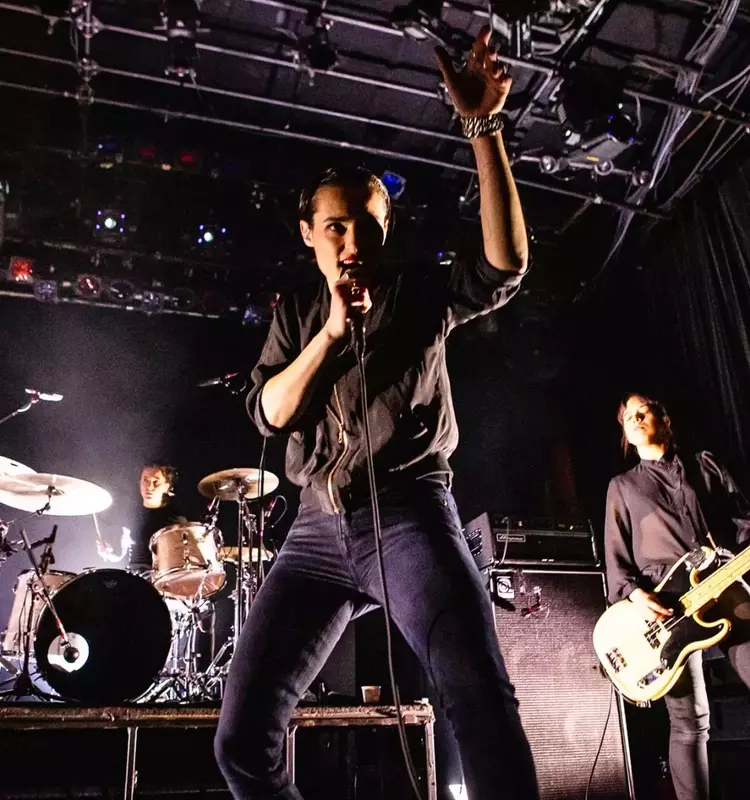
A decade after the release of their defining album, 'Adore Life', two members of the acclaimed British post-punk group, Savages, offer a candid retrospective on their journey. Guitarist Gemma Thompson and bassist Ayşe Hassan recently shared their experiences surrounding the album's creation, the pressures of artistic evolution, and the eventual, bittersweet conclusion of the band's active phase. Their reflections shed light on the intense energy and creative struggles that shaped one of the 2010s' most impactful rock acts, as a recent discovery of unreleased material sparks renewed interest in their legacy.
The catalyst for this nostalgic look back was an initiative by former frontwoman Jehnny Beth, who suggested revisiting the archives for the tenth anniversary of 'Adore Life'. This proposal came as a pleasant surprise to Thompson and Hassan, marking the first time in years the band members had collectively engaged with their past work. Among the unearthed treasures were "Prayer," an unreleased track from the 'Adore Life' sessions, and a poignant cover of Black Sabbath's "Paranoid," recorded prior to their debut album in 2012. These releases have provided fans with a fresh connection to the band's formative years and the raw power of their sound.
Thompson and Hassan, who joined a recent interview from their respective homes in New Zealand and southeast England, admitted that this marked their first media appearance discussing Savages since their last performance at a French rock festival almost nine years ago. The absence of Beth and drummer Fay Milton from the discussion underscored the individual paths the members have forged since the band's hiatus in 2017. Savages burst onto the London music scene in 2011, quickly establishing themselves with their critically acclaimed 2013 debut, 'Silence Yourself', which reinvigorated the post-punk genre. The desire to capture their electrifying live presence for their second album led them to New York in 2015, where they performed a series of intimate club shows, now legendary among their devoted fanbase.
Relocating to an industrial Brooklyn neighborhood, the band embraced a period of creative freedom and intense collaboration. Thompson vividly recalled the unique experience of navigating snowdrifts to their practice space and impromptu snowball fights in a snow-paralyzed New York, highlighting the raw, unfiltered environment that fueled their songwriting. This period was crucial for overcoming the challenge of following up a highly praised debut. While 'Silence Yourself' emerged organically, the creation of 'Adore Life' came with increased external pressures, as Thompson noted the industry's desire for commercially viable tracks. However, she found solace in the experimental and abstract aspects of their creative process, which often diverged from conventional radio-friendly compositions.
Hassan also reminisced about the thrilling, risky atmosphere of their New York club performances, particularly at venues like Baby’s All Right. These shows served as a live workshop, allowing the band to refine new material in front of an enthusiastic audience. This intense live testing period was integral to shaping the songs that would ultimately appear on 'Adore Life'. Following their New York residency, the band returned to London's RAK Studios to record the album. Unlike their debut, where all members recorded simultaneously, 'Adore Life' saw instrumental tracks laid down over several weeks, with Beth's vocals added later in Paris. Released on January 22, 2016, 'Adore Life' garnered positive reviews, and Savages immediately embarked on an exhaustive tour across Europe and the U.S. While Thompson acknowledged the intense and demanding nature of their final touring year, she emphasized the exceptional quality of their performances, valuing every moment spent on stage with her bandmates.
The band's eventual decision to go on an indefinite hiatus in July 2017 was a difficult one, as Thompson expressed her initial desire to maintain momentum and plan for a third album. She openly shared the emotional impact of the band's dissolution, describing it as "stepping off a cliff." Thompson often imagined a heavier, more dynamic third album, drawing inspiration from bands like Fugazi, an aspiration that remains a "what if" in another lifetime. Hassan offered a philosophical perspective on the band's end, emphasizing their commitment to living in the moment and giving their all, understanding the inherent impermanence of any artistic endeavor. She expressed pride in their collective dedication, acknowledging that not everyone was aligned with continuing as a unit.
In the years since Savages disbanded, each member has pursued diverse creative ventures. Jehnny Beth has released two solo albums, while Gemma Thompson has delved into visual arts and formed the improvisational duo Tondo. Ayşe Hassan is preparing to release an industrial-pop record under the moniker Esya and has collaborated with electronic artists. Fay Milton co-founded the environmental advocacy group Music Declares Emergency and has also launched a solo album as Goddess. While a reunion remains off the table for now, the overwhelming positive response to their recently released archival tracks has deeply resonated with Thompson and Hassan, reinforcing the enduring impact of Savages' music and their profound connection with their fanbase.