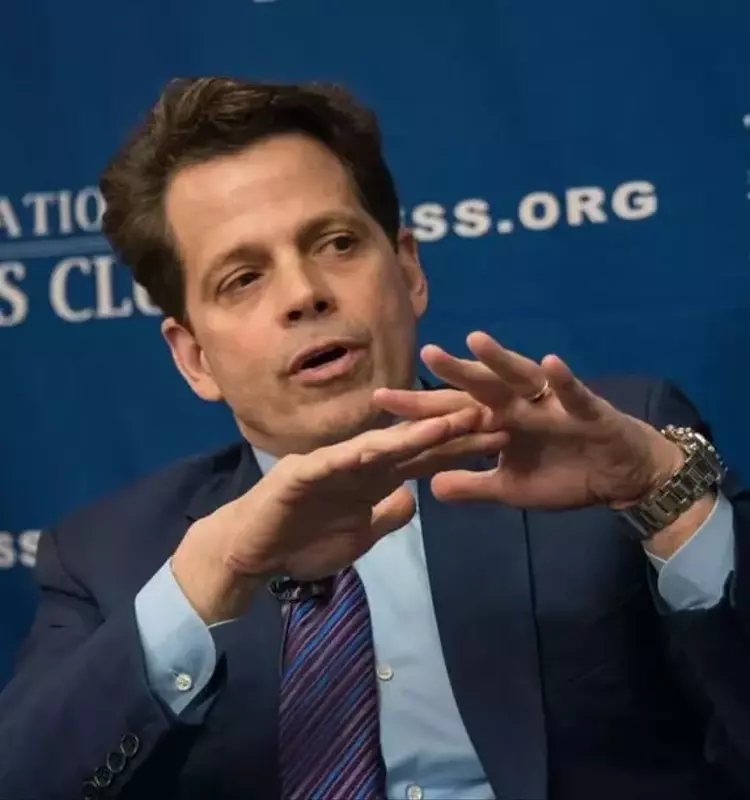
Former White House communications director Anthony Scaramucci has issued a stark warning to today's technology moguls, whom he dubs 'broligarchs,' suggesting they have overlooked a crucial lesson about the nature of capitalism that was grasped a century ago. Scaramucci argues that the enduring success of the capitalist system hinges on the public's perception of its fairness. He contends that if ordinary individuals lose faith in the system's ability to provide equitable opportunities, historical precedents indicate a path toward instability. His critique extends to powerful figures in the tech and finance sectors, like Elon Musk and Peter Thiel, whose influence on policy and public discourse is undeniable. Despite his criticisms, Scaramucci has also praised and invested in ventures like SpaceX, highlighting the complexity of his views.
Scaramucci's commentary underscores a growing concern about the concentration of wealth and power within the tech industry and its potential implications for societal harmony. He draws a direct line from historical industrial leaders, who recognized the importance of worker well-being for market stability, to contemporary tech leaders. The central message is that a robust capitalist system requires broad participation and belief in its fairness, without which it risks becoming an engine of discontent rather than prosperity. This perspective invites a re-evaluation of current economic models and the role of leading entrepreneurs in fostering a more inclusive and sustainable future.
The Imperative of Perceived Fairness in Capitalism
Anthony Scaramucci, a prominent voice in finance and former White House communications director, has passionately articulated his belief that the contemporary titans of technology, or “broligarchs,” have overlooked a fundamental lesson about the sustainability of capitalism. He invokes the historical figure of Henry Ford, not to laud his character, but to highlight Ford's astute understanding that a thriving capitalist system necessitates that its participants, particularly the workforce, feel invested and believe in its inherent fairness. Ford's innovative “Five-Dollar Workday” dramatically increased worker wages, which, in turn, allowed employees to purchase the very products they manufactured, fostering a sense of ownership and contributing to economic stability. Scaramucci posits that today's powerful tech and finance leaders, by seemingly neglecting this crucial aspect of worker empowerment and equitable distribution of opportunity, risk alienating a significant portion of the population. He cautions that historical patterns clearly illustrate the potential for severe societal unrest when the general populace perceives the economic game as rigged or unjustly played.
This perspective by Scaramucci is not merely an academic observation but a pointed critique of the current trajectory of economic power and its social implications. He suggests that the burgeoning wealth and influence concentrated among a select few “broligarchs” might inadvertently be eroding the foundational trust required for capitalism to function harmoniously. The core argument rests on the premise that when the benefits of economic growth appear disproportionately allocated, leading to widespread disillusionment, the system itself becomes vulnerable. Scaramucci’s reference to historical consequences serves as a potent reminder that economic models are not impervious to public sentiment. Therefore, he advocates for a renewed focus on ensuring that the capitalist framework offers genuine pathways for upward mobility and fair returns for all, thereby maintaining the essential belief that the system is “worth playing” for everyone, not just a privileged few.
Navigating the Complexities of Modern Tech Influence
Scaramucci's critique of what he terms "broligarchs" delves into the complex landscape of modern tech influence, specifically pointing to figures like Elon Musk and Peter Thiel. These individuals, along with their associated venture capitalists and executives, exert significant power over critical sectors including artificial intelligence, space exploration, cryptocurrency, and national politics. Their ability to shape debates and policy decisions has prompted warnings from observers like former Labor Secretary Robert Reich, who previously cautioned against the formation of a "billionaire brain trust" that could heavily sway governmental policies. Scaramucci underscores that the concentration of such extensive influence in the hands of a few unelected individuals poses considerable risks to the democratic process and the broader societal structure. He emphasizes that while these tech leaders drive innovation, their unchecked power could inadvertently lead to systemic vulnerabilities, raising concerns about the integrity of checks and balances within society and the potential for increased corruption.
The former White House communications director's position is not a simplistic anti-billionaire stance; rather, it reflects a nuanced understanding of the economic ecosystem. Scaramucci himself has invested in successful ventures like SpaceX, acknowledging the transformative potential of such companies. However, he also recognizes the phenomenon of a "cult of personality" surrounding leaders like Musk, which can inflate company valuations and obscure underlying societal issues. His broader concern revolves around a system that allows for the emergence of potential trillionaires while a growing segment of the population loses faith in their economic prospects. This disparity, Scaramucci argues, creates an environment where the stability of the entire system is jeopardized. He advocates for a more equitable and transparent approach to wealth creation and distribution, urging that the pursuit of innovation not come at the cost of societal cohesion and belief in a fair economic playing field for everyone.
