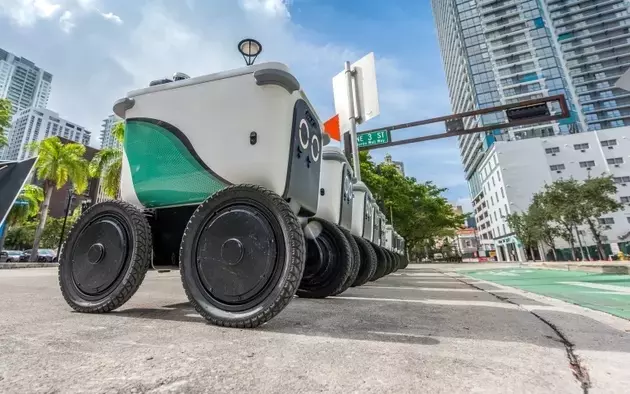
Serve Robotics Inc. has recently unveiled its second-quarter performance, indicating a notable slowdown in operational progress. Despite possessing a substantial fleet of 2000 autonomous delivery robots, the company is struggling with inadequate utilization, primarily due to insufficient demand from key partners such as Uber Eats. This situation raises significant questions about Serve Robotics' strategic positioning and long-term viability within the competitive food delivery sector.
The financial health of Serve Robotics remains precarious, marked by poor unit economics and a high rate of cash consumption driven by substantial operating expenses. The company's valuation, although volatile, does not present a compelling investment case, suggesting that a low stock price alone is not a sufficient incentive for potential investors given the underlying operational challenges.
Serve Robotics' Q2 Operational Challenges
Serve Robotics Inc. experienced a challenging second quarter, marked by a significant decline in operational momentum. The company, which operates a fleet of 2000 autonomous delivery robots, reported a concerning underutilization of its assets. This issue stems largely from a lower-than-anticipated demand from its primary partners, including Uber Eats, raising serious questions about the effectiveness of its current business model and market strategy. The persistent low utilization rates directly impact the company's ability to generate sufficient revenue, leading to a precarious financial situation where operational costs continue to outpace income. This imbalance creates a cycle of cash burn, forcing the company to deplete its reserves at an unsustainable rate. The lack of robust demand highlights a potential miscalculation in market penetration or an overestimation of partner reliance, prompting a critical re-evaluation of Serve Robotics' position in the highly competitive food delivery landscape and its capacity to scale profitably.
The underperformance in Q2 extends beyond mere numbers, signaling deeper structural issues within Serve Robotics' operations. The strategic dependence on a limited number of major partners like Uber Eats exposes the company to significant demand volatility and shifts in partner priorities. When these partners reduce their orders, the ripple effect on Serve Robotics is immediate and severe, as evidenced by the current underutilization of its robot fleet. This situation not only affects immediate financial outcomes but also casts a long shadow over future growth prospects. For a company heavily invested in hardware and operational infrastructure, consistent demand is crucial for achieving economies of scale and improving unit economics. The current scenario suggests that Serve Robotics needs to diversify its client base, explore new market segments, or enhance the value proposition of its autonomous delivery services to stimulate demand. Without these strategic adjustments, the company risks continued financial strain and an inability to achieve sustainable growth, despite its innovative technology and substantial asset base.
Financial Instability and Investment Outlook
The financial metrics reported by Serve Robotics underscore a period of significant instability, characterized by persistently poor unit economics. The fundamental cost of operating each autonomous delivery robot, when weighed against the revenue it generates, is currently unfavorable, leading to a negative margin on individual deliveries. This issue is compounded by high operating expenses across the board, encompassing maintenance, technological development, and administrative overheads, which collectively contribute to a rapid depletion of the company's cash reserves. This financial trajectory is unsustainable in the long run, as it indicates that the company is spending more than it earns without a clear path to profitability. The immediate consequence is a heightened risk of liquidity problems, requiring continuous capital injections or drastic cost-cutting measures to maintain operations. Addressing these core financial inefficiencies is paramount for Serve Robotics to stabilize its economic standing and move towards a more viable business model.
Despite the considerable volatility observed in Serve Robotics' stock valuation, the current low price does not inherently translate into an attractive investment opportunity. This perspective is rooted in the deep-seated operational and financial challenges that continue to plague the company. A low stock price, while sometimes indicative of an undervalued asset, can also reflect genuine concerns about a company's future earnings potential and its ability to overcome significant hurdles. In Serve Robotics' case, the ongoing issues of underutilized assets, weak demand, and substantial cash burn suggest that the underlying business fundamentals are not yet robust enough to warrant investment based solely on a discounted share price. Investors typically seek companies with clear growth trajectories, strong unit economics, and a sustainable competitive advantage. Until Serve Robotics can demonstrate concrete improvements in these critical areas, the investment outlook remains cautious, advising against speculative investments driven purely by current market valuations.
