ServiceNow's Strategic Evolution: AI Integration and Fair Valuation
Finance

ServiceNow's Strategic Evolution: AI Integration and Fair Valuation

authorBy Michele Ferrero
DateAug 14, 2026
Read time2 min
This analysis delves into ServiceNow's current market position, focusing on its valuation, strategic artificial intelligence integrations, and future growth prospects. Despite a recent market adjustment, the company demonstrates resilience through consistent revenue expansion and proactive investments in emerging technologies.

Navigating the AI Era: ServiceNow's Strategic Path Forward

ServiceNow's Market Standing and AI Integration

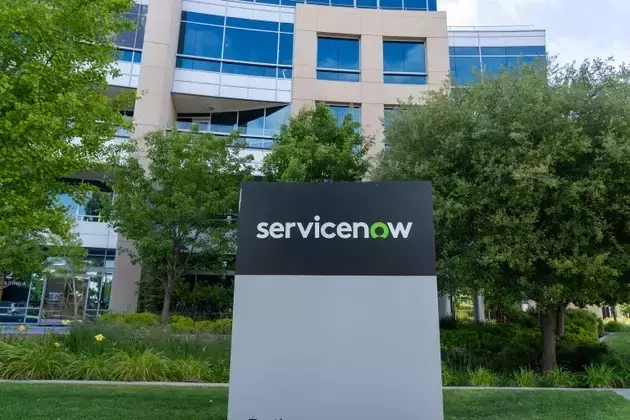
ServiceNow finds itself at a pivotal moment, having navigated a period of market volatility, colloquially termed 'SaaSpocalypse.' Currently, its valuation appears to reflect a fair assessment of its intrinsic worth. The company's unwavering commitment to robust revenue growth, coupled with strategic ventures into artificial intelligence, forms the bedrock of its long-term investment narrative. This forward-looking approach positions ServiceNow as a resilient player in a dynamic technological landscape.

Analyzing Margin Adjustments and Revenue Trajectory

A closer examination of ServiceNow's financial performance reveals a recent trend of margin compression. This, however, is not indicative of weakening fundamentals but rather a direct consequence of intentional investments in cutting-edge AI capabilities and hyperscaler technologies. These strategic expenditures are designed to bolster future growth and innovation. Concurrently, the company continues to demonstrate impressive revenue expansion, maintaining a compound annual growth rate of 23-24%, underscoring its underlying strength and market demand for its services.

Leadership's Vision: AI, Cybersecurity, and Innovation

ServiceNow's leadership exhibits a clear vision for harnessing the transformative power of AI and enhancing cybersecurity measures. This is evident through strategic acquisitions, such as Armis and Veza, which significantly augment its technological arsenal. Furthermore, the introduction of pioneering initiatives like the 'AI Control Tower' exemplifies the company's dedication to integrating advanced intelligence into its operational framework. These actions highlight a proactive and adaptive management strategy aimed at securing a competitive edge.

Investment Outlook: Prudence Amidst Potential

Considering the current market dynamics and ServiceNow's strategic direction, a cautious yet optimistic investment stance is warranted. While the company's trajectory is compelling, a more attractive entry point would ideally offer a greater margin of safety for investors. Therefore, a neutral rating is assigned at this juncture, with an anticipation to re-evaluate the investment proposition should the share price reach a more favorable level, such as $100 per share.

More Articles
Finance
PayPal's Stock Surge: A Story of Anticipated Profit Shift and Strategic Growth
PayPal's stock has seen a significant rise, outperforming major indices, fueled by an early-identified shift in profit drivers. Despite challenges in traditional online branded checkout, emerging segments like Venmo and Buy Now, Pay Later have propelled growth, a trend management highlighted well before the stock's impressive rally. This strategic pivot, coupled with cost-saving initiatives, has positioned PayPal for continued financial robustness.
By David RubensteinAug 14, 2026
Finance
Understanding Bond Returns: Yield to Maturity vs. Spot Rate
This article delves into two crucial metrics for bond investors: Yield to Maturity (YTM) and Spot Rate. YTM represents the total anticipated return if a bond is held until its maturity date, factoring in all coupon payments and their reinvestment. In contrast, the Spot Rate signifies the return achieved when a bond is bought and sold on the secondary market without considering coupon payments. The article provides clear explanations of both concepts, highlighting their differences and applications in evaluating bond performance and risk, particularly for zero-coupon bonds.
By Suze OrmanAug 14, 2026
Finance
NexPoint Residential Trust: Facing Financial Headwinds
NexPoint Residential Trust is currently rated as a "Hold" due to increasing leverage, declining financial projections, and reduced dividend coverage. Despite a significant discount to its Net Asset Value, persistent debt and refinancing risks suggest this discount is structural. Recent Q2 2026 results showed modest revenue growth but a decline in Adjusted Funds From Operations and same-store Net Operating Income, primarily due to higher interest expenses and softer revenue performance.
By Lisa JingAug 14, 2026
Finance
Pulp Market Dynamics: Suzano's EBITDA Growth and Deleveraging Efforts
Suzano (SUZ) is experiencing EBITDA growth primarily due to increased pulp prices, despite challenges from rising input costs and stagnant sales volumes. The company's deleveraging process is constrained by expanding Chinese hardwood pulp capacity and the substitution of softwood pulp. However, strategic operational enhancements, including hedging, reduced operational downtime, and new sourcing agreements, are expected to decrease cash costs and support ongoing improvements, with deleveraging progressing at approximately 3% per quarter. The recent Arbex J.V. acquisition is largely leverage-neutral, and pulp remains the primary contributor to EBITDA.
By Nouriel RoubiniAug 14, 2026
Finance
Kraken's Parent Company, Payward, Records Significant Q2 Revenue Growth
Payward, the company behind the Kraken exchange, announced an adjusted revenue of $508 million for the second quarter, marking a 17% increase year-over-year. This growth signals a diversification beyond crypto spot trading, with increased contributions from asset-based services and strategic acquisitions. Despite a sector-wide dip in crypto spot activity, Payward expanded its funded accounts and platform assets, strengthening its presence, particularly in the European Economic Area.
By David RubensteinAug 14, 2026