A Solitary Vision: Crafting Soundscapes Anew
The Genesis of a New Musical Path: From Saxophone to Solitude
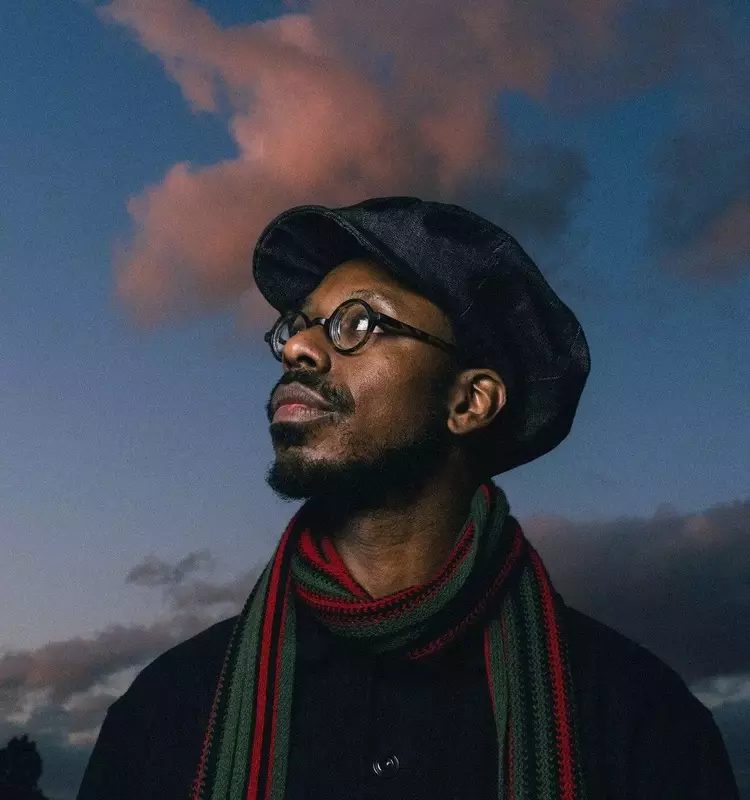
Shabaka Hutchings' decision to step back from public saxophone performances in early 2023 was a pivotal moment, influenced by both the physical demands of the instrument and a desire to escape the commercialization of his artistry. His engagement in esteemed projects, like performing Pharoah Sanders and Floating Points' "Promises" and John Coltrane's "A Love Supreme," fueled his quest for innovation. This pursuit ultimately led him to explore new instruments and alternative musical expressions, freeing himself from the symbolic weight and audience expectations tied to his saxophone playing.
Exploring Fresh Sonic Territories: Beyond Collaborations
Following his departure from the saxophone, Shabaka released critically acclaimed works, "Perceive Its Beauty, Acknowledge Its Grace" (album) and "Possession" (EP), where he masterfully played flute and various global wind instruments. These projects involved collaborations with diverse artists such as billy woods, Brandee Younger, André 3000, and Esperanza Spalding, establishing his presence in the evolving genre of spiritually infused jazz and new age music. Yet, his innate restlessness pushed him further, culminating in "Of the Earth," an entirely solo project where he meticulously handled every aspect of creation.
The Art of Solo Creation: Loops, Rhythms, and Harmonies
In the realm of jazz, musical interaction is paramount. However, "Of the Earth" foregrounds composition and meticulous editing, with Shabaka constructing the entire album himself. The foundational element of the album is the loop, where diverse rhythmic patterns emerge and evolve. Shabaka masterfully utilizes these repeating structures as a canvas, allowing them to interweave with melodically rich and harmonically dense wind instrument parts, creating a dynamic tension that defines each track.
A Modern Echo of Jazz Fusion: Electro-Acoustic Explorations
At times, "Of the Earth" evokes the spirit of 1980s electro-acoustic jazz, maintaining the essence of traditional jazz instrumentation while revolutionizing rhythmic elements. On "Those of the Sky," flutes and reeds engage in intricate melodic interplay, guiding the listener's ear through unfolding musical layers. "Step Lightly" begins with a pulse reminiscent of synth-pop, before Shabaka ingeniously layers flute lines into a subtly dissonant arrangement, complemented by a programmed soca beat and metallic chimes. These densely layered compositions are designed to captivate listeners who appreciate dissecting each intricate sonic stratum.
Influences and Intricacies: Density and Nuance
Shabaka credits Flying Lotus as an inspiration, particularly for the structural depth of his compositions rather than their mood. "Of the Earth" prioritizes density, filling each track with a multitude of sounds without resorting to excessive texture or otherworldly effects. "Call the Power" exemplifies this, starting with a hypnotic, kalimba-like guitar riff run through a distortion pedal, which then transforms into a chaotic yet organized march through an array of percussive elements, synths, and a bass pedal.
Miniatures and Narrative: Connected Musical Journeys
The album's percussive loops, such as the skittering rhythm on "Marwa the Mountain," possess a distinct, slightly irregular quality, akin to a skipping record. Against this playful rhythmic backdrop, featuring a partially broken music box-like instrument, Shabaka delivers sharp, expressive tenor sax phrases. Most pieces are concise, lasting three to four minutes, contributing to the album's feel as a cohesive collection of interconnected miniatures. The minimal breaks between tracks further enhance this suite-like continuity.
Vocal Reflections: Themes of Struggle and Resilience
Two tracks on "Of the Earth" feature Shabaka's vocals, adding another layer to his artistic expression. "Go Astray" is a contemplative piece addressing colonialism, capitalism, and the harrowing history of the slave trade, set against electronic sequences and percussive sounds. His deep, spoken cadence is inherently musical, conveying meaning even if not explicitly focused on the lyrics. The album concludes with "Space Time," a brief, haunting interlude leading into "Eyes Lowered," a powerful mantra about perseverance in the face of adversity, urging strength and self-expression in a world that seeks to diminish individuality. This closing statement stands as a rare moment of unequivocal conviction, celebrating the boundless possibilities of a beginner's approach to music.