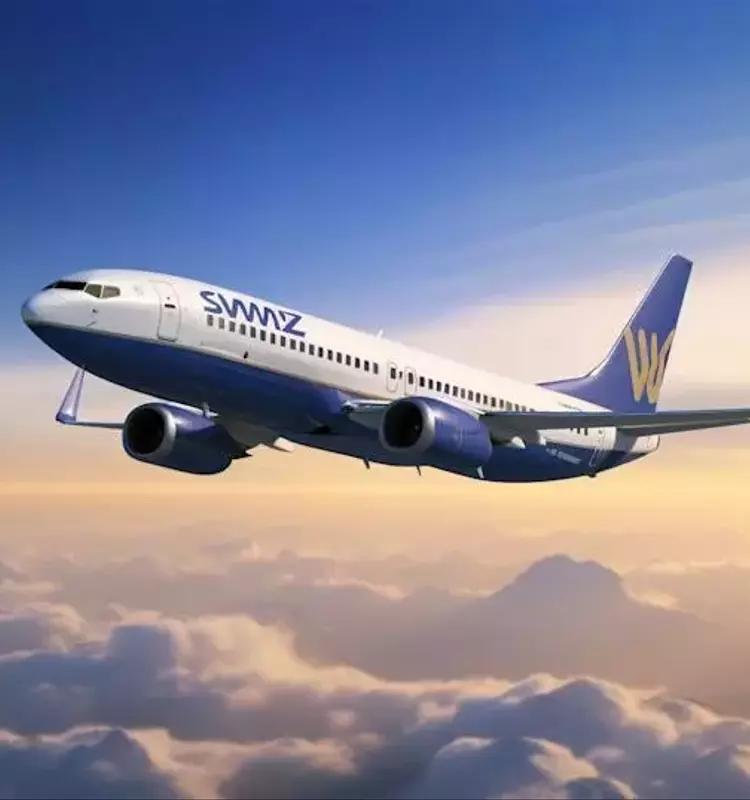
Recent evaluations of Southwest Airlines Co. (LUV) stock reveal a divergence in analyst opinions, reflecting the complex and evolving landscape of the airline industry. While one firm, Redburn, increased its price target, it surprisingly upheld a 'Sell' rating, raising flags about geopolitical risks and their potential impact on fuel expenses. In contrast, another prominent firm, TD Cowen, moved to a 'Buy' rating, projecting an optimistic future for the airline, driven by anticipated demand growth and strategic supply management. These contrasting viewpoints underscore the volatility and multifactorial influences at play within the aviation sector, where macroeconomic trends, operational efficiencies, and external geopolitical events can significantly sway investor sentiment and financial projections.
This article delves into the specifics of these analyst revisions, examining the underlying reasons for their differing conclusions and exploring what these assessments might mean for Southwest Airlines' performance in the near future. It also touches upon the historical context of the airline's operations and its positioning within the broader market of low-cost carriers, providing a comprehensive overview of the factors influencing its stock valuation. By dissecting these expert analyses, we aim to offer clarity on the intricate dynamics shaping Southwest's market trajectory, highlighting both the opportunities and the challenges that lie ahead for the company and its investors.
Analyst Perspectives on Southwest Airlines: A Mixed Outlook
Recent analyses of Southwest Airlines Co. (LUV) stock have presented a divided expert opinion, illustrating the complexities of evaluating the airline sector. Rothschild & Co Redburn, despite raising its price target for LUV to $35 from $27, maintained a 'Sell' rating. This decision was largely influenced by concerns over an acceleration in domestic airline capacity growth and the potential for geopolitical tensions, particularly involving Iran, to trigger significant fuel cost inflation. The firm anticipates that higher fuel prices could lead to downward revisions in earnings forecasts across the airline industry, including for Southwest. This cautious stance by Redburn underscores the vulnerability of airline profitability to external macroeconomic and geopolitical pressures, which can directly impact operational costs and overall financial health. Their assessment highlights a pessimistic view on the industry's ability to absorb increasing costs, suggesting a challenging period ahead for carriers like Southwest.
In contrast, TD Cowen upgraded Southwest Airlines Co. (LUV) from 'Hold' to 'Buy', simultaneously increasing its price target to $66 from $50. This optimistic revision stems from the belief that airline demand will strengthen throughout 2026, while supply growth remains carefully managed. TD Cowen analysts foresee Southwest potentially raising its guidance in March, with improving earnings estimates expected to bolster higher share prices. The firm also suggested that a broader positive shift in the airline industry environment would reduce the likelihood of negative earnings revisions for Southwest. This perspective emphasizes the resilience of demand in the travel sector and the potential for well-managed airlines to capitalize on market recovery. The disparity in these analyst views reflects a broader debate about the future trajectory of the airline industry, with some focusing on inherent risks and others highlighting growth opportunities.
The Trajectory of Southwest Airlines Amidst Market Dynamics
Southwest Airlines Co. (LUV), headquartered in Dallas, Texas, has a rich history tracing back to its incorporation as Air Southwest Co. in 1967. Founded by Herb Kelleher and Rollin King, the airline initially aimed to provide low-cost intrastate flights within Texas. By 1971, it formally adopted the name Southwest Airlines and has since grown to become one of the largest domestic carriers in the United States. Its strategic positioning as a low-cost carrier has allowed it to carve out a significant market share, appealing to budget-conscious travelers. The company's business model, characterized by point-to-point service and a standardized fleet, has historically contributed to its operational efficiency and cost advantages. This model has proven effective in various market conditions, enabling the airline to expand its network and passenger base over decades, solidifying its standing as a key player in the competitive U.S. aviation landscape.
Despite its strong market position and historical successes, Southwest Airlines, like the broader industry, faces dynamic market challenges. The differing analyst ratings from Redburn and TD Cowen reflect these complexities. Redburn's concerns about rising fuel costs due to geopolitical tensions and accelerating capacity growth highlight the sector's sensitivity to external shocks and internal competitive pressures. On the other hand, TD Cowen's bullish outlook suggests that disciplined supply management and a resurgence in demand could propel Southwest's performance. The company's ability to navigate these crosscurrents, adapt its strategies to changing market conditions, and manage operational costs will be crucial for its future profitability and stock performance. As a prominent airline recognized for its affordability and extensive domestic network, Southwest's trajectory will continue to be a significant indicator of the health and direction of the U.S. airline industry, subject to ongoing evaluations of its financial health and market position.
