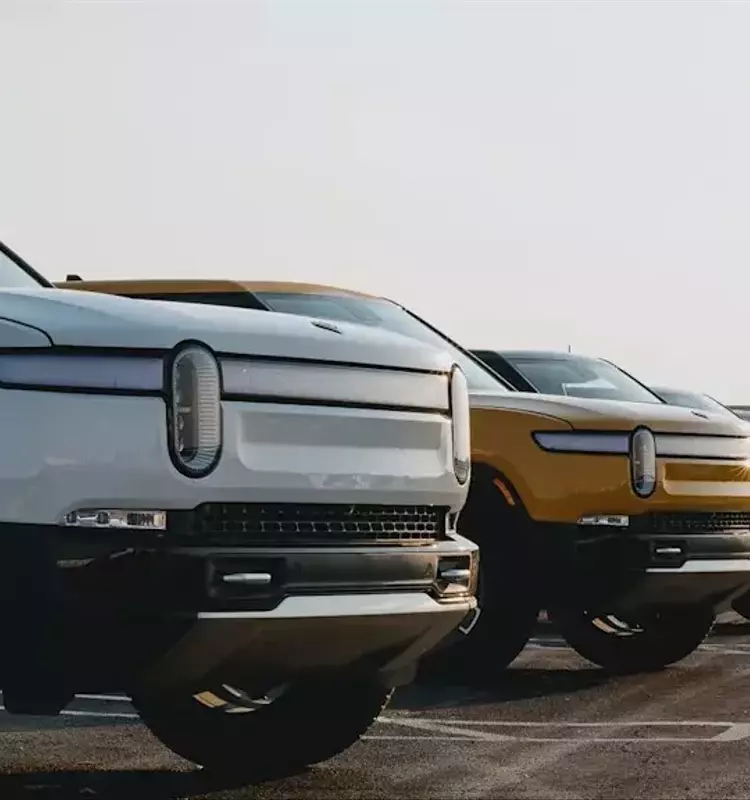
Following its successful initial public offering, SpaceX is poised for substantial investment into artificial intelligence, particularly through its xAI venture. While these efforts primarily aim to advance autonomous driving capabilities for Tesla, another company led by Elon Musk, this strategic direction is expected to create a ripple effect benefiting Rivian. As the robotaxi market expands, other companies lacking in-house vehicle production may increasingly rely on manufacturers like Rivian, cementing its position as a key supplier in this transformative industry.
SpaceX's recent IPO, which generated an impressive $86.7 billion, along with a potential $20 billion bond offering, signals a significant financial influx. A substantial portion of these funds is targeted at AI development. This focus aligns with Elon Musk's broader vision, as seen through Tesla's prior $2 billion investment in xAI, which subsequently merged with SpaceX. The synergy created by these collaborations is intended to accelerate the evolution of self-driving technologies, moving beyond conventional vehicle sales towards a global robotaxi ecosystem, a market projected to reach trillions in value.
The global emergence of robotaxis is anticipated sooner and with greater market value than many current projections suggest. Industry experts, including Ark Invest CEO Cathie Wood, estimate a potential global market worth $8 trillion to $10 trillion for autonomous taxi services. A McKinsey report further supports this, predicting that Level 4 robotaxis will see large-scale commercial application by 2030, primarily in mobility services rather than private ownership. Major technology firms like Alphabet, with its Waymo service valued at $126 billion, and Uber Technologies, with over $10 billion invested in its robotaxi initiatives, are already making significant moves in this space.
However, a critical distinction lies in vehicle manufacturing capabilities. Unlike Tesla, which integrates its self-driving software with its own produced vehicles, many competitors lack this in-house manufacturing capacity. Should SpaceX's AI investments expedite Tesla's autonomous technology, these other robotaxi providers might find themselves at a disadvantage in vehicle production. This scenario has already prompted responses, such as Uber's $1.25 billion investment in Rivian for up to 50,000 vehicles, intended to support Uber's robotaxi fleet. This trend highlights Rivian's growing importance as a potential supplier to the robotaxi sector, even as it focuses on vehicle production rather than launching its own ride-hailing service.
In the foreseeable future, Rivian could become an indispensable partner for companies seeking to establish or expand their robotaxi operations. The increasing demand for purpose-built autonomous vehicles, coupled with the strategic investments by tech giants, positions Rivian favorably. It would not be unexpected to witness a major technology company, possessing ample capital, acquire Rivian outright. Such a move would allow a competitor to achieve the vertical integration that currently gives Tesla a unique advantage, ensuring a stable supply chain and bolstering its presence in the rapidly evolving autonomous transportation landscape.
