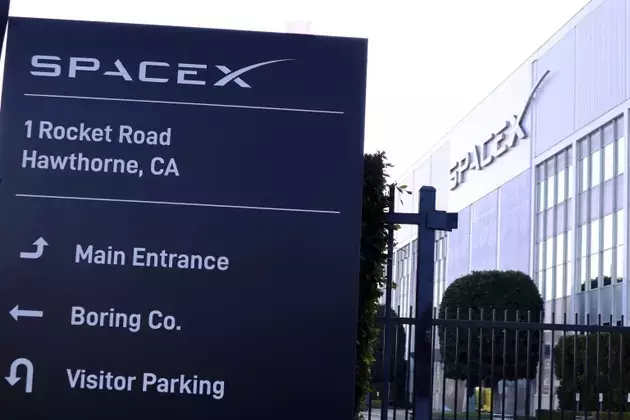
The market has recently seen significant activity, marked by a landmark initial public offering (IPO) from SpaceX and notable shifts within the tech sector. Investors are closely monitoring the performance of major technology firms and their strategic capital expenditures, particularly in artificial intelligence (AI). Additionally, persistent inflation and upcoming Federal Reserve decisions continue to influence market sentiment, prompting a cautious yet opportunistic approach among investors.
A major focus of recent financial discussions centers on the dynamics of market enthusiasm surrounding AI. While direct AI spenders face scrutiny regarding returns on investment, companies providing essential infrastructure and tools, often termed 'pick and shovel' plays, are gaining favor. This strategic shift reflects a broader investor preference for more predictable revenue streams amidst economic uncertainties and evolving technological landscapes. The discussion further touches upon the implications of a new Federal Reserve chair and potential impacts on interest rates and market stability.
SpaceX's Public Market Entry and Shifting Investment Trends
SpaceX's debut on the public market has generated considerable buzz, signaling a robust appetite for high-growth ventures and potentially ushering in a record year for IPOs. The company's valuation, despite current revenue figures, is heavily tied to its future prospects, particularly the expansion of Starlink and its role in government space contracts. This mirrors the trajectory of other innovative companies, where market participants invest in the long-term vision rather than immediate financial metrics. The successful pricing of its IPO, resulting in an 11% gain on opening day, indicates careful planning to balance initial excitement with sustainable growth expectations.
The market's enthusiasm for SpaceX highlights a broader trend: a strong demand for initial public offerings, with other major tech firms like OpenAI and Anthropic also preparing for their market debuts. This surge in IPO activity suggests abundant liquidity and investor confidence, yet it also raises questions about potential market bubbles if valuations become detached from underlying fundamentals. Concurrently, a noticeable shift in investment strategy is occurring, favoring companies that provide foundational support to the AI industry over those directly developing AI applications. This 'pick and shovel' approach is seen as a safer bet in an environment where the return on investment for direct AI spending remains uncertain, reflecting lessons learned from past industry cycles.
Oracle's Earnings and Economic Headwinds
Oracle's latest earnings report, while showing strong cloud revenue growth, faced a negative market reaction due to its guidance on increased capital expenditures (CapEx) for AI initiatives, funded through debt and equity. This decision sparked concerns among investors, echoing similar apprehensions seen with other hyperscalers regarding the efficiency and return on investment of massive AI spending. The company's approach to financing these expenditures suggests a cautious stance from the market, which is scrutinizing how effectively these large-scale investments will translate into future profitability. The market's response underscores a general skepticism about the immediate financial benefits of extensive AI infrastructure development, prompting a re-evaluation of growth strategies within the tech sector.
Beyond corporate earnings, the broader economic landscape is characterized by persistent inflation and a cautious Federal Reserve. Despite some positive indicators, inflation remains a significant concern, with market participants closely monitoring geopolitical events, particularly the Iran conflict, for its potential impact on energy prices and overall economic stability. The upcoming Federal Reserve meeting, and the anticipated direction from a new chair, are critical factors influencing market sentiment. There is considerable uncertainty regarding future interest rate policies, with a slight lean towards higher rates by year-end. This wait-and-see approach, combined with lower trading volumes during summer months, creates an environment ripe for exaggerated market movements, as investors seek clarity on both monetary policy and global economic stability.
