Special Economic Zones: Driving Global Economic Growth
Finance

Special Economic Zones: Driving Global Economic Growth

authorBy Mariana Mazzucato
DateMay 13, 2026
Read time2 min

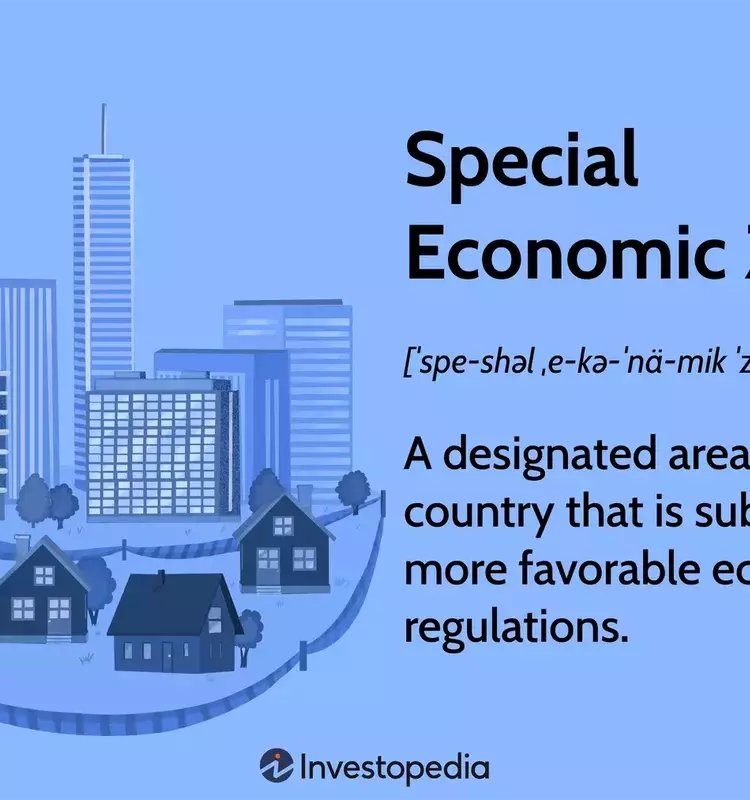
Special Economic Zones (SEZs) are strategically designated areas within a country designed to foster economic growth through unique regulatory frameworks. These zones aim to attract significant foreign direct investment (FDI) by offering various incentives, such as tax breaks and reduced tariffs, creating an appealing environment for businesses. This influx of cross-border investment unlocks both regional and global economic potential.

SEZs are typically established to accelerate economic development in specific geographical regions. They achieve this by leveraging tax incentives to draw foreign capital and promote technological advancements. While SEZs can significantly boost a country's exports and facilitate international trade, they sometimes face challenges such as protectionist measures and excessive bureaucracy, which can hinder their efficiency. Different types of SEZs exist, including free-trade zones, export processing zones, industrial parks, and specialized zones, each offering distinct benefits tailored to specific economic activities.

The concept of SEZs originated in the late 1950s in developed nations, with the Shannon Airport in Ireland being one of the earliest examples. By 2022, there were over 7,000 SEZs globally, predominantly in developing and transitional economies that utilize them for industrialization. China stands out as the most successful case study, having used SEZs since 1979 to attract foreign capital and liberalize its economy. Cities like Shenzhen and Xiamen, initially designated as SEZs, have driven significant innovation and development, prompting further expansion of such zones across the country. This strategic approach has been instrumental in China's economic reforms and its transition into a more robust and liberalized state.

SEZs are more than just economic tools; they are catalysts for national progress and international cooperation. By attracting investment and promoting innovation, they contribute to a more interconnected and prosperous global economy. The success stories of these zones demonstrate that strategic economic planning can lead to remarkable transformations, offering hope and opportunity for developing nations worldwide. Embracing such initiatives can pave the way for sustainable development, job creation, and enhanced living standards, ultimately fostering a better future for all.

More Articles
Finance
Reevaluating JEPI: A Critical Look at an 8% Yield
This article critically reassesses the JPMorgan Equity Premium Income ETF (JEPI), which the author previously rated as a "strong buy." Despite its attractive 8.46% yield, new observations reveal that JEPI underperformed during market downturns, mirroring significant S&P 500 losses even with dividends. The author suggests that JEPI's high yield is largely a return of capital, questioning its sustainability as genuine income and proposing that traditional diversification or self-managed covered calls might offer superior risk-adjusted returns.
By David RubensteinMay 13, 2026
Finance
Understanding the DAGMAR Model in Marketing
The DAGMAR model is a fundamental marketing framework used by businesses to define advertising campaign objectives and measure their success. It guides consumers through a four-stage process: awareness, comprehension, conviction, and action (ACCA). This model emphasizes setting measurable goals, identifying specific target markets, and establishing clear benchmarks and timelines to evaluate campaign effectiveness.
By Suze OrmanMay 13, 2026
Finance
Uncovering Hidden Investment Gems: The Undercovered Dozen's Latest Picks
The Undercovered Dozen series, curated by Seeking Alpha editors, shines a weekly spotlight on 12 lesser-known stocks, offering fresh investment ideas. This week's selection, covering articles from May 1 to May 7, focuses on companies with limited analyst coverage but promising prospects. One highlighted stock, STRL, shows strong medium-term potential due to structural demand and recent analyst upgrades following consistent positive performance.
By Morgan HouselMay 13, 2026
Finance
Precision Portfolio Building with Fractional Shares in the S&P 500
Fractional share investing offers a strategic advantage for precise portfolio allocation, particularly within the S&P 500. This method is highly beneficial for diverse investor groups, including retirees and those employing quantitative strategies, as it allows for exact dollar investments, mitigating challenges posed by high-priced stocks. While enhancing portfolio customization for yield and growth, it's essential to acknowledge its limitations, such as restricted stock selection and low liquidity for active traders.
By Lisa JingMay 13, 2026
Finance
Snowflake's AI Data Cloud: Resilience and Growth Potential
Snowflake is demonstrating a strong recovery after a significant market correction, propelled by increasing enterprise AI adoption. Its AI Data Cloud, strategic alliances, and high customer retention rates are driving substantial product revenue growth. Despite a high valuation, the company's aggressive growth trajectory and healthy free cash flow margins present a compelling investment case, though caution is advised for value-oriented investors awaiting future earnings reports.
By Michele FerreroMay 13, 2026