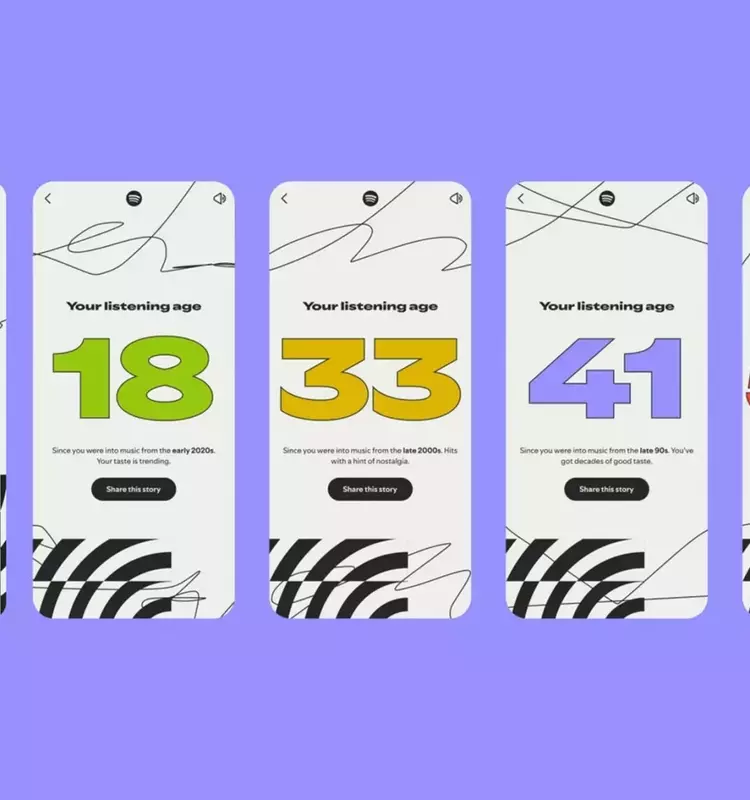
Spotify's newest Wrapped feature, which calculates a user's 'Listening Age' based on their musical preferences, has rapidly become a major talking point across social media platforms like TikTok and Instagram. This innovative addition deviates from the typical annual summary of top artists and genres, instead offering a personalized age that reflects the era of music a user predominantly enjoys.
The methodology behind this 'Listening Age' stems from the psychological phenomenon known as the 'reminiscence bump,' wherein individuals tend to favor music from their formative years. Spotify's team, comprising creatives, editors, and data scientists, meticulously analyzed the release dates of songs streamed by users throughout the year. They pinpointed the five-year period that best represents a user's concentrated listening, then extrapolated an age, assuming the user was in their late teens or early adulthood during that period. This nuanced approach has led to a wide range of 'listening ages' among users, from teenagers with the musical tastes of septuagenarians to older adults who stream like Gen Z.
The introduction of the 'Listening Age' has not only dominated online conversations but has also seen celebrities join in on the fun, showcasing their own unexpected results. This engaging feature has proven to be a significant success for Spotify, driving record engagement with over 200 million users and 500 million shares in its initial 24 hours. This success underscores how deeply music intertwines with personal identity and how a novel approach to data presentation can captivate a global audience.
This feature highlights the universal appeal of music and its profound connection to personal identity and nostalgia. It demonstrates that our musical tastes, regardless of our chronological age, are deeply intertwined with our life experiences, reminding us that shared cultural experiences like music can bridge generational gaps and foster unexpected connections.