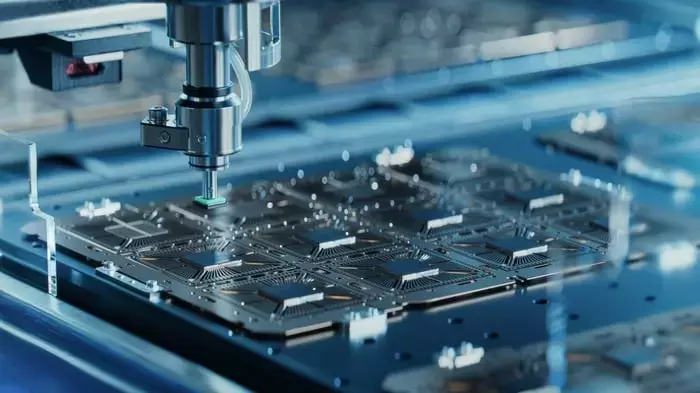
Veteran investor Stanley Druckenmiller's Duquesne Family Office recently shifted its investment focus, moving away from data analytics giant Palantir Technologies and significantly increasing its position in Taiwan Semiconductor Manufacturing (TSM). This calculated change in portfolio allocation highlights a growing recognition of TSM's crucial role as the manufacturing backbone for the rapidly expanding artificial intelligence sector, a role that appears to offer more sustainable long-term value compared to Palantir's lofty market valuation. The astute investor's strategy underscores a careful evaluation of market dynamics and future growth catalysts within the technology landscape.
The Strategic Exit from Palantir
Stanley Druckenmiller's Duquesne Family Office has notably divested its interest in Palantir Technologies, a move that suggests a re-evaluation of the data analytics company's market position and future prospects. This decision, following a period of substantial growth for Palantir driven by its AI Platform, points to concerns over its elevated valuation metrics. Despite Palantir's integral role in AI and its strong integration across various industries, its price-to-sales ratio, significantly higher than industry averages and even historical tech bubbles, appears to have prompted a cautious retreat from the stock by the experienced investor.
Palantir has indeed been a prominent player in the AI revolution, with its platforms like Apollo, Gotham, and Foundry experiencing considerable demand from corporations and government entities. However, the stock's current valuation, characterized by an exceptionally high price-to-sales ratio of 126, raises questions about its sustainability. Such a valuation surpasses typical software industry benchmarks and even the speculative peaks of the dot-com era, indicating potential overextension. Druckenmiller's action to reduce exposure to Palantir, therefore, signifies a prudent approach to managing investment risk, aligning with his historical pattern of strategic adjustments based on valuation and market sentiment, even for companies with strong underlying growth narratives.
Embracing the Foundry Powerhouse: TSMC's AI Advantage
In contrast to his divestment from Palantir, Stanley Druckenmiller has consistently built up a position in Taiwan Semiconductor Manufacturing (TSM) over the past year, signaling a strong belief in the foundry specialist's long-term potential within the AI landscape. This strategic pivot underscores TSM's indispensable role as the primary fabricator of advanced semiconductors, which are essential components for AI leaders like Nvidia and Advanced Micro Devices. Druckenmiller's investment highlights TSM's unique position at the core of AI infrastructure development, likening it to "selling the shovels during the AI gold rush" due to its foundational contribution to the industry.
TSMC's prominence extends beyond current generative AI applications, as its advanced manufacturing capabilities are critical for emerging technologies such as autonomous systems, robotics, and quantum computing. As these sectors mature and expand, TSM's unrivaled foundry services are expected to remain a vital enabler of innovation and growth. Despite a seemingly high forward price-to-earnings multiple, Druckenmiller's sustained investment in TSM reflects a deeper understanding of its strategic importance and its robust secular tailwinds. This perspective suggests that TSM, while perhaps less 'flashy' than some of its AI counterparts, offers a compelling investment opportunity for those looking to capitalize on the foundational elements driving the ongoing evolution of artificial intelligence, despite potential geopolitical considerations that some investors might find concerning.