The Strategic Use and Risks of Loss Leader Pricing
Finance

The Strategic Use and Risks of Loss Leader Pricing

authorBy David Rubenstein
DateApr 28, 2026
Read time2 min

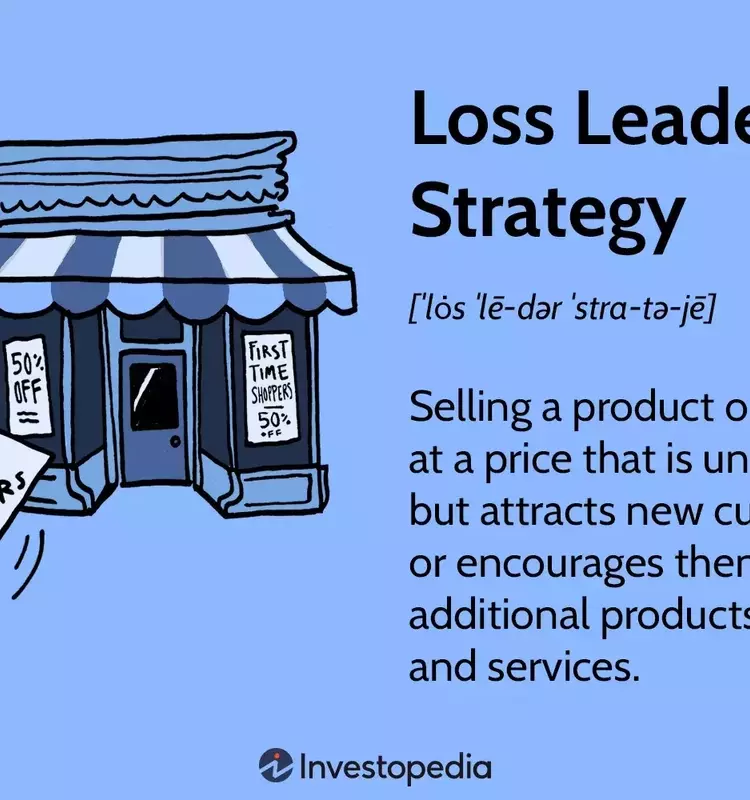
A loss leader strategy is a pricing tactic where a product is deliberately sold at a price below its cost. This method aims to draw in new customers and stimulate sales of other, more profitable goods or services offered by the business. This approach is widely adopted across various retail environments, from traditional physical stores to e-commerce platforms, serving as a powerful tool for market penetration and establishing a customer base.

This strategy operates on the principle of generating a customer influx through attractive low-priced items, with the hope that these customers will then proceed to purchase other products at regular or higher margins. Famous examples include razor companies offering their handles at minimal cost, knowing the recurring purchase of blades will ensure profitability, and video game console manufacturers selling hardware below cost to drive sales of high-margin games and subscription services. While effective for capturing market share and fostering brand loyalty, this approach is not without its pitfalls. Businesses risk customers only purchasing the loss leader items without making additional, profitable purchases, a behavior known as "cherry-picking." Furthermore, such aggressive pricing can be perceived as predatory, putting immense pressure on smaller competitors and leading to demands for lower prices from suppliers.

Businesses considering a loss leader strategy must carefully weigh its advantages against potential challenges. While it can be a potent tool for customer acquisition and market entry, maintaining profitability requires diligent management to ensure that the sales of complementary, higher-margin products compensate for initial losses. This balance is crucial for the long-term success and sustainability of the strategy.

Adopting a loss leader strategy, when executed thoughtfully, can be a testament to strategic foresight and adaptability in a competitive marketplace. It embodies the entrepreneurial spirit of taking calculated risks for greater rewards, fostering customer relationships, and continuously innovating business models to thrive and contribute positively to the economic landscape.

More Articles
Finance
General Motors Exceeds Q1 Earnings, Boosts Full-Year Outlook
General Motors (GM) announced first-quarter results that surpassed analysts' expectations, coupled with an increased full-year profit projection. This positive revision is attributed to a significant reduction in tariff-related costs following a Supreme Court ruling. Despite a slight dip in revenue compared to the previous year, the company's adjusted earnings per share and EBIT saw substantial growth, highlighting robust operational performance and strategic cost management.
By Nouriel RoubiniApr 28, 2026
Finance
Facultative Reinsurance: Tailored Risk Management for Insurers
Facultative reinsurance offers primary insurers a flexible way to manage specific risks by negotiating individual coverage. This differs from treaty reinsurance, which covers broader risk categories automatically. While more costly, facultative reinsurance enables insurers to underwrite unique or high-value policies, strengthening their financial stability and expanding their capacity.
By Suze OrmanApr 28, 2026
Finance
Retirement Readiness: Income, Net Worth, and the Path to Financial Security for Americans Aged 55-64
A recent Federal Reserve survey reveals that Americans aged 55-64 boast a median household income of $82,150, positioning them near peak earning years. However, true retirement readiness transcends income, encompassing total savings, asset accumulation, debt management, and the potential for continued earnings. This demographic's financial landscape is significantly shaped by factors like homeownership and educational attainment, highlighting divergent paths to wealth accumulation and retirement preparedness.
By Mariana MazzucatoApr 28, 2026
Finance
Gold Prices Decline Amid Inflationary Pressures and Geopolitical Dynamics
Gold prices are currently experiencing a downturn, primarily driven by rising oil prices, which are exacerbating inflation concerns, and uncertainty surrounding a potential agreement between the US and Iran. Technical analysis reveals a bearish trend as gold has fallen below key moving averages. Traders are closely watching the $4601 support level, with resistance for any rebound anticipated between $4650 and $4700.
By Robert KiyosakiApr 28, 2026
Finance
Mobile Marketing: Revolutionizing Business Reach
Mobile marketing leverages digital strategies through mobile devices to engage audiences and deliver tailored content based on user location and behavior. It offers significant advantages over traditional marketing methods due to its cost-effectiveness, real-time reach, and accessibility. However, marketers must navigate privacy concerns and ensure campaigns are well-planned and engaging from the start. This approach not only engages users through their constant mobile presence but also offers cost-effective alternatives to traditional media advertising.
By Mariana MazzucatoApr 28, 2026