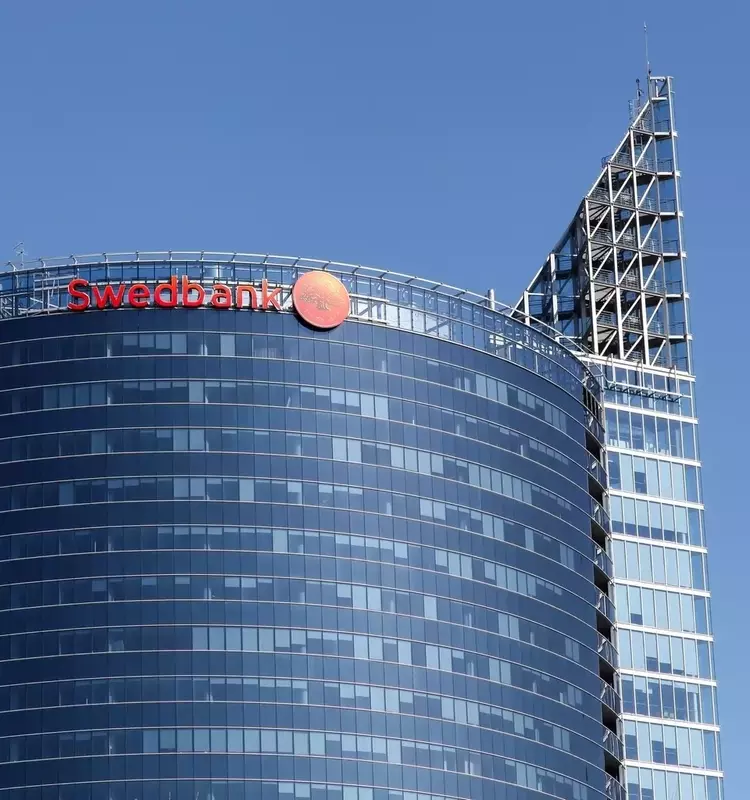
Swedbank's current market valuation suggests a notable overpricing, especially when juxtaposed against its anticipated financial trajectory and inherent market risks. Despite consistent strong returns on equity and attractive dividend distributions, the institution's stock price reflects an optimism not supported by its fundamental outlook. The bank's significant involvement in the real estate sector, a segment prone to cyclical fluctuations and economic downturns, adds a layer of vulnerability. This combination of factors points to a cautious investment stance, urging stakeholders to reconsider their positions until more favorable conditions arise.
Furthermore, the absence of compelling growth prospects in the near future exacerbates the issue of overvaluation. With a projected negative earnings per share growth for 2026, the premium at which Swedbank shares are trading appears unsustainable. This stagnant growth, coupled with the heightened risk from real estate exposure, diminishes the stock's appeal, advocating for a strategic withdrawal or deferment of investment. A more judicious entry point would be when the market adjusts its expectations, aligning the stock's valuation with its intrinsic value and future earnings potential, ideally at a lower price-to-earnings multiple.
Swedbank's Elevated Valuation and Future Growth Challenges
Swedbank currently presents a scenario of overvaluation, reflected in its 12x price-to-earnings (P/E) ratio, which appears disproportionate given its projected negative earnings growth for 2026. While the bank has historically demonstrated a robust return on equity and a commitment to shareholder returns through dividends, these positive aspects are overshadowed by a static or declining earnings outlook. The premium valuation does not account for the challenges in expanding its earnings base, raising questions about the sustainability of its current stock price. Investors holding Swedbank shares are advised to maintain a 'Hold' position, with a target price of 240 SEK, due to the existing overvaluation and an elevated risk profile, particularly when considering the broader economic climate.
The bank's valuation is further complicated by its significant concentration of loans within the real estate market. This sector is susceptible to economic shifts and interest rate fluctuations, which could impact the quality of Swedbank's assets and its profitability. The lack of diversification in its loan portfolio amplifies the systemic risks the bank faces. Despite meeting stringent quality and safety standards, the stock's current price does not offer an attractive entry point for new investments. A strategic rotation out of Swedbank is recommended, with a potential re-entry considered only when the P/E multiple falls below 10x, indicating a more reasonable valuation relative to its risk and growth prospects. This cautious approach is crucial for investors seeking value and mitigating exposure to overvalued assets with limited upside potential.
Systemic Risks and Strategic Investor Considerations for Swedbank
Swedbank's strong operational performance, evidenced by its robust return on equity and consistent dividend payouts, positions it as a bank meeting essential quality and safety benchmarks. However, the investment landscape for Swedbank is significantly shaped by systemic risks, primarily its substantial exposure to the real estate market. This overconcentration in property loans introduces a heightened level of vulnerability to economic downturns or sector-specific challenges, necessitating a discount in its valuation. The market's current premium pricing does not adequately reflect these inherent risks, making the stock less attractive from a valuation perspective, despite its fundamental strengths. Investors should weigh the bank's quality against its risk profile and current market pricing.
Given the prevailing overvaluation and the looming negative earnings per share growth projected for 2026, a strategic recalibration of investment in Swedbank is advisable. For investors prioritizing value and seeking optimal entry points, a rotation out of the stock at its current levels is a prudent move. The recommendation is to await a more opportune moment, specifically when the stock trades at a price-to-earnings ratio below 10x. Such a decline would signify a more appealing valuation, aligning better with the bank's growth challenges and systemic risks. This approach allows investors to preserve capital and redeploy it into assets with clearer growth trajectories or more favorable risk-adjusted returns, optimizing their portfolio performance.
