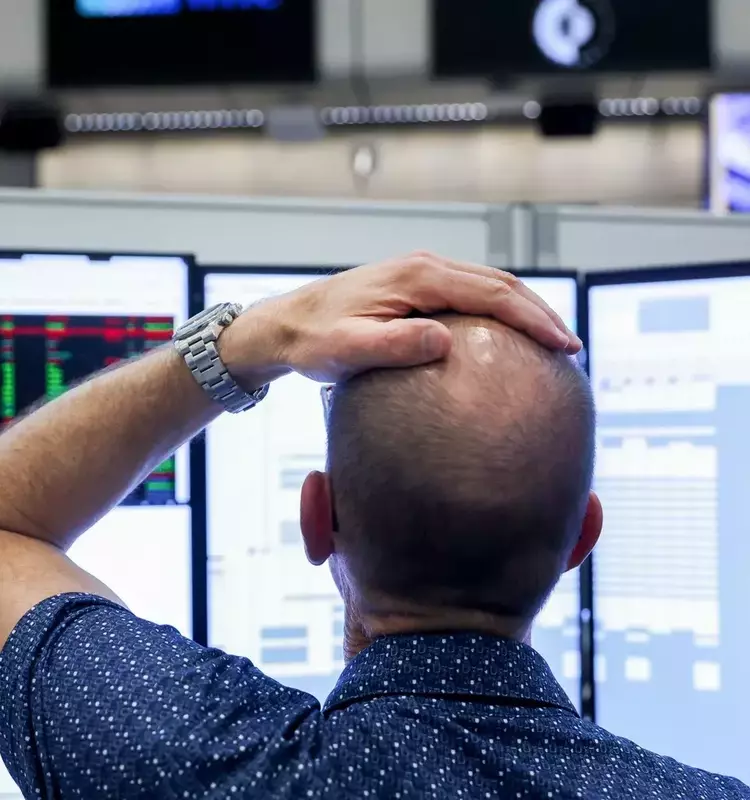
On Wednesday, equity markets faced a downturn, primarily driven by a significant decline in the technology sector. This market weakness was largely a preemptive response to the eagerly awaited May Consumer Price Index (CPI) report, a key indicator of inflation. Investors demonstrated caution, leading to a broad-based sell-off in futures markets.
Market Snapshot: Futures Decline, Tech Sector Leads Plunge, and Key Economic Data Awaited
As trading commenced on Wednesday, June 10, 2026, major U.S. stock index futures displayed a notable decline. The Nasdaq 100 futures, representing the technology-heavy sector, experienced a significant drop of 1.3%. Simultaneously, the S&P 500 futures, tracking a broader segment of the market, fell by 0.8%, and the Dow Jones Industrial Average futures, which monitor large-cap industrial stocks, decreased by 0.7%. This widespread negative sentiment was predominantly fueled by the impending release of the May Consumer Price Index (CPI) data at 8:30 a.m. ET. Market analysts and forecasters surveyed by Dow Jones Newswires and The Wall Street Journal projected the CPI to indicate a 4.2% year-over-year increase, potentially marking the highest annual inflation rate in three years. In response to these inflation concerns, the 10-year Treasury yield, a benchmark for various consumer lending rates, edged up to approximately 4.53% from its previous close of 4.52% on Tuesday. The preceding trading day saw a mixed performance, with the Nasdaq Composite and S&P 500 closing lower due to a cooling rally in semiconductor stocks, while the Dow Jones Industrial Average managed to end the day with marginal gains. Individual company performances highlighted the tech sector's vulnerability, with Marvell Technology (MRVL) shares tumbling nearly 8% on Tuesday and extending their losses by another 4% in premarket trading. The iShares Semiconductor ETF, a gauge of the semiconductor industry, also reflected this weakness, dropping over 3% in early Wednesday trading after a nearly 2% decline on Tuesday. Furthermore, all "Magnificent Seven" tech giants, with the exception of Alphabet (GOOGL), showed declines before the market opened, signaling a broader tech slump. Nvidia (NVDA) emerged as the steepest decliner in premarket trading, shedding about 2% of its value. Oracle (ORCL) shares fell by 2.5% in anticipation of its earnings report, scheduled for release after market close. Conversely, Cracker Barrel Old Country Store (CBRL) stock saw a nearly 8% surge following an unexpected profit report and an optimistic full-year outlook. In other markets, oil prices remained volatile, with West Texas Intermediate (WTI) futures largely stable at $88.25 per barrel and Brent crude contracts slightly down at $91.40, amidst geopolitical tensions following U.S. "self-defense strikes" against Iran. Bitcoin experienced a minor dip, trading around $61,300, down from its overnight peak of $62,200. The U.S. dollar index showed minimal change at 99.88, while gold futures saw a 2.3% decline, settling at $4,190 an ounce.
The market's reaction to the anticipated inflation data underscores the delicate balance between economic growth and price stability. The pronounced decline in technology stocks, often sensitive to interest rate fluctuations, suggests that investors are bracing for potential monetary policy shifts to curb rising inflation. This event highlights the critical role of economic indicators in shaping investor sentiment and market direction, emphasizing the need for a comprehensive understanding of macroeconomic trends to navigate volatile financial landscapes.
