Unwrapping the Mystery: Navigating Teen Birthday Present Practices
The Shifting Sands of Parental Involvement in Teenage Social Life
As children mature into their teenage years, the landscape of parenting undergoes a significant transformation. While fundamental support, such as transportation, academic assistance, and clothing provisions, remains constant, teenagers progressively cultivate an independent social sphere. This autonomy extends to their peer interactions, especially when it comes to social gatherings like birthday parties. The intensity of parental supervision at such events often diminishes, transitioning from meticulous planning and guest inquiries to merely facilitating attendance and coordinating pick-ups.
The Perennial Puzzle of Present Protocol
The act of giving birthday presents is a subject fraught with diverse opinions and unwritten rules across all age groups. Debates frequently arise regarding the appropriateness of opening gifts during a party, the necessity of giving gifts at all, or the desire to avoid accumulating unnecessary clutter. These discussions highlight the varied perspectives on gift-giving, ranging from obligatory acts to expressions of sentiment. However, when these customs intersect with the burgeoning independence of adolescence, the complexities amplify.
A Mother's Observation: Contrasting Birthday Experiences
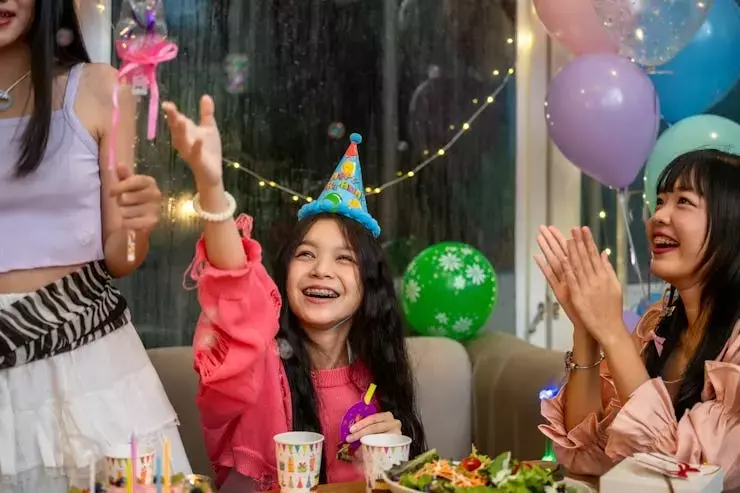
A recent online discussion initiated by a concerned parent on Reddit shed light on this very conundrum. She recounted the vastly different birthday experiences of her two children: her 11-year-old son received a multitude of presents from his party guests, whereas her 14-year-old daughter, hosting a party for her closest friends, received no purchased gifts, only a couple of handmade, somewhat impersonal items. This disparity prompted the mother to seek clarification on contemporary teenage birthday etiquette, emphasizing her curiosity about social distinctions rather than a desire for material gain.
Exploring the Nuances: Age, Gender, and Social Expectations
The mother's account sparked a lively debate among fellow parents, leading to various theories about the observed differences. Some suggested that age plays a crucial role, with younger children's parties still heavily influenced by parental involvement in gift selection, while older teens often manage their social engagements more independently. The question of whether gender might be a factor also arose, though no definitive conclusion was reached. A prevailing sentiment among online commenters was that for teenagers, especially close friends, "presence is the present" – the value lies more in shared time and celebration than in material offerings.
Deciphering Teenage Gift-Giving: Beyond Material Value
Many participants in the online discussion concurred that the shift in gift-giving patterns aligns with the increasing autonomy of teenagers. Parents of younger children typically take the lead in acquiring birthday gifts, whereas older teens are often expected to handle this responsibility themselves. Consequently, the nature of gifts can change, often favoring small tokens, handmade crafts like friendship bracelets, or simply candy. This evolution suggests that the symbolic gesture of friendship and celebration often outweighs the monetary value of a gift. The discussion also touched upon whether parents of party guests were even aware it was a birthday celebration, or if it was perceived more as a casual get-together.
The Enduring Value of Friendship and Presence
Ultimately, the consensus leaned towards acknowledging the evolving nature of social interactions and gift-giving as children transition into adolescence. While parental guidance and financial support for gifts might still be offered, the emphasis increasingly shifts to the quality of relationships and the joy of shared experiences. In the featured story, the daughter's contentment with her party, despite the lack of traditional presents, reinforced the idea that genuine connection with friends is often the most cherished gift. This highlights a broader understanding that for many teenagers, the celebration itself, surrounded by their closest companions, holds the greatest significance, regardless of material exchanges.
