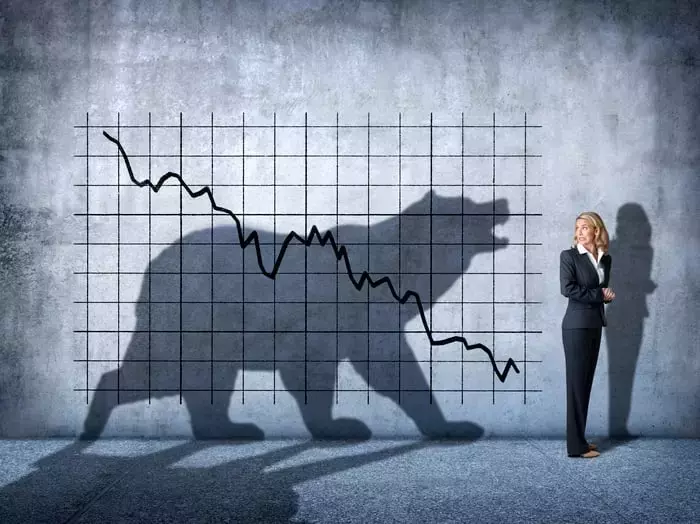
The Trade Desk, a prominent advertising technology company, recently saw its stock value plummet, marking its most significant decline to date. This downturn is primarily driven by a noticeable deceleration in revenue growth, sparking considerable apprehension among investors. Despite its innovative stance in the advertising ecosystem, the firm's recent financial disclosures and future projections suggest a challenging period ahead, prompting a reassessment of its market position and investment viability. The company's slowing trajectory comes at a time when the broader digital advertising market remains dynamic, with some competitors demonstrating more robust expansion.
Investors are scrutinizing The Trade Desk's current valuation, particularly its price-to-sales ratio, which remains elevated compared to market averages. While the company boasts impressive gross margins, this has not translated into a substantial expansion of its net income margins. This disconnect between strong operational efficiency and bottom-line profitability, combined with a significant slowdown in its core business growth, raises questions about the stock's attractiveness. The prevailing sentiment indicates that the stock may not yet represent a compelling 'buy the dip' opportunity, as its previous premium valuation relied heavily on aggressive growth expectations that are now being recalibrated.
Revenue Growth Challenges and Investor Scrutiny
The Trade Desk witnessed a substantial 37.1% decline in its stock value during August, exacerbating its year-to-date losses to 55%. This dramatic fall reflects growing investor anxiety regarding the company's decelerating revenue growth. The ad tech innovator reported a 19% year-over-year revenue increase for the second quarter, reaching $694 million, with a net income of $90 million. However, this growth rate pales in comparison to the 26% reported in the same period last year. Furthermore, the company's third-quarter guidance projects an even slower growth of 14%, raising red flags for a stock that has historically been celebrated for its rapid expansion and premium valuation.
The core of investor concern lies in the unexpected slowdown of a company previously known for its swift market penetration and disruption of traditional advertising models. The Trade Desk's business model focuses on decentralized targeted advertising across various internet platforms, positioning itself as an alternative to large internet giants. However, its recent performance, notably trailing Meta Platforms' 21% ad revenue growth, suggests a shift in market dynamics or competitive pressures. This deceleration has led to a re-evaluation of its stock, which previously commanded a lofty price-to-sales ratio of 20. The market is now grappling with whether The Trade Desk can regain its growth momentum or if its high valuation is no longer justified by its current trajectory.
Valuation and Future Prospects
Even after the considerable August decline, The Trade Desk's stock maintains a price-to-sales (P/S) ratio of 10, a figure significantly higher than the S&P 500's average of 3.2. This elevated multiple poses a challenge, as it traditionally suggests expectations of robust growth or exceptionally high net income margins. While The Trade Desk boasts an impressive gross margin of approximately 80% over the past year, this efficiency has not translated into a meaningful expansion of its net income margin, indicating that high operational efficiency doesn't automatically guarantee substantial bottom-line profitability at scale.
The current valuation, coupled with the recent deceleration in revenue growth, implies that the market's previous high expectations for the company might have been overly optimistic. For The Trade Desk to justify its current P/S ratio, it would need to either accelerate its growth significantly or demonstrate a substantial improvement in its net income margins, neither of which appears imminent based on recent performance and future guidance. Consequently, analysts and investors are now advising caution, suggesting that despite the significant stock price drop, it may not yet be the opportune moment to invest, as the stock's fundamental trajectory needs to align more closely with its valuation.