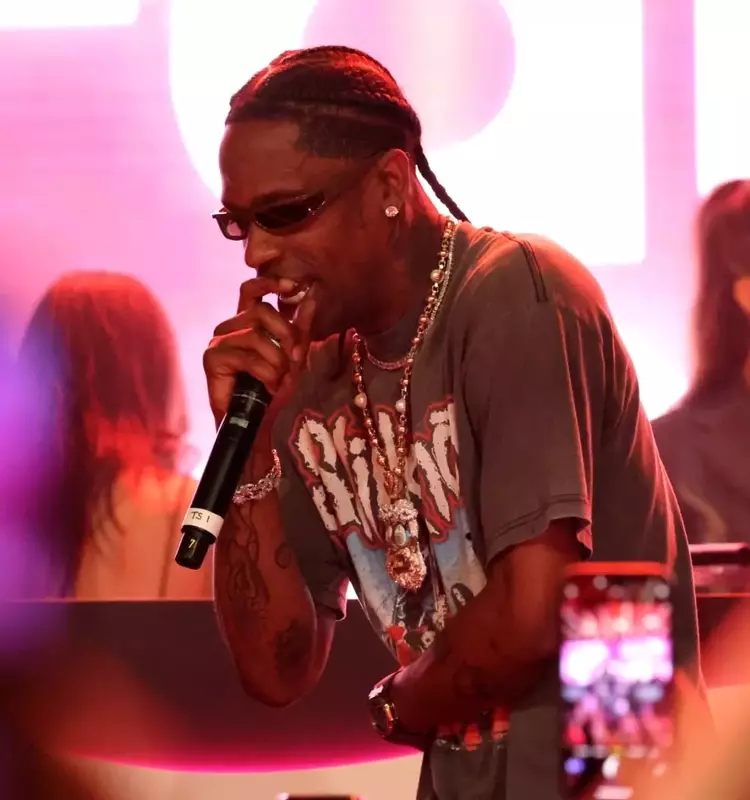
In a significant legal development, musical artists Travis Scott, SZA, and Future have formally requested the dismissal of a copyright infringement claim concerning their collaborative track, 'Telekinesis.' Their defense pivots on the assertion that Kanye West, who contributed to the initial creation of the song at the heart of the dispute, had already granted the necessary authorization for its use. This argument directly challenges the plaintiff's claim of exclusive ownership, suggesting a foundational flaw in the initial copyright registration. The legal team representing Scott, SZA, and Future contends that any use of the musical elements was properly sanctioned, raising questions about the legitimacy of the ongoing litigation and the original artist's exclusive rights.
This case underscores the complexities of intellectual property in the music industry, particularly when multiple collaborators are involved. The defendants' motion highlights the critical role of permissions and co-authorship in defining ownership. Furthermore, their legal strategy scrutinizes the accuracy and validity of the plaintiff's copyright filings, aiming to demonstrate that the original registration contained material misrepresentations. The outcome of this motion could have broader implications for how musical compositions are legally protected and how collaborative efforts are recognized under copyright law, emphasizing the importance of clear agreements and accurate registrations to prevent future disputes.
The Heart of the Copyright Controversy
The core of this legal contention revolves around the song 'Telekinesis' by Travis Scott, SZA, and Future, which gospel artist Victory Boyd alleges infringes upon her 2019 composition, 'Like the Way It Sounds.' Boyd asserts that elements of her original work were unlawfully copied and used without her consent in the widely released track. However, the defending artists' legal counsel has moved to dismiss the lawsuit, presenting a counter-argument that fundamentally challenges the plaintiff's claim to exclusive rights. They maintain that the foundational components of 'Like the Way It Sounds'—specifically, its chords, beat, and melody—were actually developed by Kanye West, who subsequently authorized their use. This raises a crucial question about the true ownership and the legitimate chain of permissions, suggesting that the defendants were operating under the valid consent of a co-creator.
The motion to dismiss further scrutinizes the validity of Boyd's copyright registration, arguing that her initial filing contained significant inaccuracies. It is contended that Boyd misrepresented herself as the sole author and copyright holder, despite West's demonstrable contributions to the musical composition. This alleged misstatement, if proven, could render her copyright registration invalid, thereby undermining the very basis of her infringement claim. The legal team for Scott, SZA, and Future asserts that if West was indeed a joint author with the authority to grant permission, then their use of the material was entirely legitimate. This intricate legal battle not only examines the specifics of musical creation and collaboration but also delves into the technicalities of copyright law, particularly concerning the requirements for accurate and complete registration, and the implications of co-authorship on licensing and usage rights.
Challenging Copyright Validity and Authorship
Central to the defense's strategy is their direct challenge to the validity of Victory Boyd's copyright registration for 'Like the Way It Sounds.' The motion to dismiss argues that Boyd’s initial 2023 copyright filing contained "knowing misstatements" by designating herself as the "sole author and copyright owner," overlooking Kanye West's creative input in developing the song’s fundamental elements such as the chords, beat, and melody. This alleged misrepresentation is presented as a critical flaw that, according to the defendants, should invalidate the copyright registration itself. Such a legal challenge implies that proper attribution and full disclosure of all contributors are essential for a copyright to be legally sound and enforceable, especially in collaborative musical endeavors where multiple artists contribute to the composition.
Adding another layer to their argument, the defendants contend that Boyd's subsequent attempt to amend her registration in June—by trying to register only the lyrics as a separate work—further exposes the weaknesses in her original claim. They argue that lyrics cannot be copyrighted as a standalone work when they were created as an integral part of an "inseparable musical composition" in collaboration with another artist, namely Kanye West. This facet of the defense seeks to establish that Boyd’s efforts to salvage her claim by segmenting the work are legally unsound, as the lyrics and music were fundamentally conjoined in their creation. Therefore, the motion asserts that the combined inaccuracies in the initial registration and the subsequent attempt to re-register demonstrate a lack of clear and legitimate ownership, ultimately warranting the dismissal of the copyright infringement lawsuit against Travis Scott, SZA, and Future.