Global oil markets are experiencing a complex interplay of geopolitical tensions and strategic responses from major energy players. The persistent crisis in the Strait of Hormuz has prompted significant production adjustments in the Middle East, while the perceived influence of former US President Donald Trump has introduced a layer of cautious optimism among traders. This dynamic environment is shaping oil prices and influencing the long-term strategies of national oil companies and international energy firms.
Oil Market Navigates Hormuz Crisis and Political Influence
As of Tuesday, March 10, 2026, the global oil landscape is characterized by a mix of apprehension and hope. The critical Strait of Hormuz has been under blockade for two weeks, triggering a domino effect of production cuts across the Middle East. Saudi Arabia, Iraq, Kuwait, and the United Arab Emirates have collectively reduced their output by approximately 6.7 million barrels per day. Iraq stands out with a substantial cut of 3 million barrels daily, reflecting the region's limited crude storage capacity, which accounts for only 5% of the global total despite contributing one-third of the world's oil flow.
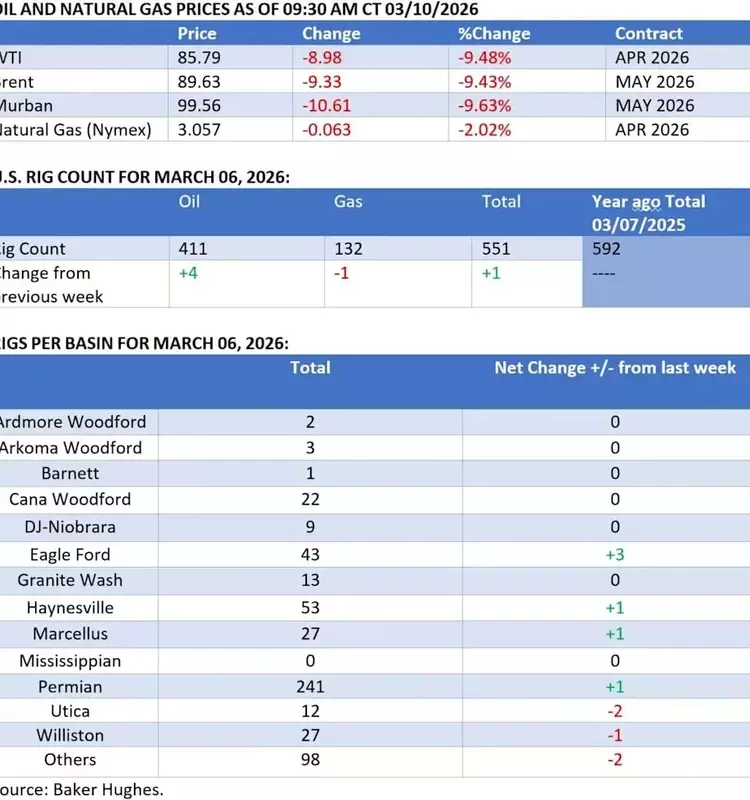
Amidst this backdrop, oil markets have displayed a degree of cautious optimism, largely attributed to former US President Donald Trump. Traders are speculating on his potential to mitigate the ongoing conflict, leading to a temporary calming effect on prices. Following a surge on Monday that saw ICE Brent crude approach $120 per barrel, prices have since retreated to $92 per barrel, indicating that Trump's market placation efforts have had some success.
Further complicating the situation, Saudi Aramco reported a 12% decline in its annual profit for 2025, with net income reaching $93.4 billion. This marks the twelfth consecutive quarter of year-over-year profit drops for the world's leading national oil company. In response, Saudi Aramco plans its inaugural share buyback, committing up to $3 billion this year, as its gearing ratio has fallen to 3.8% by the end of 2025.
Geopolitical tensions continue to exert pressure on the energy sector. The IEA recently considered a joint release of strategic petroleum reserves, potentially up to 400 million barrels, to stabilize soaring oil prices, though members ultimately decided against it. India, with its limited strategic reserves of only 30 million barrels, will not participate in any SPR release and instead intends to maximize short-haul Russian oil imports. Meanwhile, Bahrain's Bapco Energies declared force majeure on all operations after Iranian drone attacks severely damaged its 405,000 b/d Sitra refinery, making it the second Middle Eastern refinery to suffer critical drone-related damage after ADNOC's Ruwais plant also halted operations due to a drone strike.
In other market developments, Chevron is reportedly in talks to acquire a 30% stake in Brazilian fuel distributor Ipiranga from Ultrapar. Shell has agreed to sell its North American lubricants business, Jiffy Lube, to Monomoy Capital Partners for $1.3 billion. GeoPark has maintained its $375 million offer for Frontera Energy's Colombian assets, despite a higher bid from Parex Resources. Equinor announced new oil and gas discoveries in the North Sea, and ExxonMobil is seeking to reincorporate in Texas to mitigate activist investor risks. South Korea has implemented a price cap on gasoline and diesel to combat rising fuel costs. China's crude oil imports surged by 16% year-over-year in January-February, demonstrating a strategic build-up of reserves, while India faces a severe cooking gas shortage due to its reliance on Middle Eastern supplies. Lastly, Mongolia is seeking to renegotiate terms with Rio Tinto for its Oyu Tolgoi copper mine, citing unfair interest rates on loans.
The unfolding events in the global energy market highlight the delicate balance between supply, demand, and geopolitical stability. The Hormuz crisis serves as a stark reminder of the vulnerability of critical shipping lanes and the immediate impact on global oil flows. The cautious market reaction, partly influenced by political figures like Donald Trump, underscores the psychological elements at play in commodity trading. Moving forward, the industry will need to navigate these complex challenges with adaptive strategies, focusing on diversification of supply, enhancement of storage capacities, and diplomatic efforts to de-escalate conflicts. The actions of key national and international energy companies, alongside governmental policies, will be crucial in shaping the future resilience and stability of the global oil market.
