TSMC: A Smart Investment in the Future of AI
Stocks

TSMC: A Smart Investment in the Future of AI

DateSep 20, 2025
Read time3 min

Nvidia CEO Jensen Huang recently offered a compelling vision for the future of artificial intelligence, predicting a dramatic increase in global AI infrastructure investment. He forecasts spending to grow from $600 billion this year to an astonishing $3 trillion to $4 trillion by the close of the decade. This substantial growth hinges on the widespread availability of advanced chips, an area where Taiwan Semiconductor Manufacturing (TSMC) plays a crucial role. Huang specifically praised TSMC, calling it a foundational company whose stock is a wise acquisition, underlining its indispensable position in the technological landscape.

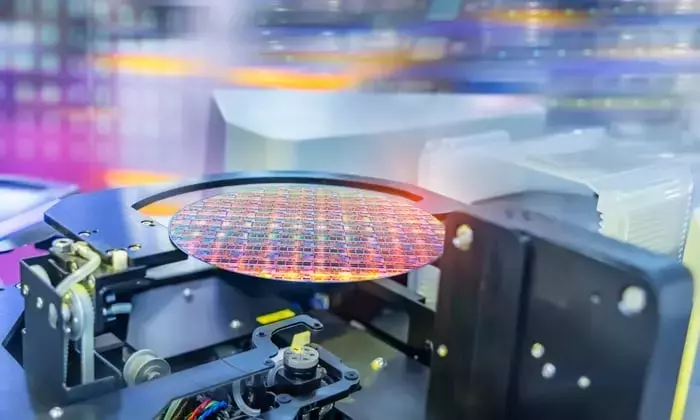
TSMC's distinctiveness stems from its unparalleled expertise in semiconductor fabrication. Chip manufacturing is a highly complex process, demanding significant technological proficiency and optimal operational efficiency to remain profitable. TSMC excels as the world's foremost contract manufacturer for semiconductors, a trusted partner for advanced chip designers seeking high-volume production. The company operates the globe's most sophisticated foundries, leading the industry in producing advanced chips, such as graphics processing units (GPUs), with the smallest possible nodes. These smaller nodes enable more transistors per chip, enhancing speed and efficiency, a feat that competitors like Intel and Samsung have struggled to replicate. Consequently, all major AI chip developers, including Nvidia, Broadcom, and AMD, depend on TSMC, ensuring its success regardless of which company ultimately dominates AI chip design.

The burgeoning AI sector presents a monumental opportunity for TSMC. The company anticipates AI chip demand to achieve over a 40% compound annual growth rate through 2028, offering a clear path for sustained expansion. TSMC is already collaborating closely with its key clients to guarantee production capacity and satisfy escalating demand. Beyond AI, emerging technologies such as robotaxis, robotics, and quantum computing are poised to drive further demand for cutting-edge chips. Each of these fields will necessitate robust computing power, placing TSMC at the forefront of future technological advancements. Despite its pivotal role in the semiconductor ecosystem, TSMC remains an undervalued asset in the market. With a forward price-to-earnings ratio of 23 times based on analysts' 2026 projections, it offers a compelling investment opportunity for those looking to capitalize on the AI infrastructure boom.

Investing in TSMC is more than just buying stock; it is an investment in the foundational technology powering the future. As artificial intelligence continues to expand its influence across every facet of technology and industry, the demand for sophisticated semiconductor solutions will only intensify. TSMC's relentless pursuit of innovation, its strategic market positioning, and its commitment to advancing chip technology make it a beacon of progress. For those seeking to support the growth of groundbreaking technologies and participate in a future driven by intelligence and innovation, TSMC represents a strategic choice that embodies the forward-looking spirit of progress.

More Articles
Taiwan Semiconductor: Powering the AI Revolution with Unmatched Innovation
Taiwan Semiconductor Manufacturing (TSMC) dominates the semiconductor foundry market, a crucial position given its role in producing cutting-edge chips essential for modern technology and the burgeoning AI industry. As a primary supplier for AI giants like Nvidia, AMD, and Broadcom, TSMC's commitment to continuous innovation, particularly with its advanced 3nm, 2nm, and upcoming A16 and A14 chip nodes, ensures its sustained leadership. The company is poised for significant growth, driven by massive investments in AI data centers, making it a compelling investment in the technology sector.
Sep 20, 2025
Nvidia and CoreWeave Partnership: Who Gains More?
Nvidia has entered into a significant $6.3 billion agreement with CoreWeave, an AI cloud computing specialist. This deal requires Nvidia to acquire CoreWeave's surplus capacity until 2032, providing a substantial revenue stream for the financially challenged CoreWeave. While CoreWeave receives a direct financial boost, Nvidia aims to solidify its market position, support a key partner, and secure vital AI cloud resources. This analysis delves into the reciprocal benefits, examining whether the advantages are more pronounced for CoreWeave's growth or for Nvidia's strategic ecosystem expansion.
Sep 20, 2025
Leading the AI Revolution: Nvidia and Amazon's Potential for Future Dominance
This article explores the future prospects of Nvidia and Amazon in the rapidly evolving artificial intelligence landscape. It highlights Nvidia's continued leadership in AI chip development and its strategic investments in new technologies. Concurrently, it examines Amazon's potential for a significant rally, particularly through its AWS cloud services and the integration of AI and robotics in its e-commerce operations, positioning both companies as strong contenders for top market valuation in the next five years.
Sep 20, 2025
Experimental Technology: The Key to Unleashing AI's Full Potential
OpenAI, a leader in artificial intelligence, recently achieved its first billion-dollar revenue month. However, the company's growth is hampered by a significant shortage of power for its data centers. CFO Sarah Friar emphasizes the urgent need for innovative power solutions beyond traditional energy sources. This challenge presents a unique opportunity for companies like Oklo, which is developing small modular nuclear reactors (SMRs) as a potential solution. Oklo's existing ties with OpenAI and its experimental technology could be crucial in addressing AI's escalating energy demands.
Sep 20, 2025
Social Security's Upcoming COLA Increase: A Double-Edged Sword for Retirees
The Social Security Administration is set to announce its 2026 cost-of-living adjustment (COLA) on October 15, with predictions pointing to a significant increase. While this marks a historical five-year streak of COLAs above 2.5%, inherent flaws in how inflation is measured for Social Security, coupled with a projected surge in Medicare Part B premiums, suggest that many retirees may still face a decline in purchasing power.
Sep 20, 2025