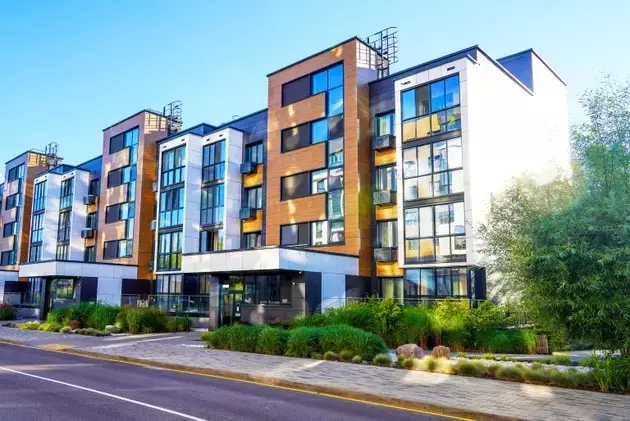
UDR, a prominent player in the apartment REIT sector, has seen its stock value decrease by approximately 14% over the past year, failing to keep pace with the general equity market's upward trend. This underperformance largely stems from prevailing weak rental market conditions and a cautious investor sentiment towards the sector. Despite these challenges, the company's first-quarter financial results were generally stable, with Funds From Operations (FFO) aligning with forecasts and a modest 1% increase in revenue. Occupancy rates remained robust at 96.6%, signaling consistent demand for its properties. Management has maintained its FFO guidance for 2024, projecting figures between $2.47 and $2.57. Furthermore, UDR boasts strong dividend coverage, estimated at about 1.45 times, and has transitioned to monthly dividend payments, offering investors a 4.8% yield. However, the outlook for medium-term returns suggests a growth rate of approximately 8%, with significant acceleration not anticipated until after 2027, once the current oversupply in the housing market stabilizes. Therefore, despite the attractive dividend and stable current performance, there isn't a compelling reason to consider UDR a 'Buy' at this time.
UDR's recent financial disclosures confirm a steady, albeit unexciting, operational performance. In the first quarter, the company reported FFO of $0.62 per share, which was in line with analyst expectations. Revenue growth, though positive at 1%, indicates a slow but stable expansion. The high occupancy rate of 96.6% across its properties highlights the enduring appeal and necessity of its residential units, even in a fluctuating market. This consistent demand provides a solid foundation for UDR's operations, mitigating some of the broader market pressures.
The management team's decision to reaffirm its full-year FFO guidance for 2024 is a testament to their confidence in the company's ability to navigate the current economic landscape. The projected range of $2.47 to $2.57 per share suggests a predictable financial trajectory. Critically, UDR's dividend policy, now featuring monthly payouts, underscores its commitment to shareholder returns. With a robust dividend coverage ratio of around 1.45 times, the company demonstrates its capacity to sustain these distributions, offering a competitive yield of 4.8% to investors. This move to monthly dividends is particularly appealing to income-focused investors, providing more frequent cash flow.
However, the primary hurdle for UDR's stock appreciation in the coming years remains the prevalent oversupply within the apartment sector. This surplus is expected to temper significant growth in rental rates and overall profitability until approximately 2027. Consequently, the projected medium-term returns of around 8% reflect this subdued growth environment. While stable, this forecast does not present a compelling catalyst for substantial capital gains in the immediate future. Investors looking for aggressive growth might find other opportunities more attractive, while those prioritizing stable income and long-term value might consider UDR a hold.
In conclusion, UDR demonstrates financial stability and a commitment to shareholder value through its dividend policy, but faces headwinds from market oversupply, limiting its short to medium-term growth potential. The shift to monthly dividends is a positive for income investors, yet the broader market conditions suggest a cautious stance, aligning with a 'hold' recommendation rather than an immediate 'buy' given the lack of strong growth catalysts until beyond 2027.
