UK Housing Affordability: A Two-Decade Perspective
Loan

UK Housing Affordability: A Two-Decade Perspective

DateJul 14, 2025
Read time3 min
The landscape of UK housing affordability over the past two decades presents a complex picture, with national averages suggesting a slight improvement, yet regional variations revealing persistent challenges for aspiring homeowners. This report delves into the intricate relationship between property values, income growth, and mortgage costs, highlighting the factors that continue to shape the accessibility of homeownership across different parts of the country.

Navigating the Evolving Terrain of UK Housing Accessibility

A Look Back: How Affordability Has Shifted

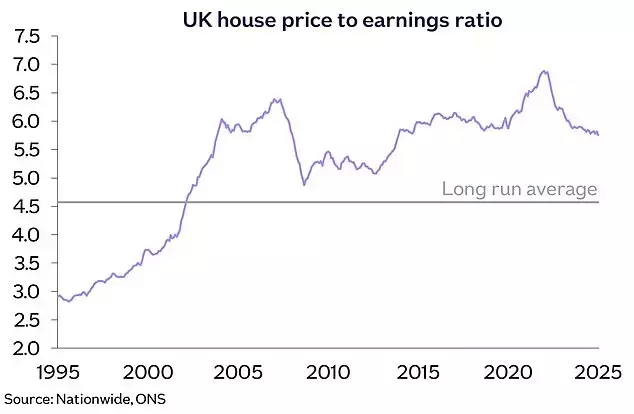
New data from Nationwide Building Society reveals an interesting trend: despite a general perception of rising property costs, the average UK home is marginally more attainable today than it was twenty years prior. This assessment is based on the critical ratio of average property prices to average annual full-time salaries. In the period from April to June this year, the average house price stood at 5.8 times the typical income, a slight decrease from 5.9 times recorded during the same quarter in 2005. This shift reflects a period where earnings have outpaced property value appreciation, with salaries increasing by 76 percent against a 73 percent rise in house prices over the two-decade span. Nevertheless, the current ratio remains above the long-term average of 4.8, indicating that housing still poses a significant financial hurdle for many.

Regional Disparities: A Tale of Two Britains

While the national statistics offer a glimmer of improved affordability, a closer examination reveals stark regional differences. London, for instance, has seen a marked decline in housing accessibility, with its house price-to-earnings ratio escalating from 7.1 to 9.2 over the last 20 years. Surrounding metropolitan areas have experienced a similar, albeit less dramatic, increase. Conversely, the North of England has witnessed the most notable improvement in affordability, with its ratio falling from 5.4 in 2005 to 4 in 2025. This regional divergence underscores the uneven impact of market forces and income growth across the UK, making the dream of homeownership more distant for those in high-cost areas.

The Impact of Interest Rates on Homeownership

Beyond the house price-to-earnings ratio, interest rates play a pivotal role in determining the true cost of homeownership, particularly for first-time buyers. Compared to 2005, initial mortgage payments, as a percentage of take-home pay for a first-time buyer with a 20 percent deposit, have slightly reduced from 38 percent to 34 percent. However, this overall improvement masks the significant deterioration in affordability seen over the past five years due to sharp increases in interest rates during 2022 and 2023. For example, a £200,000 mortgage in 2020 at 1.7 percent interest would have cost approximately £818 per month, whereas today, at rates around 4.15 percent, the monthly payment for the same amount could exceed £1,072. Nationwide anticipates a gradual easing of these financial pressures, driven by a combination of potential rate reductions and continued wage growth outpacing property price increases.

The Deposit Dilemma: Rising Rents and Saving Challenges

Despite some statistical improvements in the house price-to-earnings ratio, the practical hurdles to homeownership remain substantial, particularly the challenge of accumulating a sufficient deposit. Industry experts, such as Jeremy Leaf, a North London estate agent, point out that the house price-to-earnings ratio doesn't fully account for the dramatic rise in rental costs, especially in major cities like London. This surge in rent makes it increasingly difficult for aspiring buyers to save the necessary funds for a down payment, often leading to delayed property purchases. The sensitivity of the market to financial incentives, as evidenced by the impact of past stamp duty holidays, further highlights the importance of addressing initial costs for first-time buyers. Moving forward, government initiatives aimed at supporting deposit accumulation, such as improvements to schemes like 'Freedom to Buy,' could be crucial in revitalizing the housing market.

More Articles
Property Swap Dilemma: Navigating Stamp Duty and Main Residence Rules
A homeowner seeking to downsize faces a complex property exchange scenario, raising questions about avoiding stamp duty through a 'gift' arrangement. The individual owns a rural detached house valued at £500,000 and aims to purchase a town property for £550,000 from a young family. The family, in turn, wishes to acquire the homeowner's current residence. This unique situation is complicated by the homeowner's retention of a London flat, which might trigger a significant stamp duty surcharge. Experts weigh in on the legality and financial implications of such a transaction.
Jul 13, 2025
Compass's Strategic Shift: Opening Exclusive Listings with Conditions
In a significant policy reversal, real estate giant Compass announced it will make its previously exclusive property listings accessible to all brokerages and multiple listing services (MLSs). This move, effective Friday, signals a strategic pivot for a company that has historically championed private listing networks. The offer, however, is contingent upon strict adherence to specific terms: listings must remain unaltered, the original listing agent's identity must be prominently displayed, and participating brokerages or MLSs must ensure their agents face no repercussions for sharing Compass's inventory. This initiative seeks to counter prevailing narratives and reinforce Compass's stance on collaborative brokerage practices, while emphasizing the homeowner's primary objective of selling their property.
Jul 11, 2025
Unraveling the Dynamics of the Current Housing Market
The housing market is currently exhibiting a complex interplay of forces. While overall inventory experienced a slight dip last week, largely influenced by holiday periods, other indicators like purchase applications show robust year-over-year growth. This analysis delves into key metrics such as new listings, price adjustments, and mortgage rates, providing a comprehensive overview of the market's current health and future outlook, particularly as it navigates economic shifts and policy changes.
Jul 12, 2025
Urban Residence Soundproofing: Expert Advice for City Dwellers Battling Noise Pollution
Relocating from a peaceful rural setting to a bustling urban environment often brings an unwelcome companion: noise. This article delves into effective strategies for soundproofing a home against the cacophony of city life, from traffic and construction to neighboring disturbances. Industry experts offer practical advice, outlining various methods for insulating walls, windows, floors, and ceilings, along with estimated costs and planning permission considerations. The piece highlights the significant improvement in quality of life that soundproofing can provide, transforming a noisy urban dwelling into a serene sanctuary.
Jul 12, 2025
UK Housing Market Sees Surge in Property Listings Amidst Landlord Exodus
The UK property market is experiencing a significant increase in available homes, reaching a seven-year high, largely driven by landlords divesting their properties. This surge, with nearly half a million homes listed between April and June, comes amidst rising interest rates, new regulations, and the impending Renters' Rights Bill. While supply is up, confirmed sales have seen a decline, partly due to the expiration of stamp duty tax relief. Regional variations are evident, with strong demand in cities like Manchester, but a notable cooling in inner London.
Jul 11, 2025