UK Housing Market Sees Varied Growth: Northern Surge, London Slump
Loan

UK Housing Market Sees Varied Growth: Northern Surge, London Slump

DateJul 16, 2025
Read time3 min

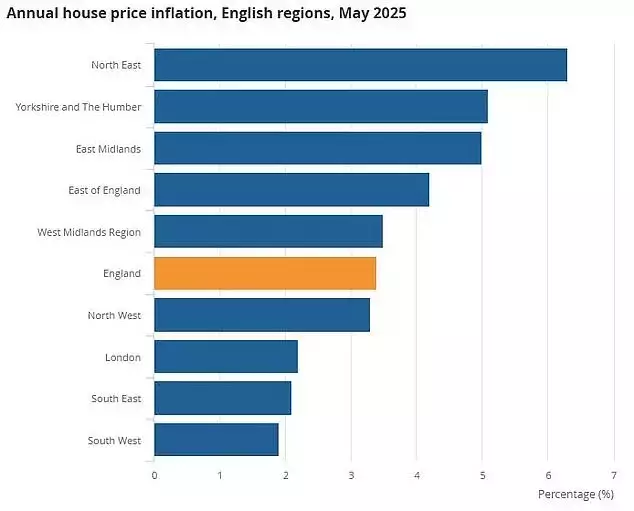
The British property market displayed a complex picture in May, marked by an overall increase in average house prices alongside pronounced regional variations. Data from the Office for National Statistics indicates a 1.1 percent monthly rise, contributing to a 3.9 percent annual growth, pushing the average UK home value to £269,000—a substantial £10,000 increase from the previous year. This upswing, however, follows a 2.7 percent dip in April, signaling a volatile yet generally upward trend. Property experts note that the market is undergoing a re-calibration, urging sellers to adopt realistic pricing strategies in light of shifting buyer sentiment and broader economic influences.

A notable trend is the stark geographical divide in housing performance. Northern areas, including Scotland and the North East of England, are experiencing strong momentum, with house prices surging by more than 6 percent year-on-year. For instance, the average property in the North East now commands approximately £159,142, reflecting robust demand outpacing supply in these perceived value-for-money regions. Conversely, the South West and South East of England recorded more modest annual gains of 1.9 and 2.1 percent respectively. London, in particular, presented a contrasting narrative, with May seeing a 1.4 percent decline in average prices, bringing its annual growth to just 2.2 percent. The capital's unique market, heavily influenced by international buyers, appears to be grappling with an exodus of affluent homeowners, contributing to a cooling effect, especially in prime inner-city areas where values remain below 2014 levels.

Beyond geographical distinctions, the type of property also plays a crucial role in price dynamics. Detached houses continue to be a strong performer, appreciating by 5.4 percent over the past year, reaching an average of £441,349. In stark contrast, flats and maisonettes saw a marginal 1.5 percent increase, averaging £198,262. New build properties are experiencing exceptionally rapid growth, with average prices soaring by an impressive 29.9 percent year-on-year to £419,862. This diverse performance across property types and regions underscores the nuanced nature of the current housing landscape, where localized factors and specific market segments dictate varying outcomes for homeowners and prospective buyers.

This evolving property market, characterized by localized booms and corrections, highlights the importance of adaptability and informed decision-making. For individuals and families, understanding these regional and property-specific trends is crucial for making sound financial choices. The resilience of certain areas and property types, even amidst broader economic shifts, serves as a testament to the enduring value of strategic investment and the continuous pursuit of opportunities within a dynamic environment. Embracing change and adjusting expectations in line with expert advice fosters a more stable and equitable real estate landscape, benefiting all participants.

More Articles
Legal Scrutiny Intensifies Over Real Estate Settlement Adherence
Attorneys representing plaintiffs in a significant real estate commission lawsuit are actively investigating whether multiple listing services (MLSs) and Realtor associations nationwide are complying with the terms of a recent settlement. Letters have been dispatched to 25 entities, demanding evidence of adherence to new business practices. This proactive enforcement aims to ensure transparency and proper implementation of the settlement's provisions, addressing concerns about potential circumvention by some market participants.
Jul 15, 2025
New Dashboard Enhances Real Estate Market Insight for NAR Members
The National Association of Realtors (NAR) has launched an innovative Market Statistics Dashboard, an exclusive tool for its members. This dashboard provides critical monthly data on housing affordability, sales trends, home prices, and demographic shifts at the metro level. It also offers forward-looking analysis on mortgage rate scenarios, empowering realtors with data-driven insights to better serve clients and navigate the dynamic housing market.
Jul 15, 2025
UK Mortgage Policy Shift: Risks and Implications for Homeowners
A significant policy change in the UK is allowing prospective homeowners to borrow up to six times their income, a substantial increase from the previous four-and-a-half times limit. While this initiative aims to help first-time buyers and families access the property market more easily, experts are raising alarms about potential negative consequences. Concerns include a possible surge in house prices, increased financial strain on borrowers, and a heightened risk of mortgage defaults and repossessions, drawing parallels to the conditions that preceded the 2008 financial crisis.
Jul 15, 2025
Mastering Your Sphere of Influence in Real Estate
In the competitive real estate market, cultivating a robust sphere of influence (SOI) is paramount. This guide illuminates the essence of SOI, its significance, and practical strategies for its expansion. It delves into the importance of nurturing relationships beyond mere transactions, leveraging personal connections for referrals, and employing consistent marketing. The article emphasizes the pivotal role of CRM systems in organizing contacts and utilizing AI tools for enhanced engagement, ensuring real estate professionals remain top-of-mind for potential clients.
Jul 15, 2025
Navigating the Divergent Paths of Housing Inventory Growth: A Tale of Two Markets
Increased housing inventory offers a silver lining for homebuyers, fostering a healthier existing home sales market with moderated price growth. Conversely, this surge in available homes poses significant challenges for builders, impacting their confidence and construction permits. The housing market presents a complex dichotomy: a healing resale segment benefiting from greater supply, while the new construction sector grapples with the pressures of rising inventory and high mortgage rates, leading to reduced activity and strain on builders' profitability.
Jul 15, 2025