Understanding Asset Write-Ups: Enhancing Asset Values in Financial Reporting
Finance

Understanding Asset Write-Ups: Enhancing Asset Values in Financial Reporting

authorBy David Rubenstein
DateMay 04, 2026
Read time2 min
This content explores the concept of asset write-ups in accounting, detailing their definition, reasons for occurrence, and implications for financial statements. It differentiates them from asset write-downs and provides a practical example of how asset values are adjusted during a corporate acquisition.

Elevating Asset Values: The Dynamics of Financial Restatement

Defining an Asset Value Increase

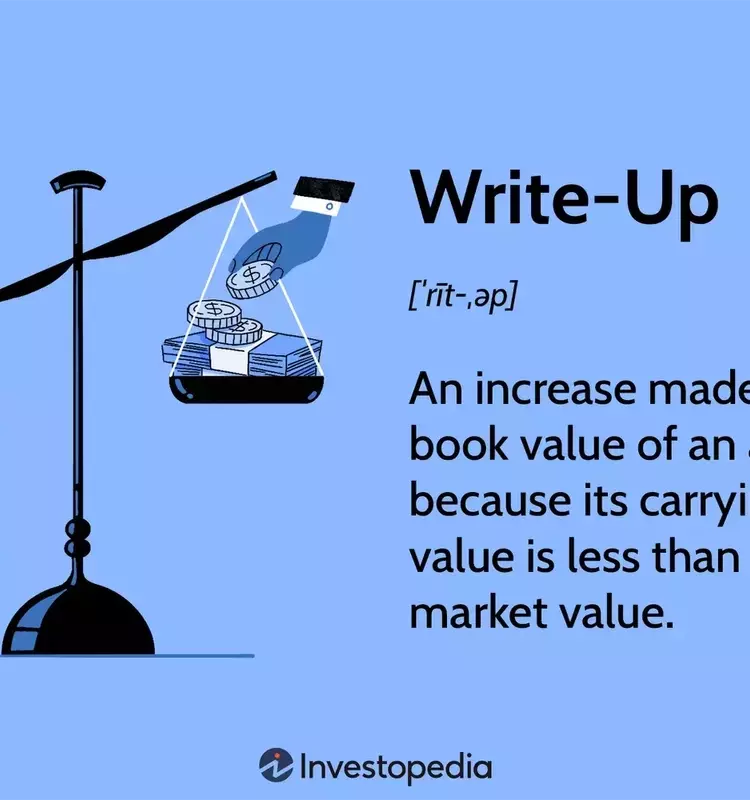
An asset value increase refers to the upward adjustment of an asset's recorded worth. This adjustment typically occurs when the current recorded value of an asset falls below its market-determined value. Such revaluations are common during corporate mergers and acquisitions, where the acquired company's assets and liabilities are reassessed to reflect current market prices. It can also arise from corrections of initial recording errors or if a prior reduction in value was deemed excessive. This adjustment is a non-cash transaction, contrasting with a reduction in asset value.

Exploring the Significance of Asset Value Adjustments

While substantial reductions in asset values often attract considerable media attention, reflecting potential financial difficulties, increases in asset values typically do not generate the same level of public or investor interest. This is largely because asset value increases are generally isolated events rather than indicators of ongoing business performance.

During the process of an asset value increase, specific considerations are given to intangible assets and the associated tax implications. An increase in asset value can lead to a deferred tax liability, stemming from anticipated future depreciation expenses on the revalued asset.

Illustrative Scenario of an Asset Revaluation

Consider a situation where one company acquires another for $100 million. Initially, the acquired company's net assets are recorded at $60 million. Prior to finalizing the acquisition, the acquired company's assets and liabilities must be adjusted to their market-based values. If this revaluation determines the market-based value of these assets to be $85 million, the $25 million increase represents an asset value adjustment. The remaining $15 million difference between the adjusted asset value and the acquisition cost is subsequently recorded as goodwill on the acquiring company's balance sheet.

More Articles
Finance
Alger Weatherbie Specialized Growth Fund: Navigating Q1 2026 Market Dynamics
The Alger Weatherbie Specialized Growth Fund experienced a challenging first quarter in 2026, underperforming the Russell 2500 Growth Index with a -11.41% return. This was primarily due to sector allocation biases, particularly an overweight in Industrials and an underweight in Information Technology, alongside specific stock setbacks. Despite this, companies like AAR CORP. showed strong performance, driven by organic growth and exceeding earnings expectations. The fund continues to focus on themes like agentic AI and increased business investment, while carefully monitoring macroeconomic shifts.
By Robert KiyosakiMay 04, 2026
Finance
Saia Inc.: Valuation Concerns Temper Strong Market Performance
Saia Inc. has demonstrated robust revenue growth and resilience in the LTL market, benefiting from sector undercapacity. However, the company faces margin compression due to inflation and rising oil prices, with its operating margin falling to 8.3%. Despite strong liquidity, SAIA's valuation appears stretched, trading at a high P/E ratio of 46.35x. Recent profit-taking and overbought technical indicators further suggest limited upside, leading to a reiterated 'Hold' rating for the stock.
By Strive MasiyiwaMay 04, 2026
Finance
Arquitos Capital's Q1 2026 Investor Letter: Navigating Biotech and Biopharma Investments
Arquitos Capital saw a -7.2% return in Q1 2026, contrasting with the Russell 2000's 0.9% gain. The firm focuses on undervalued pre-revenue biotech companies with significant net cash after failed clinical trials. Key holdings include ENDI Corp., which reported strong 2025 revenues, Finch Therapeutics, undergoing strategic Chapter 11 for asset monetization, and Liquidia Corporation, poised for substantial growth despite patent litigation uncertainties.
By Robert KiyosakiMay 04, 2026
Finance
Valero Energy: Capitalizing on Geopolitical Shifts and Market Dynamics for Sustained Growth
Valero Energy (VLO) is strategically positioned to benefit from the Strait of Hormuz closure, granting it superior access to crude oil and expanded profit margins. The company's industry-leading cost structure and strong Gulf Coast crude sourcing capabilities make it a prime beneficiary in the ongoing refining sector bull market. Management forecasts elevated refining margins and tight product markets to continue through 2026, bolstering the long-term investment case. I recommend Valero Energy as a 'Buy' due to its robust balance sheet, aggressive capital returns, and enduring competitive advantages amidst global supply chain disruptions.
By David RubensteinMay 04, 2026
Finance
Two AI Powerhouses Poised for Trillion-Dollar Valuations
This article explores how Taiwan Semiconductor Manufacturing Company (TSM) and Broadcom (AVGO), two prominent players in the AI sector, are on track to achieve a market capitalization of $3 trillion. Fueled by escalating demand for artificial intelligence, both companies are experiencing significant growth, with TSMC benefiting from its leading position in chip manufacturing and Broadcom excelling in custom AI chip development. The analysis suggests that their current growth trajectories and market valuations could propel them to this elite financial status by the end of next year.
By Robert KiyosakiMay 04, 2026