Understanding Ba3/BB- Bond Ratings: High Yields and Increased Risk
Finance

Understanding Ba3/BB- Bond Ratings: High Yields and Increased Risk

authorBy Strive Masiyiwa
DateMay 16, 2026
Read time2 min

This article delves into the nuances of Ba3/BB- bond ratings, exploring their implications for investors seeking to balance risk and return. It highlights how these non-investment grade classifications, assigned by leading credit rating agencies, signal a speculative investment opportunity with higher yield potential, albeit accompanied by increased default risk.

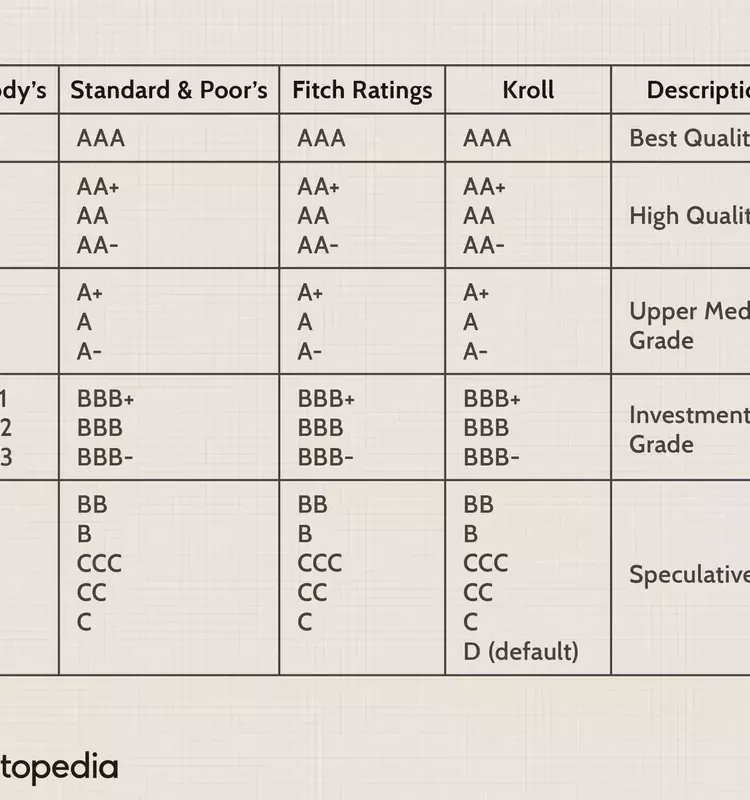
The Ba3/BB- designation is a crucial indicator in the fixed income market, primarily used by financial institutions like Moody's (Ba3) and Standard & Poor's/Fitch (BB-) to categorize debt instruments. These ratings generally signal that a bond is speculative, meaning it carries a higher risk of default compared to investment-grade bonds. Consequently, these bonds are often referred to as 'junk bonds' or 'high-yield bonds' due to the higher returns they offer to compensate investors for the elevated risk. For risk-averse investors, understanding these ratings is paramount, as they typically prefer the stability of government bonds or investment-grade corporate bonds, which generally range from AAA to Baa3/BBB-.

Bonds with Ba3/BB- ratings are characterized by their exposure to various economic and corporate risks. While they offer attractive yields, investors must recognize that these higher returns directly correlate with the increased probability of the issuer defaulting on their debt obligations. The agencies assess factors such as the issuer's balance sheet strength, ability to service debt, and overall economic outlook. It's not uncommon for a company's bond rating to fluctuate; a downgrade from investment grade to non-investment grade can occur if the company's financial health deteriorates, just as an upgrade from Ba3/BB- to investment grade is possible if the business outlook improves and financial statements demonstrate robust growth and reduced risk. Ba2/BB stands as the next higher rating in the speculative category, while B1/B+ indicates a lower level of creditworthiness within the high-yield spectrum.

Ultimately, investing in Ba3/BB- rated bonds requires a thorough understanding of the inherent risks and the potential rewards. While the higher yield-to-maturity (YTM) or yield-to-call (YTC) can be appealing, especially when compared to more secure investments, it serves as direct compensation for the potential instability of the issuing entity. Investors should conduct diligent research into the issuer's financial standing and the broader economic environment to make informed decisions and manage their portfolios effectively.

More Articles
Finance
Stock Certificates: A Glimpse into the Past of Company Ownership
Stock certificates were once physical documents signifying ownership in a company, detailing shares, purchase date, and other relevant information. While modern ownership records are now digital, these historical artifacts hold significant value for collectors due to their intricate designs and rich history. The first stock certificate was issued in 1606 by the Dutch East India Company. Today, most securities are recorded electronically, offering greater security and efficiency, though old certificates tied to active companies can still be valid.
By Morgan HouselMay 16, 2026
Finance
JPMorgan's Preferred Shares Offer Attractive Yield and Strong Safeguards
JPMorgan reported impressive first-quarter results, with net income surging over 10% year-over-year to $16.15 billion. The company's preferred shares, specifically JPM.PR.M, present an enticing opportunity with a nearly 6% yield. This yield is well-protected by a payout ratio of under 2% and a substantial common equity cushion of $344 billion. These preferred shares are considered an excellent risk-reward investment due to their robust coverage and asset protection.
By Lisa JingMay 16, 2026
Finance
TFI International: Navigating Market Fluctuations and Valuation Challenges
TFI International has shown resilience in a challenging economic landscape marked by inflation and fluctuating freight demand. Despite operational stability, the company's stock appears fully valued, with both Price-to-Sales and Dividend Discount Models indicating potential downside. While technical indicators suggest lingering bullish sentiment, a softening momentum points to possible profit-taking. This analysis reaffirms a 'hold' rating, balancing solid operations against a stretched market valuation.
By Fareed ZakariaMay 16, 2026
Finance
Bond Market Dynamics: Rate Expectations and Economic Outlook
The bond market's recent shift in interest rate expectations, with implied SOFR surpassing the Fed Funds rate, signals a potential recalibration of monetary policy. This article explores the implications of this change, alongside the surge in Treasury yields, heightened equity valuations, and the influence of the Taylor Rule, suggesting a complex economic landscape for investors.
By Robert KiyosakiMay 16, 2026
Finance
Healthcare Sector Valuation and ETF Performance Analysis
This report provides a monthly overview of the healthcare sector, focusing on valuation, quality, and momentum metrics. It specifically examines the performance of the iShares U.S. Pharmaceuticals ETF (IHE) and its comparison with the Health Care Select Sector SPDR ETF (XLV). The analysis highlights the undervaluation of the healthcare equipment industry and discusses the high concentration risk in IHE's top holdings, suggesting an alternative for diversification.
By Mariana MazzucatoMay 16, 2026