Understanding Backwardation in Futures Markets
Finance

Understanding Backwardation in Futures Markets

authorBy Robert Kiyosaki
DateJul 15, 2026
Read time2 min

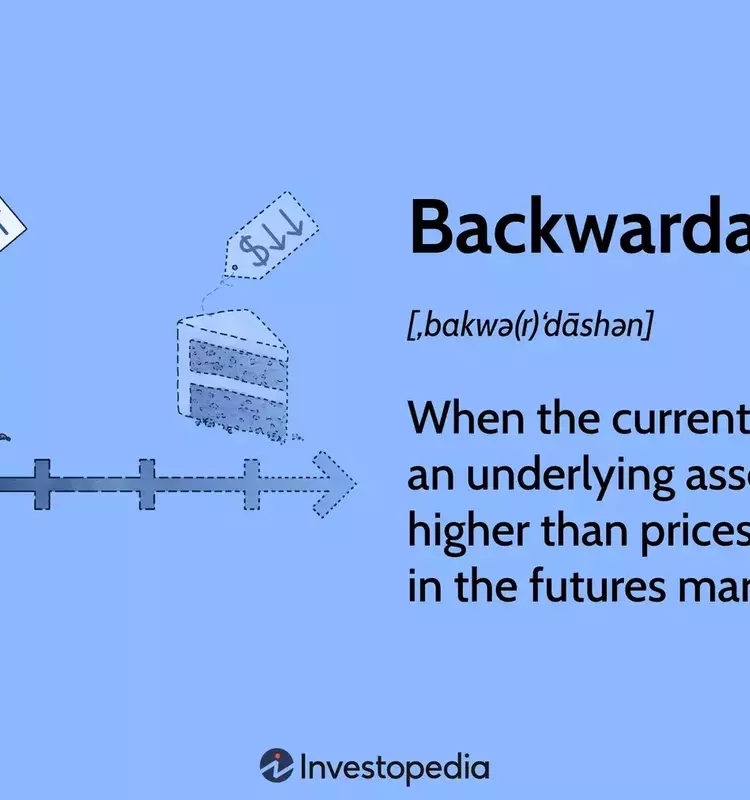
Backwardation is a market phenomenon observed when the immediate price of an asset surpasses its price in the futures market. This often indicates strong immediate demand or temporary supply shortages that are projected to normalize over time. This situation is the inverse of contango, where future prices exceed current spot prices.

This market dynamic significantly influences trading strategies. When backwardation occurs, the futures contract's price falls below the current spot price, leading to an expectation that the immediate price will eventually decrease to align with the futures price. This scenario presents opportunities for traders to profit by selling the asset at its higher current price and simultaneously purchasing futures contracts at a lower price. This activity tends to drive down the expected future spot price until it converges with the futures price. Conversely, being on the wrong side of market manipulation or unexpected changes in supply, such as new producers entering the market, can result in substantial losses for traders.

Futures contracts are agreements to buy or sell an asset at a predetermined price on a future date. They are critical tools for investors to lock in prices and manage risk. In a backwardated market, the declining futures curve acts as a sentiment indicator, suggesting that current prices are unsustainably high. While this can offer arbitrage opportunities and act as a leading indicator for falling spot prices, investors face risks. A market could continue to decline if unexpected events or recessions occur, or if new supply sources unexpectedly come online, disrupting existing positions and potentially leading to financial losses.

Understanding market conditions like backwardation and contango is essential for investors navigating commodity markets. By recognizing these dynamics, participants can make more informed decisions, balance risk and reward, and contribute to the efficiency and transparency of global financial systems. Always consider market analysis a cornerstone of investment strategy.

More Articles
Finance
Retirement Planning: Savings Milestones at Age 59
Reaching age 59 marks a pivotal moment in retirement planning, as penalty-free withdrawals from retirement accounts become an option. This article explores recommended savings benchmarks, typical savings figures for Americans nearing retirement, and strategies to ensure financial security in later years, including maximizing contributions and managing withdrawal risks.
By Lisa JingJul 15, 2026
Finance
Emerson Electric: Valuation Concerns Outweigh Dividend King Status
Emerson Electric (EMR), now a specialized automation entity following divestitures, is currently trading at a premium. This elevated valuation is not yet supported by a significant expansion in software margins, raising questions about its justified market price. The company's future success heavily depends on the effective integration of AspenTech and NI to generate high-margin recurring software revenues and enhance its Return on Invested Capital (ROIC) above its Weighted Average Cost of Capital (WACC).
By Michele FerreroJul 15, 2026
Finance
NVIDIA's AI Strategy: Optimizing Performance Per Watt
This report examines NVIDIA's strategy in the AI sector, particularly its focus on "tokens per watt" to enhance inference revenue and profitability for hyperscalers. It delves into the role of offload engines in mitigating XPU underutilization, addressing the challenges posed by memory and power constraints. As NVIDIA's advanced chips demand more power, the necessity for these offload engines becomes increasingly critical to maximize efficiency and returns in AI operations.
By Robert KiyosakiJul 15, 2026
Finance
Terreno Realty: Overvalued Despite Strong Performance
Terreno Realty (TRNO) shares were recently sold due to their valuation exceeding 30 times forward Adjusted Funds From Operations (AFFO), which is deemed excessive given current rising Treasury yields. Despite its robust industrial portfolio and strong Net Operating Income (NOI) growth, the stock's price suggests an over-optimistic outlook. While TRNO's management is effective and debt exposure minimal, its current valuation appears stretched compared to peers, prompting a strategic decision to realize gains.
By Suze OrmanJul 15, 2026
Finance
Federal Reserve's Shift: Navigating Market Uncertainty Amid Reduced Forward Guidance
The Federal Reserve's decision to scale back forward guidance has plunged markets into an era of heightened volatility and unpredictability, as investors are forced to rely more heavily on historical data. While recent bullish CPI figures offered a temporary boost to equities, underlying geopolitical risks and the lagging nature of energy-driven inflation data present ongoing challenges. The divergence between official metrics and alternative inflation indicators further complicates the economic outlook. In this environment, a steadfast, long-term investment strategy is crucial, alongside opportunistic use of leveraged funds during market downturns.
By Strive MasiyiwaJul 15, 2026