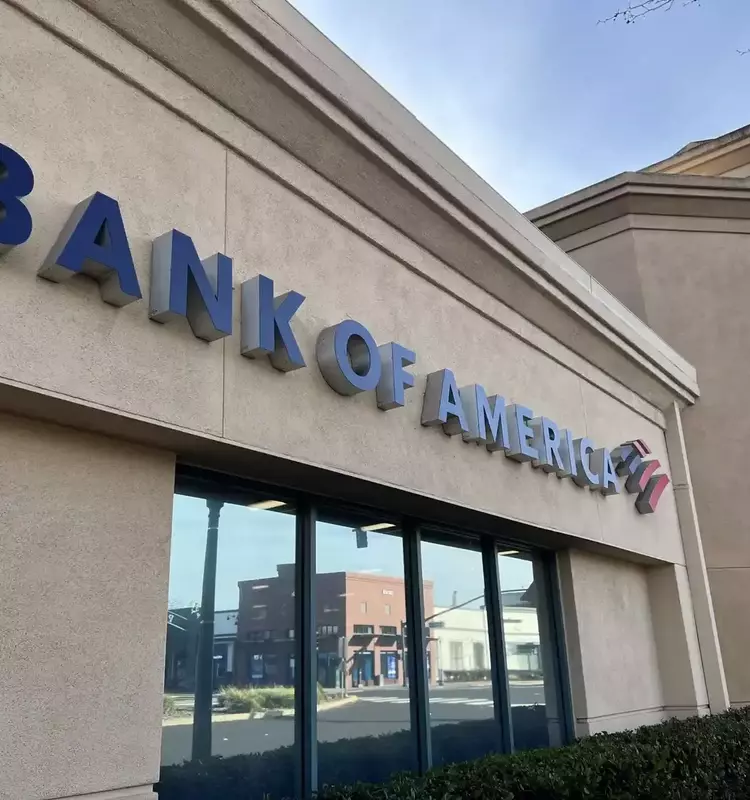
Unlocking the Secrets of Bank Profitability and Oversight
Understanding How Financial Institutions Generate Income
Banks primarily operate by accepting funds from customers, such as individuals and businesses, for which they offer interest. These collected funds are then strategically deployed into various investments, including purchasing securities or extending credit to other companies and individuals. The core of a bank's earnings stems from the disparity between the interest accrued on these loans and investments and the interest disbursed to depositors. This difference, known as the interest rate spread, is a crucial indicator of a bank's financial health.
Examining Bank of America's Financial Landscape
A detailed review of Bank of America's 2024 financial disclosures provides a clear picture of its operational model. The bank's annual reports often include a consolidated overview of its balance sheet and income statement, illustrating the returns generated from its earning assets and the costs associated with interest-bearing deposits. For instance, Bank of America reported substantial interest income from its lending and investment activities, while also incurring significant interest expenses for customer deposits. This data is typically presented with average balances to reflect the bank's financial performance over the reporting period.
Key Components of Bank of America's Income Statement
Bank of America's 2024 income statement reveals several critical figures. Its net interest income, which represents the spread between earned and paid interest, was a considerable sum. Additionally, the bank generated substantial non-interest income from various fee-based services, including wealth management, account services, and trading operations. The ultimate profit, or net income, is derived after accounting for all revenues and expenses. A bank's total revenue is thus a combination of its net interest income and its non-interest income streams.
Analyzing Bank of America's Balance Sheet
The 2024 balance sheet of Bank of America details its assets and liabilities. Significant cash holdings as deposits are noted, alongside substantial investments in short-term securities like U.S. Treasuries. Loans typically constitute the largest asset category, reflecting the bank's primary function of providing credit. Conversely, customer deposits, encompassing various account types, form the largest liability. Despite being a liability, these deposits are fundamental to the bank's capacity to extend loans.
The Regulatory Environment Governing Banks
Given the highly leveraged nature of the banking industry, robust regulatory oversight is essential to maintain the stability and solvency of individual banks and the broader financial system. In the United States, several federal agencies are responsible for regulating banks, including the Federal Reserve System (FRS), the Office of the Comptroller of the Currency, the Office of Thrift Supervision, and the Federal Deposit Insurance Corporation (FDIC). These bodies enforce capital requirements and other regulations to mitigate risks.
Navigating Interest Rate Risk in Banking
Interest rate risk is a significant concern for banks, stemming from potential mismatches between the interest paid on deposits and the interest earned on loans over time. Deposits often react more quickly to changes in prevailing interest rates compared to fixed-rate loans. While rising interest rates can boost a bank's interest income from variable-rate and new fixed-rate loans, falling rates can lead to a decline in earnings, posing a challenge to profitability.
The Impact of Changing Interest Rates on Bank Revenues
Fluctuations in interest rates can also influence the volume of fee-generating banking activities. For example, a rise in interest rates can lead to a decrease in mortgage loan originations, subsequently reducing associated fees. However, banks with a portfolio of variable-rate loans, such as credit cards, may see increased interest income when rates climb, offsetting some of the other revenue impacts.
Why Bank Loan Growth Matters to Investors
Investors closely monitor a bank's loan growth as an indicator of its ability to effectively utilize customer deposits to generate favorable yields. Consistent and healthy loan growth suggests that the bank is successfully deploying its capital to create revenue and expand its market presence.
Managing Loan and Lease Default Losses
Credit risk, the potential for borrowers to default on their loans or leases, is an inherent part of banking. To address this, banks maintain an allowance for loan and lease losses, a reserve of capital designated to cover anticipated losses within their loan portfolios. This provision is recorded on the bank's income statement and is crucial for ensuring the institution's resilience against credit defaults.
