Strategic Financial Reset: The "Big Bath" Maneuver
What Exactly Constitutes a "Big Bath" in Accounting?
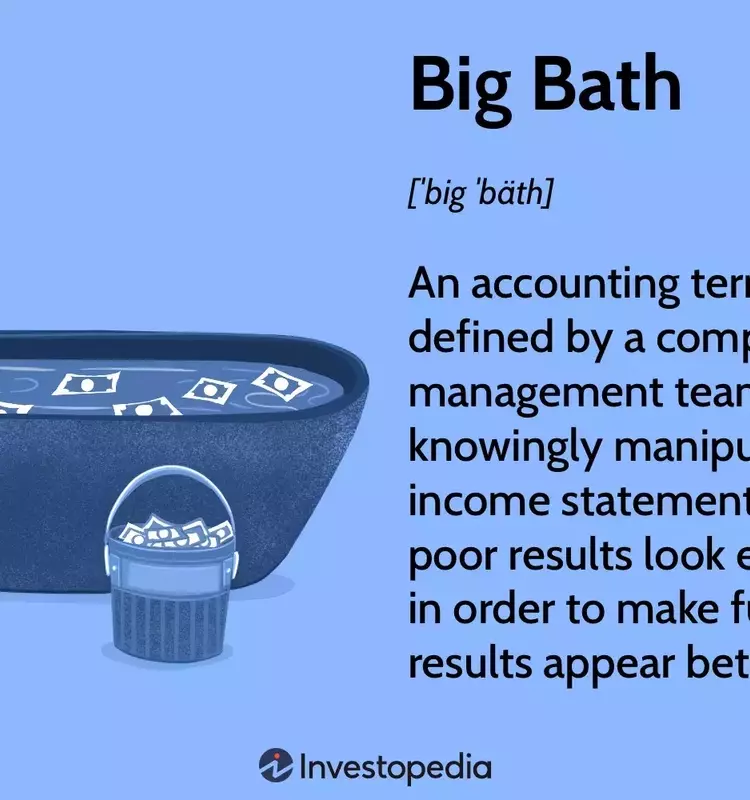
A "big bath" refers to a deliberate accounting strategy where a company's leadership intentionally manipulates financial statements to amplify an already poor year's results. The primary motivation behind this tactic is to establish a low baseline, making the financial outcomes of subsequent periods appear more robust and favorable.
Exploring the Dynamics of a "Big Bath"
The term "big bath" is apt, suggesting a thorough cleansing or a fresh start for financial records. This accounting maneuver can lead to a substantial, albeit artificial, boost in reported future earnings. Such an outcome often translates into increased bonuses for top executives, creating a strong incentive for them to engage in this practice. Notably, new Chief Executive Officers sometimes utilize a "big bath" to attribute past underperformance to the previous leadership, thereby positioning themselves to claim credit for apparent improvements in the following year.
Given that stock prices are heavily influenced by earnings reports, a significantly negative earnings disclosure can cause a sharp decline in share value. However, when earnings subsequently benefit from a "big bath" strategy, the stock price may recover and even surpass its previous levels, potentially exceeding what it would have achieved without such accounting manipulation. While a "big bath" may technically adhere to existing accounting regulations, it is widely considered an unethical practice.
Methods Companies Employ for a "Big Bath"
When a CEO anticipates failing to meet minimum earnings targets for a given year, there's an inherent incentive to shift profits from the current period to future ones. This is because the CEO's compensation structure might not differentiate between slightly missing targets or missing them by a wide margin. Companies can achieve this forward shifting of profits through various methods, such as prepaying expenses, implementing substantial write-offs, or postponing the recognition of revenues. These actions, undertaken as part of a "big bath," increase the likelihood of the CEO receiving a large bonus in the subsequent year. Prepaying expenses and executing write-offs are particularly effective tools in this scenario.
The banking sector can also implement a "big bath." During economic downturns and periods of rising unemployment, banks typically experience an increase in loan delinquencies and defaults. In anticipation of these losses, banks may preemptively write off loans and establish significant loan loss reserves. By adopting a liberal approach to these provisions, a bank can orchestrate a "big bath," particularly when facing challenging economic conditions that negatively impact its earnings.
As the economy rebounds and loan repayments become more consistent and frequent, the bank can reverse the unrealized losses in its loan loss reserve, thereby boosting earnings in future quarters. This strategy allows management to potentially benefit from higher compensation, and the bank's share price can recover from the declines experienced during periods of financial stress.
