Harnessing Market Volatility: A Trader's Guide to Broadening Formations
Unraveling the Broadening Formation: A Visual Guide to Market Dynamics
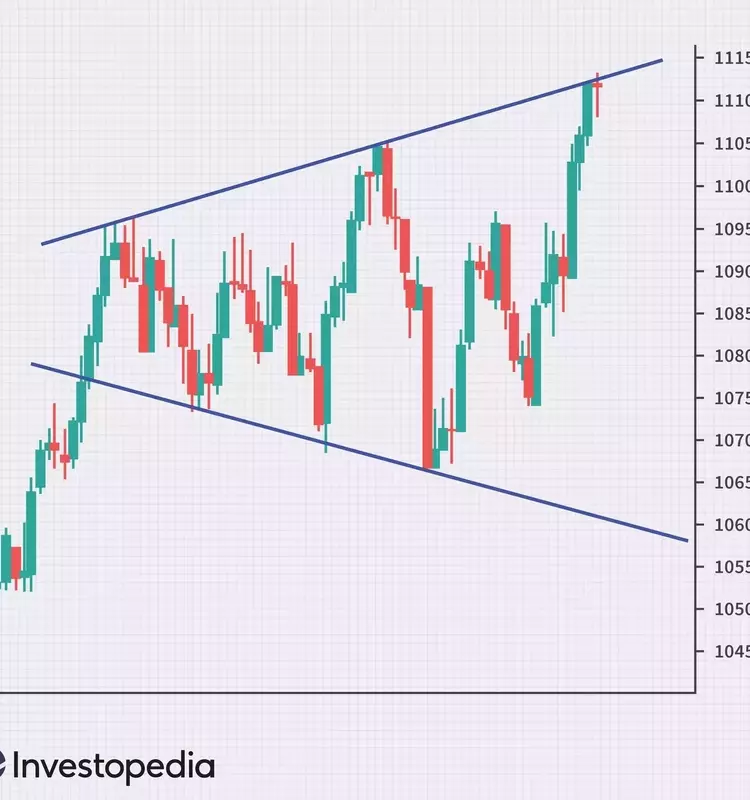
A broadening formation is a distinctive pattern observed in price charts, utilized by technical analysts to gauge market sentiment. This pattern is defined by an expansion in price volatility, visually represented by two trend lines that diverge from each other—one ascending and the other descending. Such formations are crucial for traders as they directly influence strategic decisions.
The Genesis and Impact of Broadening Formations on Market Behavior
Broadening formations typically emerge following significant price movements, either upward or downward, stemming from a lack of consensus among investors regarding a security's true value. As buyers become more eager to purchase at higher prices and sellers are increasingly motivated to secure profits, temporary price peaks rise and dips fall. When these extreme points are connected, the trend lines create a widening shape reminiscent of a megaphone or an inverted symmetrical triangle.
These patterns can arise from various factors, from simple investor disagreements to more profound economic issues. For example, heightened political uncertainty before elections can lead to such formations in national markets, as differing political outcomes or policies sway market sentiment. Similarly, during earnings seasons, varied corporate performance reports can trigger waves of optimism or pessimism, contributing to broadening formations.
While uncommon in stable markets that typically show consistent trends—like the long-term upward movement of the S&P 500—broadening formations frequently appear when market participants react to a confluence of unsettling news. Geopolitical tensions or shifts in central bank policies, especially when combined, can exacerbate market uncertainty and lead to the development of these volatile patterns.
Capitalizing on Fluctuations: Effective Trading Strategies for Broadening Formations
Broadening formations often signal caution for long-term investors and trend followers due to their inherent volatility and lack of a clear directional bias. However, these patterns present lucrative opportunities for swing traders and day traders, whose primary objective is to profit from short-term price swings rather than long-term market trends.
These agile traders employ various technical analysis tools, such as trend lines and momentum indicators, to precisely identify optimal entry and exit points. By carefully observing when prices touch the diverging trend lines, they can make informed decisions to enter trades, aiming to capture profits from rapid price reversals, or to quickly mitigate losses if the market moves unfavorably.
For instance, a swing trader might initiate a purchase when the price reaches a lower trend line and liquidate their position when it approaches an upper trend line. The expanding nature of these trend lines means that each subsequent swing trade can potentially yield greater profits compared to preceding ones, a characteristic not found in converging patterns like symmetrical triangles or parallel price channels.
Furthermore, day traders, who operate within much shorter timeframes of minutes or hours, frequently encounter broadening formations. They often complement trend line analysis with momentum indicators to confirm the likelihood of short-term reversals. The increased frequency of these patterns in shorter timeframes makes them particularly relevant for day trading strategies.
