Understanding Cash Flow Loans for Businesses
Finance

Understanding Cash Flow Loans for Businesses

authorBy Morgan Housel
DateJul 16, 2026
Read time2 min

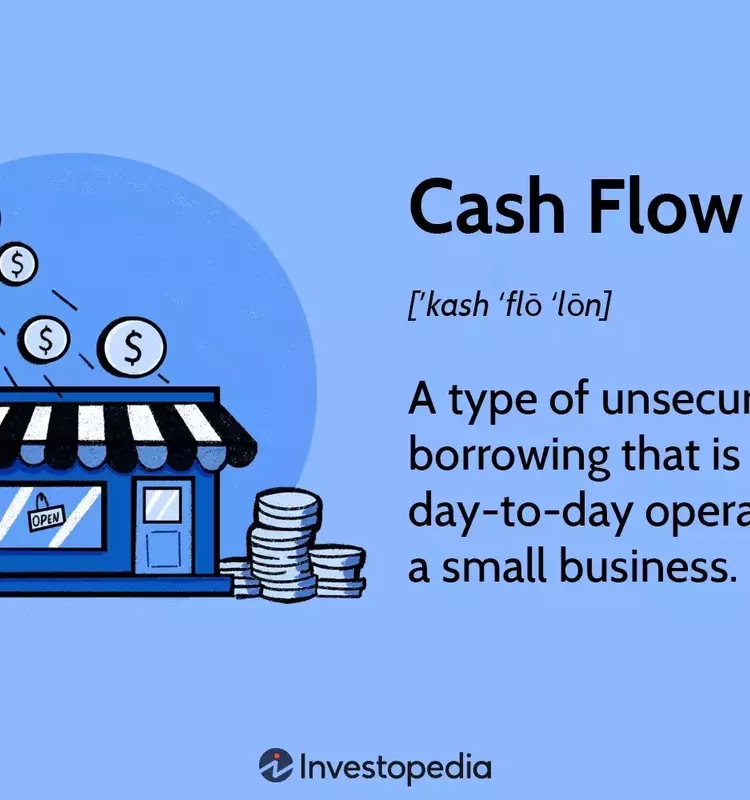
A cash flow loan serves as an unsecured financial tool enabling businesses to cover operational expenses by leveraging anticipated cash inflows instead of tangible assets. Unlike traditional bank loans, which necessitate extensive credit evaluations, cash flow lenders primarily assess a borrower's capacity to generate future cash flows to determine loan terms.

These loans are frequently utilized by smaller enterprises that may lack a substantial credit history, significant collateral, or a consistent profit record. Consequently, lenders typically impose higher interest rates to offset the elevated repayment risk. Additionally, origination fees and penalties for late payments tend to be steeper than those for conventional loans. Despite these costs, cash flow loans can be crucial for small businesses with limited financing alternatives, and prompt repayment is always advisable to mitigate the financial burden.

Consider a local bakery requiring $10,000 to acquire ingredients and packaging materials. Lacking sufficient physical assets for an asset-based loan, the bakery secures a cash flow loan from an online lender to fund its inventory needs. As the bakery generates revenue from sales over the ensuing weeks, it systematically repays the loan, including interest, demonstrating how these loans bridge short-term liquidity gaps based on a business's operational cycle.

Cash flow loans, while offering vital support for immediate operational needs, underscore the importance of robust financial planning and disciplined repayment strategies. They highlight the adaptability of financial markets in catering to diverse business requirements, ultimately fostering economic activity and growth, especially for emerging enterprises.

More Articles
Finance
EWO ETF: Navigating Austrian Markets Amid Economic Shifts
The iShares MSCI Austria ETF (EWO) has demonstrated robust performance, achieving new highs and outperforming European and global benchmarks. Its bank-centric portfolio benefits from rising net interest margins driven by ECB rate hikes, presenting an appealing valuation-earnings trade-off. However, the ETF faces challenges from weak Austrian consumer and business confidence, energy import dependencies, and limited fiscal flexibility due to increasing deficits. Technical indicators suggest strong bullish momentum but also signal overbought conditions, leading to a neutral stance.
By Mariana MazzucatoJul 16, 2026
Finance
Major Industry Shifts: TSMC's Expanded US Investment, Uber's Acquisition Bid, and United's Innovative Seating
Taiwan Semiconductor Manufacturing (TSMC) is significantly increasing its US investment by an additional $100 billion, aiming to build four new 2nm fabrication plants and bringing its total US commitment to $265 billion. Meanwhile, Uber has launched a substantial takeover bid for Delivery Hero, valuing the food delivery giant at $14.8 billion, with a crucial 17% stake already committed. In the airline sector, United is innovating passenger comfort with a new Economy Plus seating option featuring an empty middle seat and a shared table, set to debut on its new A321XLR aircraft.
By Strive MasiyiwaJul 16, 2026
Finance
Dow Inc. Navigates Market Challenges with Strategic Advantages
Dow Inc. is positioned as a buy, with a recommended accumulation strategy for shares under $30 and profit-taking near $40. The company benefits from a structural advantage due to its North American production amid rising global natural gas prices and supply risks in Europe and Asia. Despite recent sales and net loss declines, earnings are stabilizing through cost-cutting and favorable market dynamics, partly influenced by geopolitical events. Dow's dividend yield, close to 5%, supports a hold strategy for income and potential capital appreciation.
By Robert KiyosakiJul 16, 2026
Finance
Parnassus Core Select ETF Q2 2026 Commentary: Market Performance and Strategic Outlook
The Parnassus Core Select ETF achieved a 14.98% return in the second quarter of 2026, slightly trailing the S&P 500 Index's 15.20%. Performance was enhanced by holdings in Communication Services and strategic underweighting in Energy, Consumer Staples, and Utilities, while financials and industrials detracted. The fund focuses on high-quality companies with robust financial health, aiming for long-term growth and resilience.
By Michele FerreroJul 16, 2026
Finance
Understanding the Concept of Bidding in Financial Markets and Beyond
A bid represents an offer to acquire an asset, whether it's a financial instrument, a physical item at an auction, or a contract for services. This fundamental concept drives various markets, from stock exchanges to online auctions, facilitating transactions between buyers and sellers. The difference between the bid and ask price, known as the spread, reflects market dynamics and serves as compensation for market makers who ensure liquidity.
By Strive MasiyiwaJul 16, 2026