Understanding the Cash Flow Statement
Finance

Understanding the Cash Flow Statement

authorBy Mariana Mazzucato
DateJun 17, 2026
Read time2 min

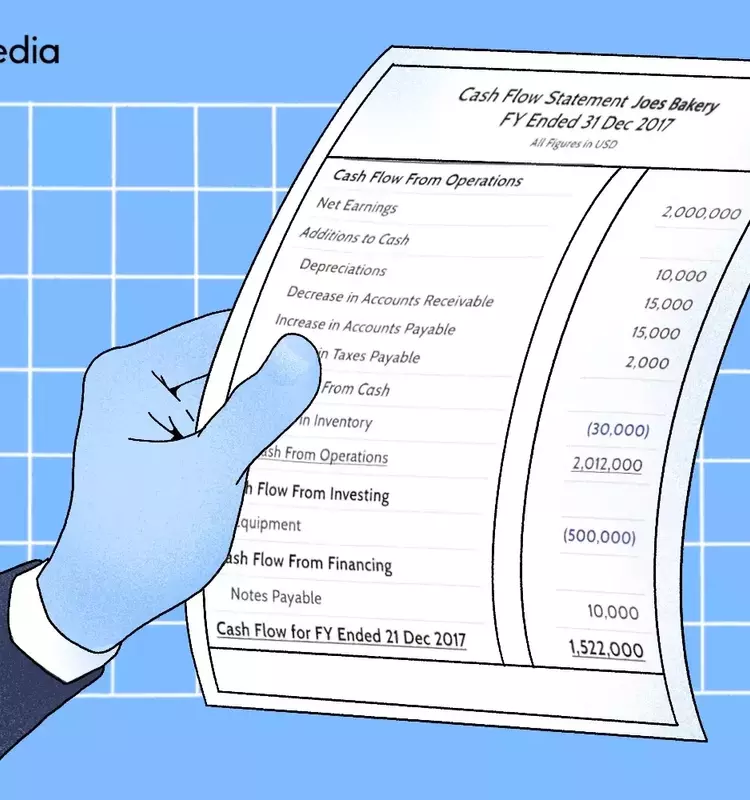
A cash flow statement is a fundamental financial document that provides insight into how an organization handles its financial resources. This report categorizes cash movements into three distinct areas: operational activities, investment endeavors, and financing strategies. Unlike income statements, which rely on accrual accounting, cash flow statements track actual money transfers, offering a transparent view of a company's immediate financial standing.

Understanding how to prepare and analyze a cash flow statement is essential for assessing a company's financial stability. The process involves collecting financial data, such as net income, non-cash expenses, and changes in assets and liabilities. There are two primary methods for preparing these statements: the direct method, which details actual cash transactions, and the indirect method, which adjusts net income for non-cash items. While both methods lead to the same net cash flow, the indirect method is more commonly used due to its alignment with existing financial statements. Analyzing these statements helps identify trends, evaluate the efficiency of cash management, and uncover potential risks or opportunities, such as a high cash burn rate or excessive reliance on external funding.

Ultimately, a robust cash flow statement is crucial for sound financial management. It allows businesses to make informed decisions, helps investors gauge sustainability, and enables analysts to identify long-term performance indicators. A company demonstrating consistent positive operating cash flow, balanced strategic investments, and prudent financing activities typically exhibits strong financial health, reflecting effective resource allocation and a commitment to shareholder value.

Mastering the intricacies of cash flow statements empowers stakeholders to discern the true financial vitality of an enterprise. By focusing on the tangible movement of cash, these statements offer a clear and unbiased perspective on a company's capacity for growth, debt management, and operational resilience. This fundamental understanding is key to navigating financial markets and making judicious economic choices.

More Articles
Finance
Companies Facing Economic Headwinds: A Deep Dive
This analysis examines the current struggles of consumer-facing companies like Lennar, Nike, and Dave & Buster's within the K-shaped U.S. economy. It details Lennar's declining sales and margins, Nike's weak performance in China and failed DTC strategy, and Dave & Buster's persistent consumer headwinds. The article suggests that while the overall market is at highs, these sectors face unique challenges.
By Morgan HouselJun 17, 2026
Finance
Understanding 401(k) Early Withdrawal Penalties and Avoiding Pitfalls
Navigating 401(k) withdrawals before age 59½ can lead to a 10% IRS penalty, along with income tax implications. This article explains the rules, detailing various exceptions for hardship distributions like medical expenses or home-buying costs, and clarifies vesting schedules for employer contributions. It also offers strategies to avoid penalties, such as taking a 401(k) loan or utilizing IRA exceptions, while differentiating between traditional and Roth 401(k) withdrawal rules to help individuals make informed financial decisions for their retirement savings.
By Robert KiyosakiJun 17, 2026
Finance
Jim Cramer's Take on Rocket Lab: High Valuation Amidst Space Sector Dynamics
Renowned financial commentator Jim Cramer has offered his insights into Rocket Lab (NASDAQ: RKLB), describing it as a "well-loved space stock" with a significant valuation. Despite its recent inclusion in the Nasdaq-100, the stock experienced a decline, which Cramer attributes to its role as a funding source for SpaceX. He highlighted Rocket Lab's diverse operations, including rocket manufacturing, satellite construction, and defense contracts through its HASTE platform. However, Cramer cautioned that its current trading multiple of 65 times sales makes it expensive, suggesting investors await a potential pullback for a more favorable entry point.
By Michele FerreroJun 17, 2026
Finance
Jim Cramer's Endorsement of X-Energy: A Speculative Investment in Nuclear Technology
Jim Cramer, host of Mad Money, has expressed cautious optimism regarding X-Energy (NASDAQ: XE), a company specializing in small modular nuclear reactors. Despite acknowledging its speculative nature and a significant stock pullback, Cramer views X-Energy's innovative business model favorably, suggesting it's a viable, albeit risky, investment for those interested in the future of nuclear power.
By Suze OrmanJun 17, 2026
Finance
Jim Cramer's Outlook on Progressive Corporation: A Cautious Stance on the Insurance Sector
Financial analyst Jim Cramer has expressed reservations about investing in the insurance sector, including Progressive Corporation (PGR), citing industry-wide pressures and recent downgrades of major players like Travelers. Despite acknowledging Progressive's strong fundamentals, Cramer suggests exploring more diversified insurance options like Berkshire Hathaway or considering AI stocks for higher growth potential and reduced risk.
By Mariana MazzucatoJun 17, 2026