Unlock Financial Insight: The Power of the Cash Ratio in Assessing Corporate Liquidity
The Essence of the Cash Ratio: Defining Immediate Financial Strength
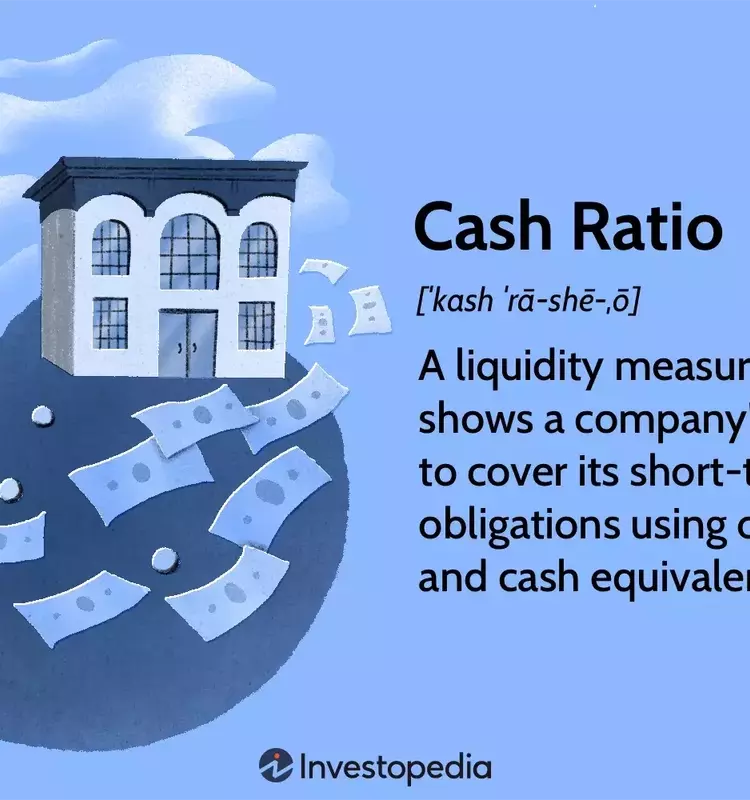
A company's cash ratio serves as a direct measure of its capacity to fulfill its immediate financial obligations using its most accessible assets. It quantifies the proportion of cash and cash equivalents available to cover all outstanding short-term liabilities, offering a clear picture of liquidity.
Formulating the Cash Ratio: A Clear Calculation for Liquidity Assessment
The cash ratio is calculated by dividing a company's total holdings of cash and cash equivalents by its current liabilities. Cash equivalents encompass highly liquid assets, such as marketable securities, which can be readily converted into cash. This formula provides a conservative perspective on a company's ability to meet its debts compared to other liquidity metrics, as it excludes less liquid assets like accounts receivable.
Decoding the Cash Ratio: What the Numbers Reveal About Financial Health
The cash ratio provides critical insights into a company's short-term solvency. A ratio exceeding one indicates that a company possesses sufficient liquid assets to cover all its current liabilities immediately, without needing to liquidate other holdings. Conversely, a ratio below one suggests that liquid assets are insufficient to cover short-term debts. While a low ratio can signal potential financial strain, it might also reflect strategic decisions such as extended credit terms with suppliers or efficient inventory management. A high cash ratio, although generally favorable, could also imply that a company is not optimally utilizing its cash, potentially missing opportunities for growth or accumulating funds due to concerns about future profitability.
A Practical Illustration: Analyzing Apple's Cash Position
Consider a practical example, such as Apple, Inc. At the close of 2024, Apple held a substantial sum in cash and marketable securities, totaling $53.7 billion. With current liabilities amounting to approximately $123 billion, Apple's cash ratio was around 0.43. This figure suggests that Apple leverages debt and favorable credit terms, prioritizing cash for strategic growth initiatives rather than maintaining an excessively high cash reserve.
Navigating the Nuances: Limitations and Context of the Cash Ratio
Despite its utility, the cash ratio is not without its limitations. It is often considered a highly conservative metric and is less frequently used in detailed financial analysis compared to other liquidity ratios. Maintaining an excessively high cash ratio might indicate inefficient asset utilization, as large cash holdings could be better deployed for investment or returned to shareholders. The ratio's interpretation heavily relies on industry benchmarks and comparisons with competitors, as different sectors have varying operational models and cash reserve needs. Furthermore, a single cash ratio snapshot might not accurately reflect a company's financial trajectory, seasonal fluctuations, or anticipated cash inflows, making trend analysis over time more insightful.
Optimal Cash Ratio: Industry Variations and Risk Tolerance
What constitutes a "good" cash ratio is highly dependent on the specific industry, as some sectors inherently operate with higher short-term debt and faster inventory turnover. Generally, a ratio of 1.0 or higher is viewed as robust, indicating complete coverage of short-term obligations. A ratio below 0.5 might signal elevated risk, as the company possesses less than half the liquid assets required to meet its immediate liabilities. However, a low ratio could also be a deliberate strategic choice, such as aggressive expansion plans funded by available cash.
Measuring Liquidity: The Cash Ratio's Role in Financial Assessment
The cash ratio is a fundamental measure of a company's liquidity, indicating its ability to settle current liabilities promptly. High liquidity suggests financial robustness, enabling a company to manage its short-term expenditures effectively. Conversely, low liquidity can lead to difficulties in meeting immediate payment obligations, potentially impacting a company's operational stability.
High vs. Low Cash Ratio: Striking a Balance for Financial Efficiency
Generally, a higher cash ratio is preferred, reflecting a stronger cash position and greater capacity to meet short-term debts. This can result from substantial cash holdings, reduced short-term liabilities, or a combination of both. However, an excessively high cash ratio might imply suboptimal cash management or a failure to capitalize on favorable credit terms. In such instances, strategically lowering the cash ratio by investing in growth or returning capital to shareholders might prove more beneficial.
Refining Cash Management: Strategies for an Improved Cash Ratio
The cash ratio, derived from a company's liquid assets and short-term liabilities, is a critical indicator of immediate solvency. Companies can enhance this ratio by increasing their cash on hand, streamlining inventory turnover, or avoiding premature expenditure. Alternatively, reducing short-term liabilities through diligent expense management or by opting for cash payments over credit can also contribute to a stronger cash ratio. These strategies enable a company to maintain a healthy financial buffer for unforeseen demand
