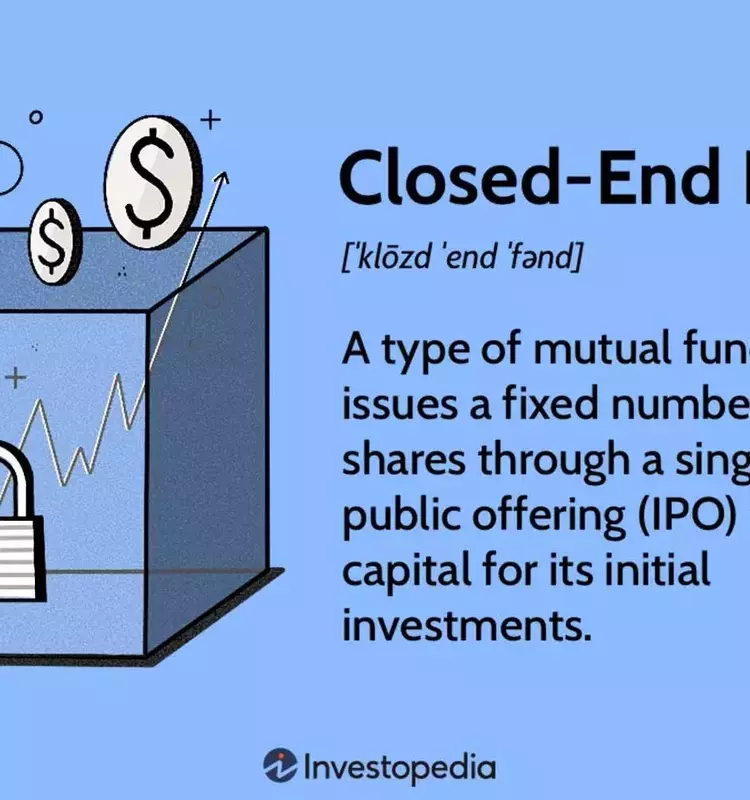
Understanding the fundamental distinctions between closed-end and open-end investment vehicles is crucial for investors. Both types of funds serve to aggregate capital from numerous individuals, professionally manage these assets, and typically offer diversification across various equities or financial instruments. However, their operational frameworks, methods of share issuance, and how they are bought and sold in the market differ significantly, impacting their pricing and accessibility.
The Dynamics of Closed-End Investments
Closed-end investment funds are typically overseen by experienced fund managers and initially raise capital through a single public offering, issuing a finite number of shares. These shares subsequently trade on stock exchanges, allowing investors to buy and sell them via brokerage firms in the secondary market. The market price of these shares can fluctuate throughout the trading day, often trading at a premium or discount relative to the fund's net asset value (NAV), driven primarily by market demand. Such funds may also incorporate alternative investments, like futures or derivatives, and distribute returns from dividends, capital gains, or interest from fixed-income assets.
Closed-end investment structures, managed by professional investment or fund managers, typically issue a predetermined number of shares during an initial public offering to raise capital. Once these shares are publicly offered, they become listed on an exchange, enabling investors to trade them through brokerage firms on the secondary market. Unlike open-end funds, closed-end funds can be traded throughout market hours, and their market prices are subject to fluctuations independent of their net asset value (NAV), often trading at either a premium or discount due to market demand. These funds have the flexibility to acquire additional capital through secondary or rights offerings and may hold unlisted securities. Distributions to shareholders can originate from various sources, including dividends, realized capital gains, or interest income from fixed-income assets within the fund's portfolio. Additionally, closed-end funds frequently incorporate alternative investments such as futures, derivatives, or foreign currencies, with some specializing in low-risk government debt like municipal bonds.
Exploring Open-End Investment Structures
Open-end funds encompass a broad category that includes mutual funds and many Exchange Traded Funds (ETFs), distinguishing themselves by having no fixed limit on the number of shares they can issue. New shares are continuously created to meet investor demand, and traditional mutual fund orders are typically processed based on the next net asset value (NAV) calculation at the end of the trading day. ETFs, while also often open-ended, trade throughout the day at market prices. Open-end funds may come with various fees, including front-end loads (a fee at purchase), back-end loads (a fee at sale), or even be no-load funds, which might still charge other operational and redemption fees. Investors generally incur taxes on distributions and realized gains from these funds, though specific rules apply to different account types and distribution forms.
Open-end investment funds, a category that prominently features mutual funds and many Exchange Traded Funds (ETFs), operate without a predetermined limit on the number of shares they can issue. These funds continuously create new shares to satisfy investor demand. For traditional mutual funds, orders are typically executed based on the net asset value (NAV) calculated at the close of the business day. In contrast, ETFs, while often structured as open-end funds, trade actively throughout the day at market prices. Open-end funds can levy various fees on investors, including front-end loads (fees incurred at the time of purchase), back-end loads (fees charged upon the sale of shares), or they might be categorized as no-load funds, which, despite the name, can still impose other redemption, exchange, and operational charges. Investors holding these funds are generally liable for taxes on income distributions and realized capital gains, although specific tax implications can vary based on the type of account, nature of distributions, and other regulatory considerations.
