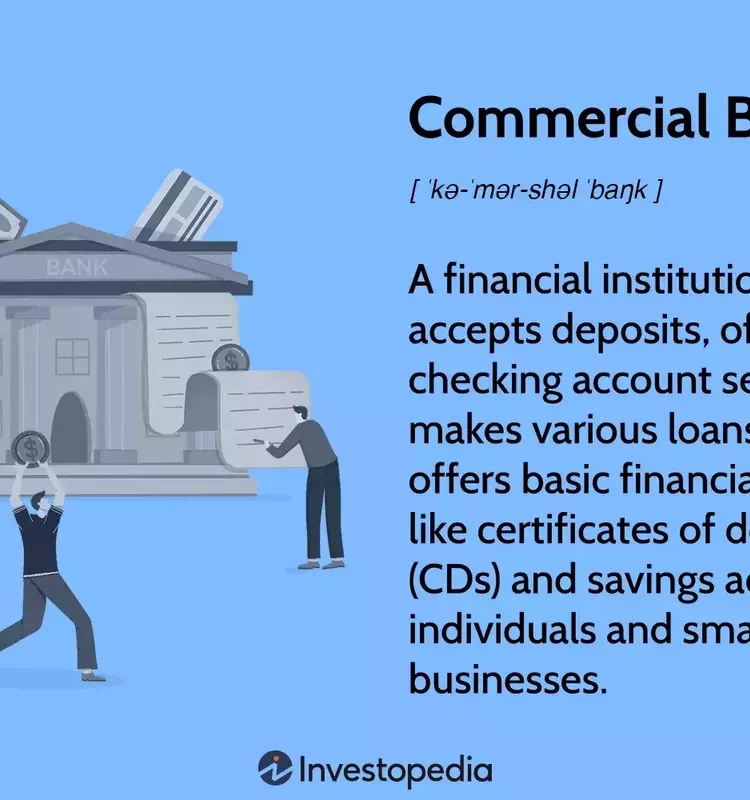
Commercial banks are fundamental pillars of the financial system, providing essential services to both individuals and businesses. Their primary function involves generating income through various fees and, most significantly, by earning interest from a diverse portfolio of loans, including mortgages, auto loans, and business loans. These lending activities are largely supported by customer deposits, which serve as the capital base for the banks. Commercial banks are pivotal in fostering economic growth by generating capital, extending credit, and maintaining market liquidity. They operate under stringent regulatory frameworks, such as those imposed by the Federal Deposit Insurance Corporation (FDIC) in the United States, which insures customer deposits up to specified limits, thereby ensuring financial stability and public trust.
The operational landscape of commercial banking has evolved significantly. While traditionally characterized by physical branches and in-person services, the advent of digital technology has led to a surge in online banking platforms. Many commercial banks now offer comprehensive online services, allowing customers to perform a wide array of transactions remotely. This shift has also given rise to exclusively online banks, which can often provide more competitive rates and lower fees due to reduced overhead costs. Despite these changes, the core mission of commercial banks remains the same: to facilitate financial transactions, provide secure deposit options, and supply the necessary credit to drive economic activity and meet the financial needs of their diverse clientele.
The Fundamental Operations and Revenue Streams of Commercial Banks
Commercial banks serve as central financial hubs, delivering a broad spectrum of services to both individual consumers and various businesses. These institutions are characterized by their ability to provide basic banking services, which include checking and savings accounts, along with more specialized offerings such as certificates of deposit (CDs), retirement account services, and investment portfolio management. For businesses, commercial banks extend their services to encompass merchant processing, enabling electronic payment acceptance, alongside offering accounts and credit products tailored to corporate needs. The operational model spans from traditional brick-and-mortar branches to entirely online platforms, reflecting an adaptation to technological advancements that allow for remote banking and greater accessibility.
The financial viability of commercial banks largely stems from their multifaceted revenue generation strategies. A significant portion of their income is derived from the interest differential—the spread between the interest earned on loans and the interest paid on deposits. For instance, a bank might offer a minimal interest rate on savings accounts while charging a considerably higher rate on mortgages, effectively capitalizing on this margin. Beyond interest income, banks also levy a variety of fees for their services. These can range from monthly maintenance and overdraft fees for accounts to charges for non-sufficient funds (NSF), safe deposit boxes, and late payments on loans. This dual approach of interest income and service fees forms the bedrock of their profitability, allowing them to sustain operations, cover costs, and generate profits in a competitive financial landscape.
Economic Contribution and Regulatory Framework of Commercial Banking
Commercial banks play an indispensable role in the broader economy, extending beyond mere financial transactions to actively foster capital formation and market liquidity. By pooling customer deposits and channeling these funds into loans, commercial banks facilitate the flow of capital, which is essential for businesses to expand, for individuals to purchase homes or vehicles, and for overall economic development. This process of credit creation directly stimulates production, generates employment opportunities, and encourages consumer spending, thereby acting as a powerful engine for economic growth. Their capacity to mobilize savings into productive investments underscores their importance in maintaining a vibrant and dynamic economic environment, supporting both micro and macroeconomic stability.
Given their critical function, commercial banks operate under extensive regulatory oversight by central banks and governmental bodies. In the United States, the Federal Deposit Insurance Corporation (FDIC) plays a crucial role by insuring customer deposits up to $250,000, safeguarding depositors' funds and instilling public confidence in the banking system. Regulators also impose reserve requirements, mandating that banks hold a certain percentage of their deposits as reserves to mitigate risks, particularly during periods of financial stress like bank runs. This regulatory framework ensures not only the safety and soundness of individual banks but also contributes to the stability of the entire financial system. Furthermore, the distinction between commercial and investment banking, historically maintained by acts such as the Glass-Steagall Act and later altered by the Gramm-Leach-Bliley Act, highlights the evolving regulatory landscape designed to manage the complexities and interconnectedness of different banking functions.
