Understanding Consignment: A Modern Retail Approach
Finance

Understanding Consignment: A Modern Retail Approach

authorBy David Rubenstein
DateApr 28, 2026
Read time3 min
Consignment represents a distinctive retail method where individuals or businesses entrust their products to an independent third party for sale. This arrangement typically involves the third-party retailer facilitating the sale in exchange for a percentage of the revenue generated. It offers a practical solution for sellers who may lack the resources or infrastructure for direct sales, opening doors to wider consumer bases. However, this convenience often comes with substantial commission rates, which can significantly reduce the seller's ultimate profit. This overview delves into the operational aspects, advantages, potential pitfalls, financial agreements, and common products associated with consignment, providing a comprehensive understanding of this unique sales approach.

Unlock New Markets, Maximize Sales: Your Consignment Solution!

The Fundamental Concept of Consignment Sales

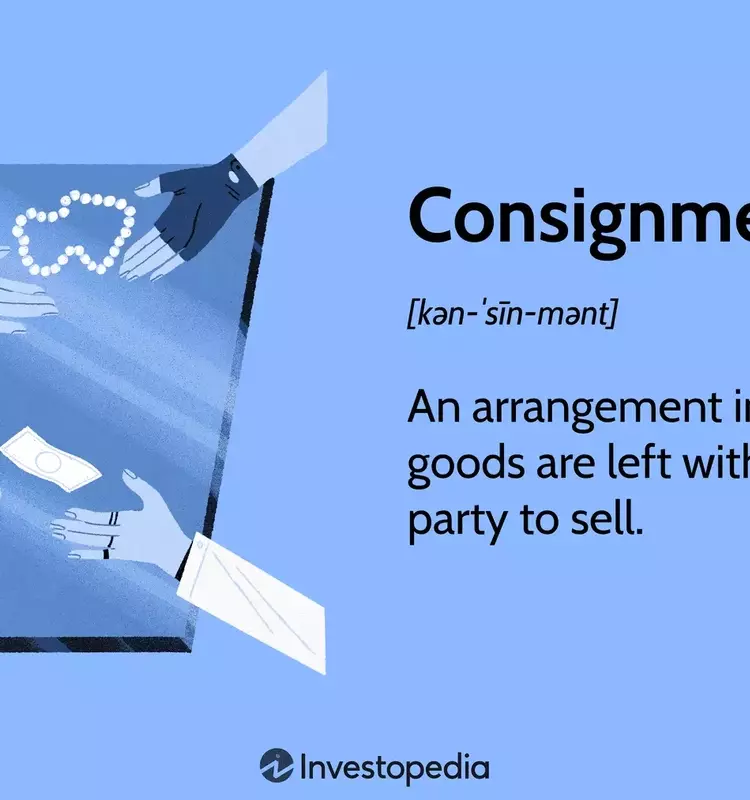
Consignment defines a business model where an independent entity is authorized to sell goods belonging to another party. These items are 'consigned' for sale, typically through dedicated consignment stores, which then earn a share of the sales revenue as their commission.

Consignment in Contemporary Commerce

In today's retail environment, consignment establishments, particularly those specializing in niche products like high-end fashion, infant wear, or pet supplies, have seen a surge in popularity. This trend is notably influenced by younger generations who prioritize cost-effective shopping alternatives over conventional luxury retail, often due to economic pressures such as student debt and stagnant wages.

Advantages of Embracing Consignment

Consignment provides a valuable avenue for sellers who do not possess a physical storefront, extending its reach to online platforms. Services such as eBay, functioning similarly to consignment models, offer individuals a marketplace to display and sell their merchandise for a fee. This negates the need for sellers to develop their own online presence, attract customers, or manage payment systems. Such arrangements prove particularly beneficial for those with limited time or inclination for direct sales, making the commission fees a worthwhile trade-off, especially when favorable terms are negotiated.

Navigating the Obstacles of Consignment Sales

A significant drawback for original producers or owners in consignment sales is the often substantial commission charged by the consignment shops. For instance, art galleries commonly take up to a 50% commission, which can severely diminish the seller's earnings. Furthermore, sellers frequently lose direct control over the marketing and presentation of their products. While some aspects can be covered in consignment agreements, consigning items generally means entrusting much of the sales process to the third-party retailer, potentially leading to discrepancies in presentation preferences.

Understanding Consignment Payment Structures

When an item is handed over to a consignment shop or a third party for sale, a clear agreement on the revenue distribution is crucial. While most consignment shops have predetermined commission rates for dividing sales proceeds, they are often open to negotiation, especially for high-value items like artwork that promise higher revenue. Depending on the item and the shop, sellers might part with 25% to 60% of the sales price in commission. These agreements are usually for a specified duration, after which unsold items are returned to the owner, or the term may be mutually extended.

Common Goods Available Through Consignment

A diverse range of products is frequently sold via consignment, including apparel, sports equipment, furnishings, musical instruments, art, and jewelry. For example, an artist needing a venue to display their large paintings might collaborate with a gallery that offers space in exchange for a sales commission. Similarly, a person discovering vintage clothing might consign them to a thrift store, agreeing on a profit split—such as 60% for the owner and 40% for the store—a common practice in many secondhand retail businesses.

More Articles
Finance
Understanding Cash-on-Cash Return in Real Estate Investment
Cash-on-cash return is a vital metric for real estate investors, particularly in commercial properties, to assess the annual profitability of their cash outlay. This measure distinctly evaluates the performance of an investment by focusing on the actual cash invested, thus offering a transparent view of potential cash distributions, especially when long-term debt is involved. It contrasts with traditional ROI by isolating the return generated from the investor's direct cash contribution, making it an indispensable tool for strategic financial planning in real estate ventures.
By Fareed ZakariaApr 28, 2026
Finance
Daily Journal Corporation: A Deep Dive into Value and Market Position
Daily Journal Corporation (DJCO) presents an interesting valuation case, with a significant portion of its worth derived from its marketable securities. The company's operational strength is evident in its Journal Technologies division, which consistently generates robust revenue through high-margin licensing and maintenance services. Despite a seemingly rich valuation compared to competitors like Tyler Technologies (TYL), this disparity can be partially attributed to tax considerations and its structure as a holding company. However, the current economic climate and the company's exposure to cyclical US banking stocks suggest a cautious approach for immediate investment.
By Robert KiyosakiApr 28, 2026
Finance
Kyndryl Holdings Navigates Critical Q4 Amidst Challenges
Kyndryl Holdings (KD) is preparing for a pivotal Q4 earnings report on May 6th, as the company grapples with ongoing SEC-related issues and recent executive departures. Expectations are for a subdued performance, with both revenue and earnings per share likely falling short of forecasts, continuing a trend observed since its spin-off from IBM. The high implied volatility signals potential for significant price fluctuations, suggesting a cautious approach for investors. A key challenge for Kyndryl will be rebuilding investor confidence by demonstrating a clear strategy for growth in high-demand areas like cloud computing and AI.
By Lisa JingApr 28, 2026
Finance
Saratoga Investment: Navigating High Yield with Prudence
Saratoga Investment (SAR) has consistently outperformed the BDC index with attractive dividends. However, concerns about extreme leverage, concentration in SaaS portfolios, and insufficient dividend safety persist. Despite a premium valuation driven by its focus on the lower middle market and low non-accruals, weak dividend coverage of 81% raises questions about sustainability. Investors are advised to proceed with caution.
By Nouriel RoubiniApr 28, 2026
Finance
Ares Commercial Real Estate: A Prudent Hold Amidst Market Uncertainties
This analysis reaffirms a 'hold' rating for Ares Commercial Real Estate, emphasizing that while new loan originations could drive future expansion, the company is actively refining its portfolio by reducing office property exposure. Improved loan loss reserves indicate a positive trend, though current dividend growth and safety are not compelling. Investors should closely monitor interest rate fluctuations and Federal Reserve policies, as these significantly influence the real estate sector.
By Lisa JingApr 28, 2026