Unveiling Tomorrow's Potential: The World of Contingent Assets
What Exactly Are Contingent Assets?
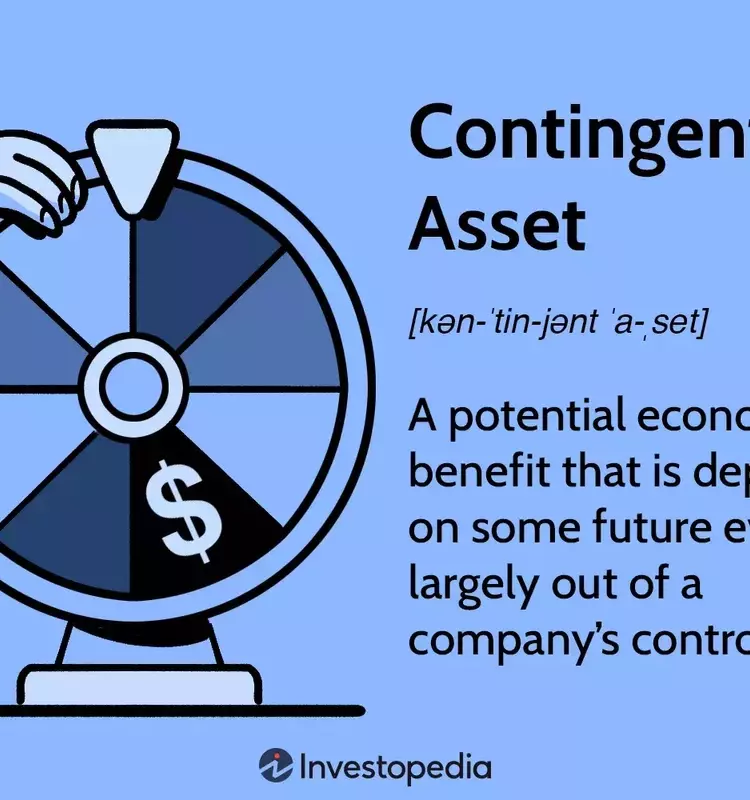
Contingent assets are potential financial benefits that a business might receive, contingent upon future occurrences that are outside of the company's direct influence. These are sometimes referred to as 'potential assets' because their existence and value are not yet certain.
Grasping the Essence of Contingent Assets
An asset that is currently contingent transforms into a recognized asset on the balance sheet once the incoming cash flows it represents become highly probable. The timing of this recognition aligns with the period when its status shifts from uncertain to almost definite.
The uncertainty surrounding contingent assets can stem from their undetermined monetary value or from the unpredictable nature of the event that could bring them into being. They originate from past occurrences, but complete information about them as assets isn't available until future events unfold. It's also worth noting that, in contrast to these potential gains, there are also 'contingent liabilities' or 'potential liabilities,' which represent possible future losses influenced by how future events transpire.
Illustrative Cases of Contingent Assets
Consider a situation where a company is engaged in a lawsuit and anticipates receiving compensation. This anticipated compensation is a contingent asset because the outcome of the legal battle and the exact amount of any award are still unknown. For instance, if Company A sues Company B for patent infringement and has a strong likelihood of winning, the expected settlement is a contingent asset for Company A. While it will be noted in the financial statements, it won't be officially recorded as an asset until the lawsuit is resolved.
Conversely, Company B, in the same scenario, would need to disclose a potential contingent liability in its footnotes, which would then be formally recognized in its accounts if it loses the lawsuit and is ordered to pay damages. Other instances of contingent assets include expected payments from warranties, benefits from estates, or other legal settlements. Furthermore, anticipated mergers and acquisitions are also typically disclosed in financial statements as contingent assets.
Regulatory Obligations for Disclosure
Both Generally Accepted Accounting Principles (GAAP) and International Financial Reporting Standards (IFRS) mandate that companies disclose contingent assets if there is a reasonable probability of their eventual realization. Under U.S. GAAP, this generally implies a 70% chance of the gain occurring, whereas IFRS permits disclosure with a 50% likelihood. International Accounting Standard 37 (IAS 37) under IFRS specifies that contingent assets are not recognized as such, but are disclosed if an inflow of benefits is more likely than not. However, if the inflow of benefits is virtually certain, the asset is recognized in the financial position statement, as it is no longer considered contingent. For GAAP, contingent asset accounting guidelines are primarily found in the Financial Accounting Standards Board’s (FASB) Accounting Standards Codification (ASC) Topic 450.
Key Considerations for Accounting
Companies are obligated to continuously assess potential assets. Once a contingent asset becomes probable, businesses must report it in their financial statements by estimating the expected income. This estimation is typically derived from a range of possible outcomes, associated risks, and prior experience with similar potential contingent assets.
Contingent assets fall under the principle of conservatism in accounting, which dictates that uncertain events should be reported in a way that yields the lowest possible profit. This discourages companies from exaggerating expectations and generally advises them to use the lowest estimated asset valuation. Moreover, no gain from a contingent asset can be recorded until it actually materializes. This conservatism principle takes precedence over the matching principle of accrual accounting, meaning the asset might not be reported until a period after any associated costs were incurred.
