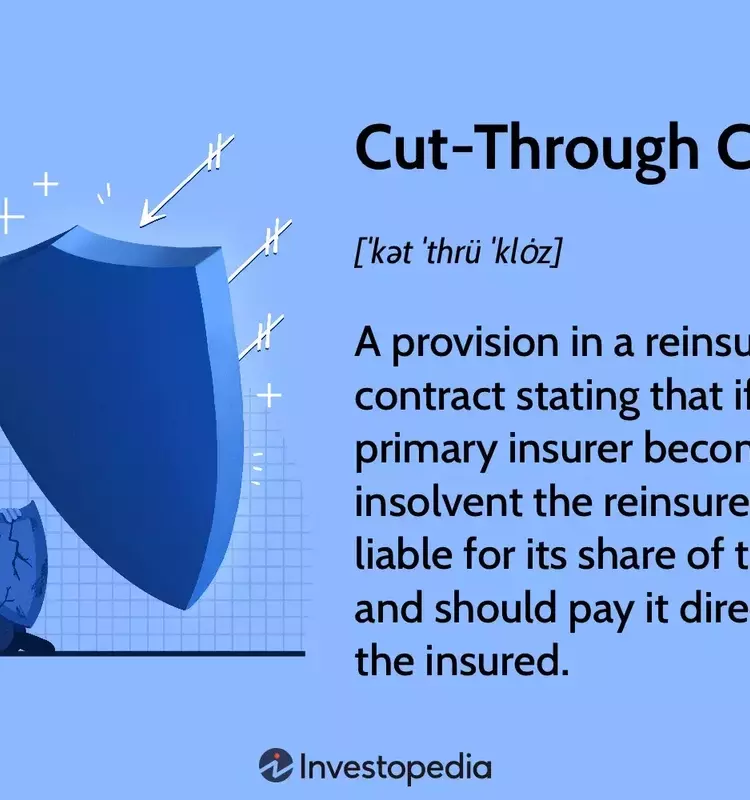
This report explores the critical concept of a "cut-through clause" within reinsurance agreements, a provision designed to extend direct contractual rights to a third party. Such clauses are predominantly activated under specific circumstances, particularly when the primary insurer, known as the ceding company, encounters financial distress or insolvency. The presence of these clauses significantly alters the conventional dynamics of reinsurance, offering enhanced protection and clarity for all involved.
The Mechanism and Application of Cut-Through Provisions
In the intricate world of insurance, a ceding company, typically an insurance provider, transfers a portion of its risk to a reinsurer. This arrangement, known as reinsurance, helps the ceding company manage its exposure to large claims. Ordinarily, the contract exists solely between these two entities. However, a cut-through clause introduces a pivotal modification. It grants a third party—which could be a policyholder, another insurer, or even a different reinsurer—direct claims against the reinsurer under predefined conditions. This is particularly vital when the ceding company becomes unable to fulfill its obligations, for instance, due to bankruptcy.
The utility of a cut-through clause becomes most apparent during critical junctures, such as the financial collapse of an insurance provider. In such an event, policyholders, who might otherwise face lengthy and uncertain recovery processes through insolvency proceedings, can directly approach the reinsurer for their claims. This mechanism ensures a smoother, more direct path to compensation. Furthermore, these clauses benefit ceding companies by enhancing their perceived stability, enabling them to attract larger clients by offering an additional layer of security. Reinsurers also find an advantage, as these clauses can serve as a competitive instrument, allowing them to participate in markets where they might not hold a direct license.
The broader insurance industry also gains from the propagation of cut-through clauses. By facilitating the distribution of risk across multiple entities, these provisions mitigate the impact of catastrophic events on individual insurers. This collective approach helps maintain the overall stability and resilience of the insurance market, ensuring that the burden of significant payouts—such as those following a natural disaster—does not disproportionately fall on a single company.
Ultimately, a well-drafted cut-through clause is a cornerstone of robust reinsurance practices. It acts as a crucial safeguard, clarifying responsibilities and streamlining the claims process, especially in challenging situations like insolvency. This clarity not only protects policyholders but also strengthens the operational framework for both primary insurers and reinsurers.
Concluding Insights: The Strategic Value of Clarity in Reinsurance
The existence and proper implementation of cut-through clauses signify a proactive approach to risk management within the insurance sector. By legally binding reinsurers to policyholders under specific, adverse conditions, these clauses transcend mere contractual formality. They embody a commitment to financial stability and consumer protection that strengthens the entire insurance ecosystem. This foresight in contract drafting not only assures policyholders of a more secure future but also imbues ceding companies with greater credibility and market appeal. For reinsurers, it opens avenues for strategic market penetration and differentiation. Thus, the cut-through clause is more than a legal technicality; it's a strategic asset that underpins trust and efficiency in the complex interplay of insurance and reinsurance.
