Understanding Debtors: Obligations, Penalties, and Protections
Finance

Understanding Debtors: Obligations, Penalties, and Protections

authorBy Nouriel Roubini
DateApr 30, 2026
Read time2 min

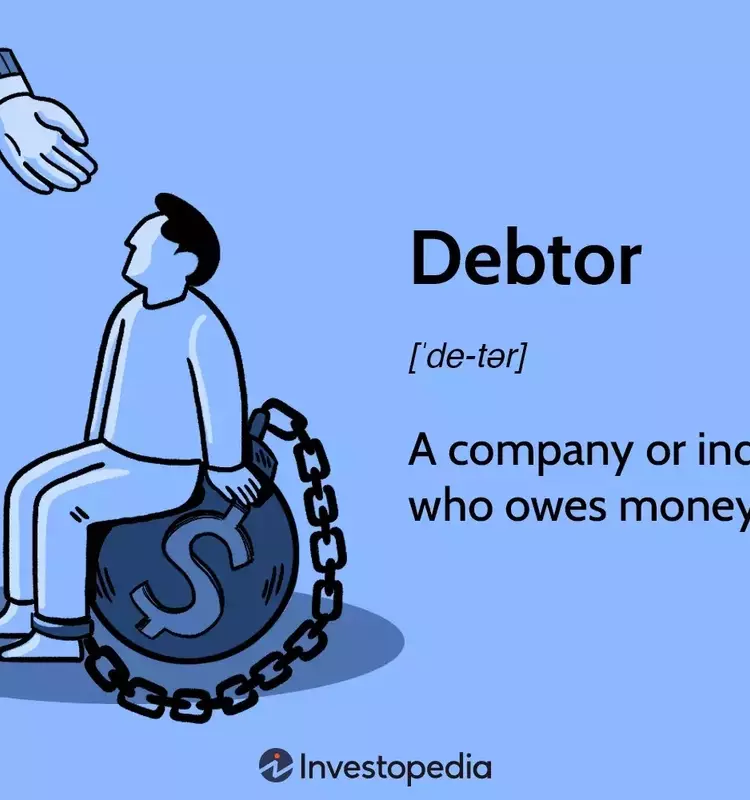
A debtor is essentially any individual or organization that has an outstanding financial obligation. This obligation typically arises from borrowing funds or incurring expenses that are due to another party. When funds are borrowed from financial institutions, the debtor is commonly referred to as a borrower. Conversely, if the debt takes the form of investment instruments like bonds, the debtor is known as an issuer. Should a debtor be unable to meet these financial commitments, they may need to seek relief through bankruptcy proceedings.

Failing to repay a debt is not typically considered a criminal offense, and debtors generally have the discretion to prioritize their repayments, with specific exceptions in bankruptcy scenarios. However, non-compliance with debt terms can lead to various consequences, including late fees, financial penalties, and a negative impact on credit ratings. In instances of persistent non-payment, creditors might initiate legal action, which could result in liens against assets or other legal encumbrances. It is crucial to distinguish between consumer debts, such as credit card balances or medical bills, for which incarceration is not a penalty, and specific obligations like unpaid child support, where court-ordered non-compliance can lead to jail time. The Fair Debt Collection Practices Act (FDCPA) serves as a vital safeguard, preventing third-party debt collectors from using threats of imprisonment for consumer debts and outlining permissible collection practices.

Creditors, who are entities or individuals extending credit, possess several options for recourse when debtors default. For secured debts, such as mortgages or auto loans, creditors may repossess the collateral. Additionally, legal avenues are available, allowing creditors to pursue court orders for wage garnishment or other forms of repayment. An illustrative case involves an individual securing a mortgage for a home, thereby becoming a debtor to the bank (the creditor), with the home serving as collateral. Defaulting on this loan empowers the bank to initiate foreclosure proceedings to recover its funds. Overall, understanding the dynamic between debtors and creditors, including legal protections and potential consequences, is essential for navigating financial responsibilities effectively.

Understanding the roles and responsibilities within the debtor-creditor relationship highlights the fundamental principles of financial accountability and the importance of legal frameworks in ensuring fair practices. It emphasizes that while financial obligations carry consequences, robust protections exist to prevent undue hardship, fostering a more equitable financial environment.

More Articles
Finance
Unraveling the Quantity Theory of Money: Impact on Inflation and Economic Debate
The Quantity Theory of Money (QTM) proposes a direct link between an economy's money supply and its price levels, influencing inflation. Irving Fisher's equation, MV=PT, forms the core of this theory, particularly within monetarism. While suggesting proportional changes in prices with money supply, the QTM faces criticism regarding assumptions like constant velocity and stable economic variables. Alternative theories from Keynesians and Austrians offer different perspectives on these economic dynamics.
By Lisa JingApr 30, 2026
Finance
Understanding the Natural Unemployment Rate: Dynamics and Economic Implications
The natural unemployment rate signifies the lowest sustainable unemployment level in an economy, reflecting voluntary job transitions, skill mismatches, and technological displacement. It acknowledges that full employment, where 100% of the workforce is employed, is an unattainable ideal due to the constant flux of the labor market. This rate is distinct from cyclical unemployment, which is influenced by economic downturns, and is a key concept in understanding long-term economic stability without triggering inflation.
By Nouriel RoubiniApr 30, 2026
Finance
Italian Inflation Reaccelerates in April Due to Energy and Food Prices
Italian inflation saw an unexpected acceleration in April, primarily driven by rising energy and food costs. While core inflation decreased, the headline rate is projected to surpass 3% soon. This resurgence highlights the ongoing impact of geopolitical events on global commodity markets and their direct influence on consumer prices in Italy.
By Lisa JingApr 30, 2026
Finance
Maximizing Rewards: A Guide to Truist Bank Bonuses for Personal and Business Accounts
Explore current and past bonus offers from Truist Bank for both personal and business checking accounts. Learn the requirements to earn up to $400, including direct deposits and debit card transactions, and understand important restrictions and fees. Discover how these promotions compare to other bank offers and whether they provide significant value for new customers.
By Nouriel RoubiniApr 30, 2026
Finance
Understanding Engagement Letters: A Guide to Business Agreements
An engagement letter serves as a crucial document defining the scope, terms, and responsibilities within a professional relationship. Less formal than a traditional contract, it clarifies expectations, details services, costs, and timelines, and acts as a legally binding agreement once signed. This guide explores how these letters function, their advantages in preventing disputes and 'scope creep,' and key considerations for both service providers and clients.
By Mariana MazzucatoApr 30, 2026