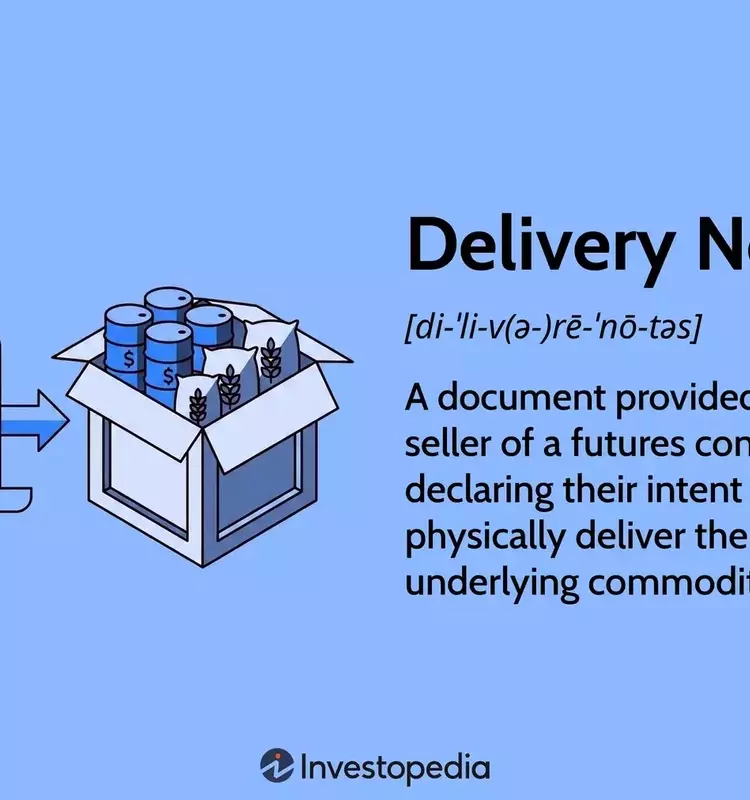
In the dynamic world of commodities futures, a document known as a delivery notice plays a pivotal role. This essential communication is issued by the seller of a futures contract, serving as a formal declaration of their commitment to physically supply the underlying commodity to the contract holder. This contrasts sharply with cash-settled futures, where no actual goods ever change hands. Delivery notices are fundamental to all physical futures agreements, meticulously detailing crucial aspects such as the quantity and quality of the commodity, its designated delivery location, and the precise delivery schedule.
The operational framework of commodities futures markets, underpinned by a robust clearinghouse system, facilitates seamless transactions. Instead of direct bilateral negotiations, buyers and sellers route their orders through a central exchange that efficiently matches compatible transactions. This streamlined process relies on standardized contractual templates, ensuring uniformity in specifying critical information like commodity type, volume, quality standards, and delivery logistics. As the delivery date approaches, sellers are obligated to furnish a delivery notice to their counterparty, affirming their intent for physical delivery rather than cash settlement. The exact procedures for delivery are predefined by the exchange, ensuring a transparent and orderly process.
The Core Function of Delivery Notices in Futures Trading
In commodities futures markets, delivery notices are an integral part of ensuring that sellers uphold their commitments to provide physical goods. These documents specify all essential details, such as the type, quantity, quality, and location of the commodity to be delivered. This structured approach simplifies transactions, making it easier for both buyers and sellers to manage their obligations without direct interaction. The clearinghouse system centralizes these operations, ensuring consistency and efficiency across all contracts.
Delivery notices act as a formal confirmation of the seller's intent for physical delivery, distinguishing these contracts from those settled in cash. The terms and conditions for delivery are standardized and set by the exchange, providing a clear framework for all participants. This system allows for both industrial users to secure necessary raw materials and financial entities to engage in speculation or hedging activities. The clarity and standardization provided by delivery notices are crucial for maintaining the integrity and smooth functioning of the commodities futures market.
Transferability and Practical Applications of Delivery Notices
The transferability of delivery notices is a key feature that caters to different market participants. Transferable notices can be traded among parties, allowing the right to receive physical commodities to be transferred without the initial buyer having to take actual possession. This is particularly beneficial for speculators who aim to profit from price fluctuations without incurring the costs and logistical challenges of physical storage. Such flexibility enhances market liquidity and broadens participation beyond traditional industrial users.
Conversely, non-transferable delivery notices are typically favored by commercial entities that require the physical commodity for their business operations. For instance, a food processing company needing a steady supply of grain would opt for non-transferable notices to guarantee direct receipt of their required raw materials. This ensures that the commodities flow directly to those who will process or consume them, aligning the futures market with real-world supply chain needs. The distinction between transferable and non-transferable notices allows the futures market to serve a diverse range of economic functions, from pure speculation to practical supply management.
