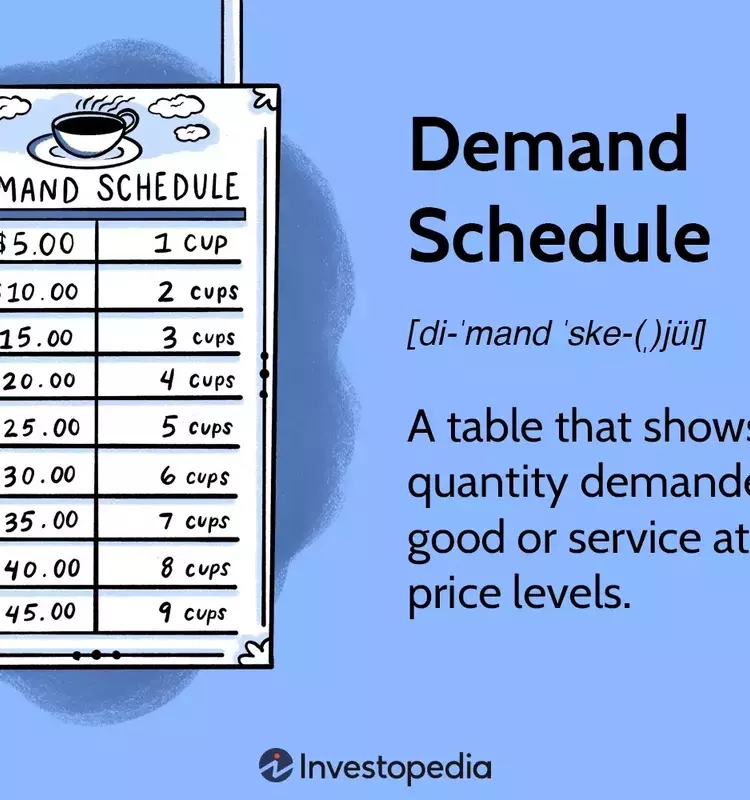
A demand schedule is a foundational concept in economics, providing a clear illustration of consumer purchasing intentions across a range of prices. This vital tool helps businesses strategically plan production, determine optimal pricing, and gain insights into the dynamic forces shaping the market. By tabulating the quantities consumers are prepared to acquire at various price levels, and often visualizing this data through a demand curve, companies can navigate the complexities of supply and demand to achieve market equilibrium and operational efficiency. Understanding the nuances of demand schedules is essential for any entity operating within a competitive market landscape.
Furthermore, the utility of demand schedules extends beyond mere price-quantity relationships. They serve as a powerful indicator of a product's elasticity, revealing how sensitive consumer demand is to price fluctuations. This insight is invaluable for crafting agile pricing strategies. Coupled with supply schedules, these tools offer a comprehensive snapshot of market equilibrium, pinpointing the price and quantity where consumer desire aligns with producer offerings. Effectively utilizing demand schedules enables businesses to make informed decisions regarding resource allocation, inventory management, and long-term strategic planning, ultimately fostering sustained growth and market responsiveness.
The Mechanics and Graphical Representation of Demand Schedules
A demand schedule systematically records the quantities of a good or service that consumers intend to purchase at varying price levels. Typically presented as a two-column table, it lists prices in either ascending or descending order, alongside the corresponding quantities demanded. The data utilized for these schedules is often derived from thorough market research, ensuring a realistic reflection of consumer behavior. When this numerical data is transformed into a visual representation, it forms a demand curve, plotted on a graph where the vertical axis denotes price and the horizontal axis represents quantity. This graphical depiction offers an intuitive understanding of the inverse relationship between price and demand: as prices increase, the quantity demanded generally decreases, and vice versa. This visual aid allows for quick estimations of demand at any given price point.
The practical application of graphing a demand schedule becomes particularly clear when integrated with a supply schedule. While a demand schedule focuses on consumer purchasing intent, a supply schedule outlines the quantities producers are willing to offer at different prices. Plotting both curves on the same graph reveals their intersection, known as the equilibrium point. This point signifies the market price at which the quantity demanded by consumers precisely matches the quantity supplied by producers, establishing market equilibrium. The demand curve typically slopes downwards from left to right, reflecting the general principle that higher prices lead to lower demand. Conversely, the supply curve usually ascends, as producers are motivated to supply more at higher prices. The convergence of these two curves is a critical economic indicator, helping businesses and economists understand the natural balancing act of market forces and predict market outcomes.
Strategic Implications and Practical Applications of Demand Schedules
Demand schedules are not merely theoretical constructs; they are indispensable strategic tools that significantly influence business decisions and economic forecasting. Beyond the basic price-quantity relationship, these schedules offer profound insights into market dynamics. They empower companies to refine their pricing strategies by identifying optimal price points that maximize demand and revenue. By analyzing how changes in price affect consumer interest, businesses can discern the elasticity of their products, which is crucial for determining whether price adjustments will lead to proportional shifts in demand. This understanding is particularly important for products that are highly sensitive to price changes, guiding management in setting prices that resonate with consumer willingness to pay while maintaining profitability. Moreover, the predictive power of demand schedules extends to operational planning, enabling precise forecasts of manufacturing needs, raw material procurement, and labor requirements to meet anticipated sales volumes effectively.
The utility of demand schedules also provides a framework for understanding broader market trends and competitive landscapes. Businesses can leverage this information to assess the potential success of new product launches or expansions into different markets. By comparing demand schedules across various regions or consumer segments, companies can tailor their strategies to specific market characteristics, optimizing product positioning and distribution. However, it is important to acknowledge the inherent limitations of demand schedules. They are primarily focused on price and may not fully account for non-financial factors such as consumer preferences, product innovation, or external market disruptions like economic shifts or global events. Furthermore, demand schedules are dynamic and require continuous revision to accurately reflect evolving market expectations and competitive pressures. Regular review and adaptation are key to ensuring that these schedules remain relevant and effective tools for informed decision-making in a constantly changing economic environment.
