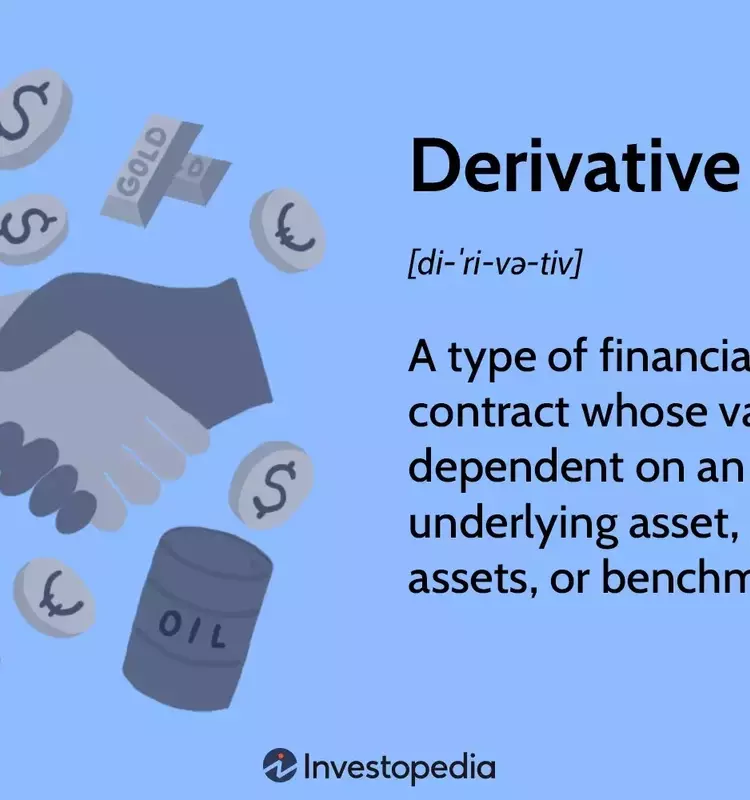
Derivatives are sophisticated financial instruments whose value is intrinsically linked to an underlying asset, such as stocks, bonds, commodities, or even economic indicators. These versatile tools empower investors to manage various financial exposures, speculate on market trends, and amplify investment returns through leverage. Common examples include options, swaps, and futures contracts, each presenting distinct risk-reward profiles and strategic applications. While derivatives can significantly bolster an investment strategy, their inherent complexity and potential for substantial risk necessitate a thorough understanding for judicious deployment within a diverse portfolio.
Effectively integrating derivatives into an investment framework involves recognizing their capacity for both risk mitigation and opportunity creation. By providing mechanisms for hedging against adverse price movements, increasing capital efficiency through leverage, or capitalizing on anticipated market shifts, derivatives offer a dynamic suite of functionalities. However, the multifaceted nature of these instruments, coupled with varying regulatory environments and counterparty risks, demands careful consideration. A comprehensive grasp of derivative mechanics, trading avenues, and associated risks is paramount for investors aiming to construct a resilient and adaptable investment strategy.
The Core Concepts of Derivative Trading
Derivatives, initially appearing complex, become more manageable with an understanding of their fundamental terminology and operational mechanics. A key concept is the “underlying asset,” which forms the basis of the derivative's value and significantly influences its pricing, risk characteristics, and contractual structure. This underlying asset can range widely, from traditional securities like stocks and bonds to broader market indices, currencies, and even abstract economic benchmarks. The perceived risk profile of the underlying asset directly correlates with the overall risk associated with its derivative counterpart.
Furthermore, many derivative contracts feature a “strike price” or “exercise price,” which is the predetermined rate at which the underlying asset can be bought or sold if the option is exercised. In the realm of fixed income derivatives, a “call price” might denote the point at which an issuer can redeem a security prematurely. Investors typically adopt a “long position” (expecting an increase in value), a “short position” (anticipating a decrease), or a “hedged position” (combining long and short elements to mitigate risk) depending on their market outlook and strategic objectives. Familiarity with these terms and concepts is essential for anyone looking to navigate the derivative market effectively.
Strategic Applications: Hedging, Leverage, and Speculation
Derivatives are strategically employed in investment portfolios primarily for three core purposes: hedging existing positions, enhancing leverage, and speculating on future asset price movements. Hedging, for instance, involves using derivatives to mitigate potential losses from unfavorable price fluctuations in an asset an investor already holds. A classic example is a stock owner purchasing a put option on that same stock. This creates an offsetting position: if the stock price drops, the loss on the stock is partially or fully compensated by the gain in the put option's value. While hedging incurs the cost of the option premium, it acts as an insurance policy, limiting downside risk even if it means foregoing some potential profit from a purely upward movement in the stock.
Leverage is another powerful aspect of derivatives, enabling investors to control a substantial value of an underlying asset with a relatively small capital outlay. This amplification of exposure means that a small percentage change in the underlying asset's price can lead to a significantly larger percentage gain or loss on the derivative investment. This characteristic makes derivatives particularly attractive in volatile markets where rapid price swings can be magnified. Lastly, derivatives are widely used for speculation, allowing investors to place bets on the anticipated direction of an asset's price without directly owning the asset. The relatively lower cost of entry compared to direct ownership makes derivatives a popular choice for speculative strategies, offering the potential for high returns, albeit accompanied by commensurately higher risks.
