Understanding the Divergence in Fuel Prices Across the United States
Finance

Understanding the Divergence in Fuel Prices Across the United States

authorBy Lisa Jing
DateMay 07, 2026
Read time3 min
This article explores the substantial variations in gasoline prices across the United States, examining the factors that contribute to these disparities and highlighting specific regions with the highest and lowest costs. It aims to provide a comprehensive overview of how geopolitical events and local conditions influence what consumers pay at the pump.

Navigating the Volatility: Where Every Cent Counts

The Current State of Gasoline Costs

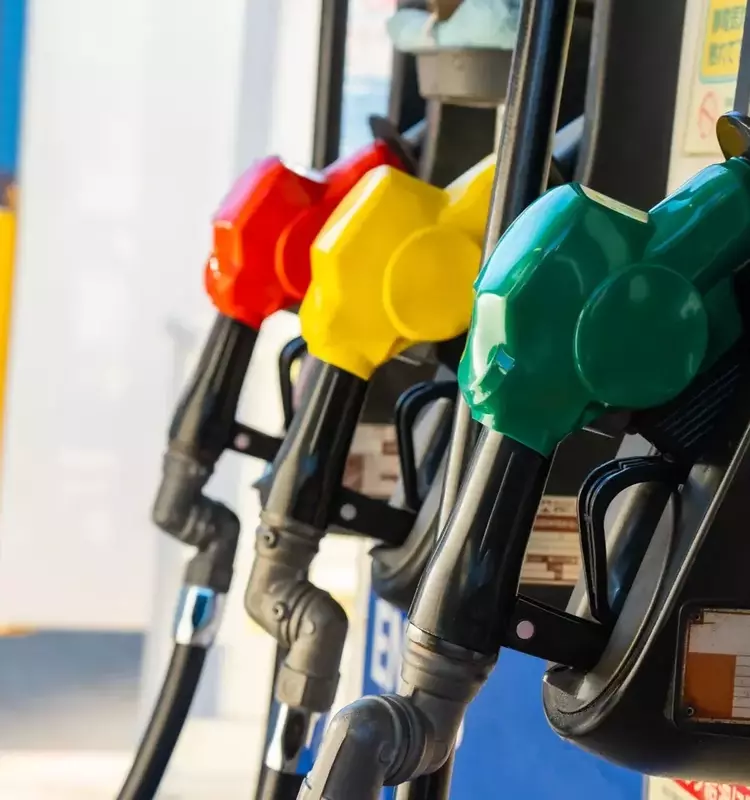
In recent months, the price of gasoline throughout the U.S. has experienced a considerable surge, with an average increase of approximately $1.58 per gallon. This escalation is largely attributed to the ripple effects of international conflicts, particularly those involving Iran, which have impacted global oil markets and consequently driven up fuel expenses nationwide.

Factors Influencing Local Fuel Prices

The cost of gasoline can differ significantly based on geographical location, even within the same state. Several elements contribute to these regional price discrepancies, including local tax policies, the proximity of an area to oil refineries and distribution pipelines, and the logistical expenses associated with fuel transportation. Remote areas, such as tourist destinations, mountain towns, and islands, often face higher prices due to increased transport costs. Conversely, regions located closer to major supply routes typically benefit from lower fuel costs.

A Snapshot: The Most Affordable and Costly Counties for Fuel

Currently, the spectrum of gasoline prices across the nearly 3,100 counties in the U.S. is remarkably broad. For instance, a gallon of gas can cost as little as $3.54 in Swisher County, Texas, while soaring to over $7.03 in Mono County, California. This stark contrast underscores the significant impact of location on fuel expenditure. Counties with the lowest prices are predominantly concentrated in the central and southern states, whereas those with the highest prices are largely found along the West Coast.

Significant Price Gaps Within States

Some states exhibit particularly wide disparities in gasoline prices between their cheapest and most expensive counties, with differences often exceeding $1 per gallon. Colorado, for example, displays the most substantial price gap, with a $2.09 difference. This is partly due to the high costs in mountain resort areas like Pitkin County (home to Aspen) compared to the more affordable prices in its rural plains counties.

Washington state also shows notable variations, particularly influenced by island communities like San Juan County, where fuel must be transported by water, leading to higher prices. Similarly, Massachusetts faces elevated prices in Nantucket, another island county with complex fuel delivery logistics. In California, remote mountainous regions such as Mono County have higher prices than more accessible inland areas, while in Nevada, urban centers like Washoe County (including Reno) tend to experience increased fuel costs.

Analyzing Intra-State Gas Price Variations

The extent of price differences within states is not uniform; some states present much narrower ranges, while others exhibit much broader ones. A detailed analysis of each state's cheapest and most expensive counties, alongside the financial spread between them, reveals the diverse economic landscapes influencing fuel costs across the nation.

More Articles
Finance
Mastering Decision-Making: A Deep Dive into Pareto Analysis
Pareto analysis, rooted in the 80/20 rule, is a powerful decision-making tool. It helps businesses prioritize resources by identifying the crucial 20% of causes that lead to 80% of outcomes. This method, often visualized through Pareto charts, streamlines problem-solving and enhances efficiency across various sectors, from business management to quality control and economics.
By Michele FerreroMay 07, 2026
Finance
Understanding Non-Cash Items in Financial Reporting
Non-cash items are entries in financial statements that affect a company's profitability but do not involve actual cash movement. These items, such as depreciation and amortization, are crucial for accurately representing a company's financial health, as they impact reported income without directly influencing cash flow. They play a significant role in both accounting practices, particularly accrual accounting, and banking operations, where they refer to pending transactions like checks awaiting clearance. Despite their importance, non-cash items can be subject to estimation inaccuracies, requiring careful analysis from investors to gauge a company's true financial standing.
By Robert KiyosakiMay 07, 2026
Finance
The Mortgage Electronic Registration System (MERS): An Overview
The Mortgage Electronic Registration System (MERS) is an electronic database used by the mortgage banking industry to streamline the tracking and transfer of mortgage rights. MERS simplifies the process by reducing the need for traditional county record assignments when loans are sold between lenders. While it offers efficiency and cost savings, critics note that MERS can obscure loan ownership, as highlighted during the 2008 housing crisis. This article explores how MERS works, its benefits, and its drawbacks, as well as how consumers can access information about their mortgages through the system.
By Michele FerreroMay 07, 2026
Finance
Understanding the Concept of Endorsement in Various Contexts
Endorsement encompasses various meanings, ranging from official approvals and document alterations to public declarations of support for individuals, products, or services. This term signifies authorization in financial transactions, modifications to legal agreements like insurance policies, and expanded privileges on licenses. Additionally, it plays a crucial role in promotion and marketing, often leveraging influential figures to shape public perception.
By Strive MasiyiwaMay 07, 2026
Finance
Gold as a Long-Term Investment: A Comprehensive Analysis
This article explores gold's effectiveness as a long-term investment, comparing its performance against stocks and bonds. It delves into historical contexts, government policies, and modern investment vehicles like ETFs that influence gold prices. The piece also examines factors such as central bank policies, global economic uncertainty, currency markets, and environmental concerns in mining, concluding that gold serves best as a diversification tool rather than a primary growth asset.
By Mariana MazzucatoMay 07, 2026